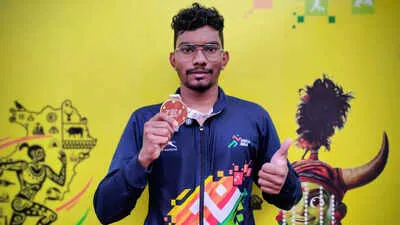
Athletes from Karnataka delivered a commanding performance at the Khelo India Tribal Games, securing more than 20 medals and underscoring the region’s growing influence in Indian swimming. Leading the surge was Manikanta L, who claimed eight gold medals and one silver, emerging as the standout performer of the competition. His achievements reflect not only individual excellence but also the broader ecosystem supporting grassroots sports development. The event highlights increasing investment in talent identification and training, positioning India’s aquatics sector for sustained growth, improved competitive standards, and enhanced visibility on international platforms.
Dominance in the Pool: Karnataka’s Medal Surge
Karnataka’s swimmers established clear supremacy at the Khelo India Tribal Games, amassing over 20 medals across various categories. Their performance was marked by consistency, technical precision, and competitive depth, signaling a well-structured training framework at the state level.
The scale of success also indicates a maturing pipeline of athletes capable of performing under pressure. Such dominance is rarely incidental; it reflects years of investment in coaching, infrastructure, and athlete development programs that are now yielding measurable results.
Manikanta L: A Breakout Star with Global Aspirations
At the center of this success story is Manikanta L, whose haul of eight gold medals and one silver set him apart as the defining athlete of the event. The 21-year-old swimmer from Davanagere has already gained exposure at the Asian Championships, and his latest performance reinforces his trajectory toward higher international benchmarks.
His ability to dominate across multiple events demonstrates versatility and endurance—qualities essential for long-term success in competitive swimming. More importantly, his achievements highlight the emergence of new talent capable of bridging the gap between domestic competitions and global arenas.
The Role of Grassroots Support and Family Backing
Behind Manikanta’s rise lies a story of sustained personal and familial commitment. Support from his father, Lakshmana, has been instrumental in enabling access to training and competitive opportunities. This underscores a broader reality in Indian sports: grassroots success often depends on a combination of institutional frameworks and individual sacrifices.
Such narratives are critical in understanding the socio-economic dynamics of sports development, where early-stage funding and support systems can significantly influence an athlete’s career trajectory.
Economic and Strategic Implications for Indian Swimming
The outcomes at the Khelo India Tribal Games extend beyond medals; they reflect the increasing viability of swimming as a competitive and commercially relevant sport in India. As performance standards improve, the sport becomes more attractive to sponsors, federations, and policymakers.
From a business perspective, the rise of athletes like Manikanta signals potential growth in sports-related investments, including training academies, performance analytics, and sponsorship deals. Enhanced visibility can also drive audience engagement, opening new revenue streams through broadcasting and digital platforms.
A Glimpse into the Future of Indian Aquatics
Karnataka’s dominant showing offers a glimpse into the future of Indian swimming—one defined by depth, discipline, and data-driven training methodologies. The challenge ahead lies in sustaining this momentum and translating domestic success into international achievements.
If supported by consistent investment and strategic planning, India’s swimming ecosystem could evolve into a globally competitive force, with athletes like Manikanta leading the charge toward excellence on the world stage.
Comments