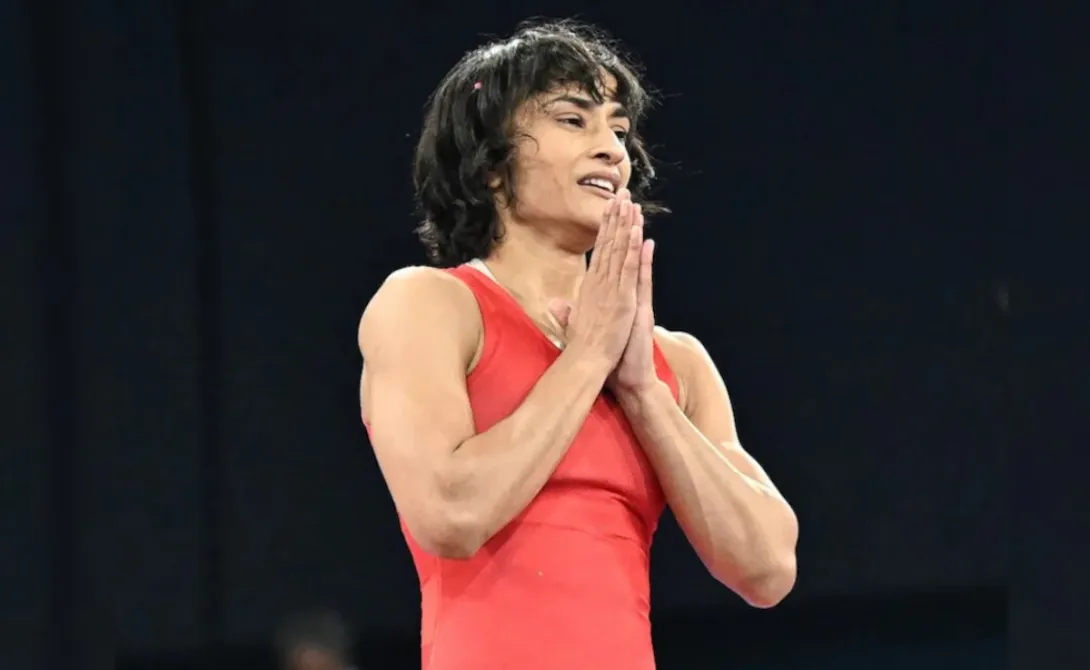
Wrestling Federation of India has introduced fresh eligibility rules for the upcoming Asian Games wrestling trials, effectively excluding veteran wrestler Vinesh Phogat from contention. Under the revised framework, only medal winners from competitions conducted during 2025 and 2026 will be permitted to participate in the final selection process. Since Phogat has not competed professionally following her controversial disqualification at the 2024 Summer Olympics, the new criteria significantly diminish her chances of representing India at the Continental event. The decision has reignited debate surrounding athlete eligibility, administrative transparency, and the future direction of Indian wrestling governance.
WFI Introduces Stricter Qualification Standards Ahead of Asian Games
The Wrestling Federation of India has unveiled a revised qualification framework for the Asian Games selection trials, introducing stricter performance-based eligibility criteria that could reshape the country’s wrestling landscape ahead of the Continental competition.
According to the federation’s latest guidelines, only wrestlers who secured medals in recognized events during 2025 and 2026 will be eligible to compete in the final selection trials for the Asian Games squad.
The move effectively excludes Vinesh Phogat, one of India’s most recognizable wrestling figures, from the qualification pathway.
The women’s selection trials are scheduled to take place on May 30 at the Indira Gandhi Indoor Stadium, while the men’s freestyle and Greco-Roman categories will hold trials on May 31 at the Sports Authority of India Regional Centre in Lucknow.
The announcement has triggered widespread discussion within Indian wrestling circles, particularly due to its implications for senior athletes attempting to return to international competition.
Vinesh Phogat’s Comeback Hopes Suffer Major Blow
For Vinesh Phogat, the revised policy represents a potentially defining setback in her wrestling career.
The decorated wrestler has not participated in professional competition since her highly emotional disqualification at the Paris Olympics in 2024 — an incident that became one of the most widely discussed moments in Indian sport that year.
Her absence from competitive wrestling since then now leaves her ineligible under WFI’s updated rules.
Phogat, who also serves as a Congress MLA in Haryana, had reportedly been exploring the possibility of returning to elite competition ahead of the Asian Games. However, the federation’s emphasis on recent medal-winning performances effectively closes that route unless further revisions or exemptions are introduced.
The development has intensified uncertainty surrounding the future of one of India’s most accomplished female wrestlers.
Indian Wrestling Governance Remains Under Intense Scrutiny
The controversy arrives at a sensitive period for Indian wrestling administration.
Over recent years, the sport has faced repeated governance disputes, athlete protests, legal intervention, and administrative restructuring. As a result, every major policy decision taken by the federation now attracts heightened public and media attention.
Selection policies, in particular, remain among the most sensitive aspects of sports governance because they directly affect athlete careers, sponsorship opportunities, and Olympic pathways.
Supporters of WFI’s new framework argue that performance-based eligibility standards are essential for ensuring fairness, objectivity, and competitive accountability. They believe recent results should carry greater weight than historical achievements when selecting athletes for major international tournaments.
Critics, however, argue that rigid criteria may unfairly exclude experienced athletes capable of delivering results on the global stage.
Debate Intensifies Over Merit Versus Legacy
The exclusion of a high-profile athlete such as Phogat has revived a longstanding debate within elite sports administration: should recent form outweigh proven international pedigree?
Advocates of the federation’s decision argue that active competition and recent performance data provide the most reliable indicators of current readiness. In modern high-performance sport, federations increasingly prioritize measurable competitiveness over reputation alone.
Others contend that experienced athletes who have previously delivered medals for the country deserve structured pathways back into competition, particularly after setbacks caused by injury, administrative issues, or extraordinary circumstances.
Phogat’s case carries additional emotional significance because of the manner in which her Olympic campaign ended. Many supporters view her absence from the Asian Games trials as a harsh outcome for an athlete who played a major role in elevating Indian women’s wrestling globally.
The situation reflects the difficult balance sports federations often face between maintaining meritocratic systems and acknowledging the value of legacy athletes.
Women’s Wrestling in India Faces Transitional Moment
Beyond the immediate controversy, the development highlights a broader transition taking place within Indian wrestling.
Over the past decade, wrestlers like Vinesh Phogat helped transform women’s wrestling into one of India’s most successful Olympic disciplines. Their achievements expanded public visibility for the sport, attracted sponsorship investment, and inspired a new generation of athletes.
However, Indian wrestling is now entering a new competitive cycle where younger wrestlers are increasingly competing for leadership positions within the national setup.
Federations frequently use qualification reforms during such periods to encourage active participation and maintain competitive depth across weight categories.
WFI’s latest criteria appear designed to reward consistent recent performance and ensure that athletes entering major tournaments remain actively engaged in the international circuit.
Political Profile Adds Another Layer to the Issue
Phogat’s growing political identity has also added complexity to the situation.
As an elected legislator in Haryana, she occupies a rare position where sporting and political visibility intersect. Consequently, administrative decisions affecting her career inevitably generate broader public discourse extending beyond wrestling itself.
In India, prominent athletes transitioning into politics often retain symbolic importance within their sports, making controversies involving them particularly high-profile.
Analysts believe the debate surrounding Phogat’s exclusion is therefore likely to continue attracting attention from both sporting and political circles in the coming months.
Selection Trials Now Carry Greater Significance
With the Asian Games approaching, the upcoming trials now assume even greater importance for Indian wrestling.
The federation’s insistence on recent medal-winning performance reflects an attempt to prioritize competitive readiness and maintain accountability within the selection process. Whether the policy ultimately strengthens India’s medal prospects remains uncertain.
What is clear, however, is that the exclusion of a wrestler as prominent as Vinesh Phogat has transformed the trials into a major talking point within Indian sport.
For WFI, the challenge now lies not only in assembling a competitive squad, but also in managing perceptions surrounding fairness, transparency, and athlete opportunity in one of India’s most closely watched Olympic disciplines.
Comments