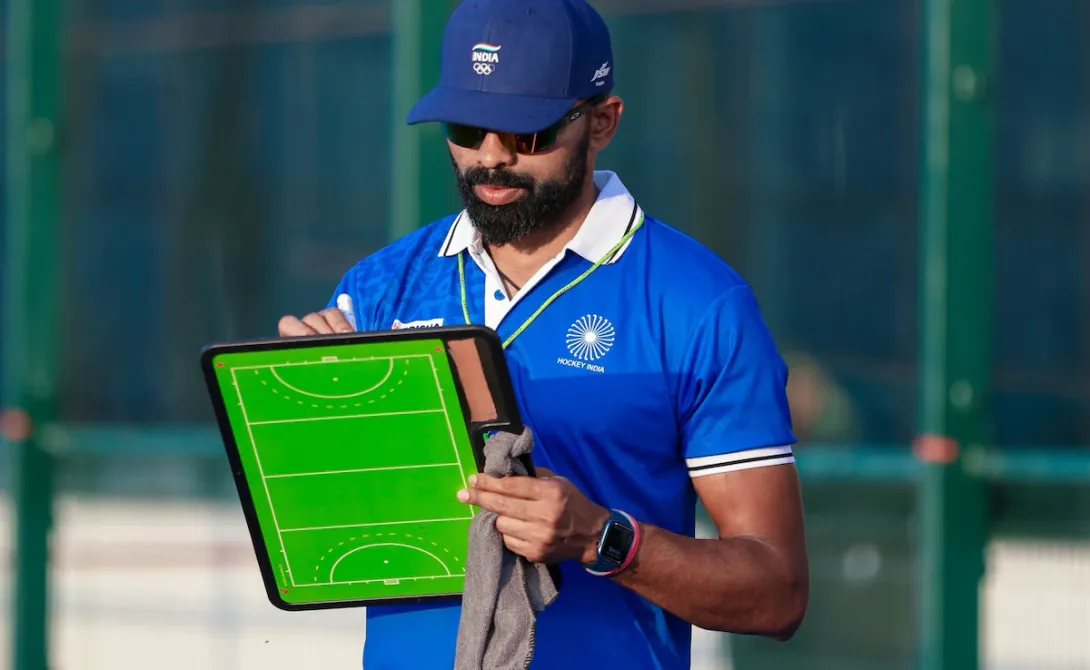
A public disagreement between Indian hockey legend P. R. Sreejesh and Hockey India has sparked fresh debate over governance, succession planning, and the treatment of former athletes within Indian sport. Sreejesh alleged that he was unfairly removed from his role with the junior men’s team to accommodate a foreign coach, triggering widespread discussion across the hockey fraternity. Hockey India president Dilip Tirkey rejected the claims, insisting the federation had repeatedly attempted to retain the former goalkeeper within the national framework. The episode highlights the growing tension between international professionalization and the integration of domestic sporting icons into long-term leadership roles.
A Hockey Icon Voices Discontent
For years, P. R. Sreejesh represented stability, composure, and resilience in Indian hockey. Revered as one of the finest goalkeepers produced by the country in the modern era, he served as India’s defensive backbone through multiple international campaigns and historic victories.
However, the former captain has now become central to an administrative controversy after publicly alleging that his exit from the Indian junior men’s coaching setup was handled unfairly by Hockey India.
His remarks, made shortly after the federation appointed a foreign coach to oversee the junior side, have intensified scrutiny over how Indian sporting institutions manage former athletes transitioning into coaching and administrative roles.
Hockey India Rejects Allegations of Unfair Treatment
Responding to the controversy, Dilip Tirkey dismissed suggestions that Sreejesh had been deliberately sidelined.
According to Tirkey, Hockey India had made several attempts to incorporate the former goalkeeper into the broader national structure following his reportedly successful tenure with the junior men’s program. He maintained that the federation continued to value Sreejesh’s expertise and leadership capabilities.
The federation’s clarification appears aimed at containing growing criticism and reinforcing the perception that administrative decisions are being made in the long-term interests of Indian hockey rather than through personal or political considerations.
Nonetheless, the disagreement has exposed visible cracks in communication between administrators and one of the sport’s most celebrated modern figures.
Foreign Coaching Appointments Trigger Renewed Debate
The dispute has also reignited a familiar debate within Indian sports administration: the balance between importing foreign expertise and empowering domestic talent.
Recent years have seen Indian federations increasingly turn toward international coaches in pursuit of tactical modernization, advanced sports science methodologies, and globally benchmarked training systems. Hockey India’s latest appointment reflects this continuing trend.
Supporters of the federation argue that foreign coaches bring broader international exposure and contemporary technical frameworks necessary to compete at the highest level. However, critics contend that experienced former Indian players possess irreplaceable institutional knowledge, cultural understanding, and emotional connection with the sport’s ecosystem.
For many observers, the situation involving P. R. Sreejesh symbolizes a wider challenge facing Indian sport: how to professionally modernize without marginalizing former athletes who helped build the nation’s competitive legacy.
Transition Management Emerging as a Governance Challenge
The controversy highlights an increasingly important issue across Indian sport — transition management for retired athletes.
Elite athletes often spend decades representing the country before attempting to move into coaching, mentoring, or administrative roles. Yet many federations continue to face criticism for lacking structured pathways that effectively integrate former stars into leadership positions.
Sports governance experts note that successful global sporting systems frequently rely on institutional continuity, where former players become long-term custodians of technical philosophy and athlete development culture.
In this context, the disagreement between Sreejesh and Hockey India has become more than an isolated personnel matter. It now reflects broader concerns about communication, succession planning, and organizational transparency within Indian sporting bodies.
Indian Hockey at a Strategic Crossroads
The timing of the episode is particularly significant given Indian hockey’s recent resurgence on the international stage. The federation has invested heavily in infrastructure, high-performance programs, and youth development systems aimed at sustaining long-term global competitiveness.
As expectations rise, administrative decisions are likely to face greater scrutiny from players, fans, and stakeholders alike.
For Hockey India, maintaining credibility while balancing modernization with institutional loyalty will remain a delicate challenge. For P. R. Sreejesh, the dispute represents a rare moment of public friction in a career otherwise associated with professionalism and national pride.
Beyond the Immediate Dispute
While the immediate disagreement centers on a coaching appointment, its implications extend much further. The episode has reopened an important national conversation about how India values its sporting icons once their playing careers conclude.
As Indian sport becomes increasingly commercialized and professionally managed, federations will likely face growing pressure to create clearer pathways for former athletes, balancing global expertise with domestic experience.
Ultimately, the handling of such transitions may shape not only institutional culture but also the long-term credibility and sustainability of India’s sporting ecosystem.
Comments