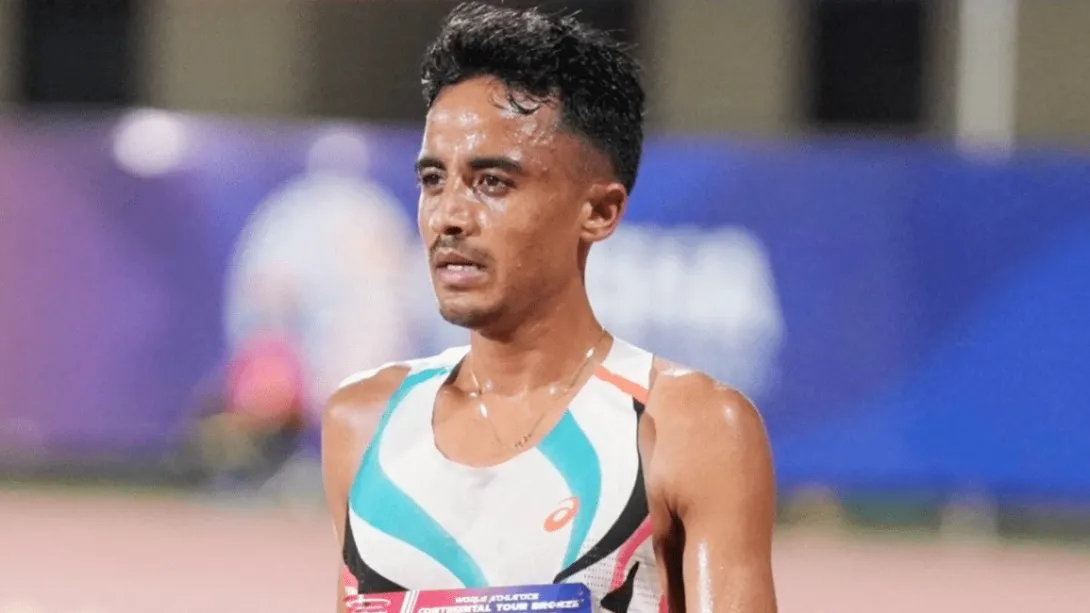
Indian long-distance running reached a historic milestone as Sawan Barwal set a new national record at the NN Marathon Rotterdam, clocking 2:11:58 in the men’s marathon. The performance eclipsed the decades-old benchmark of Shivnath Singh, which had stood since 1978. By becoming the first Indian to break the 2:12 barrier, Barwal signaled a transformative shift in India’s endurance running standards. The achievement reflects improved training ecosystems, growing institutional support, and the increasing global competitiveness of Indian athletics.
A Historic Record Falls After Nearly Five Decades
In a landmark moment for Indian athletics, Sawan Barwal rewrote history by setting a new national marathon record at the NN Marathon Rotterdam. His time of 2:11:58 surpassed the long-standing record held by Shivnath Singh, whose 2:12:00 mark had remained unbeaten since May 28, 1978.
For nearly half a century, Singh’s record symbolized both excellence and stagnation in Indian marathon running. Barwal’s achievement not only breaks that barrier but also redefines the nation’s performance ceiling in endurance sports.
Breaking the 2:12 Barrier: A Symbolic Leap
Crossing the 2:12 threshold carries both symbolic and competitive significance in global marathon running. By becoming the first Indian athlete to achieve this feat, Sawan Barwal has aligned Indian standards more closely with international benchmarks.
This breakthrough reflects advancements in training methodologies, nutrition, and sports science, all of which have contributed to improved athlete performance. It also signals India’s readiness to compete more aggressively on the global endurance stage.
Evolution of Training and Performance Ecosystems
Barwal’s record is not an isolated achievement but the outcome of a gradually evolving athletic ecosystem. Over the past decade, India has seen increased investment in coaching, altitude training, and international exposure for athletes.
Modern training frameworks, coupled with access to global competitions like the NN Marathon Rotterdam, have enabled runners to benchmark themselves against elite international fields. This exposure is critical in bridging the performance gap between Indian athletes and their global counterparts.
Economic and Commercial Implications
The rise of elite marathon performances has broader economic implications for Indian athletics. Record-breaking achievements enhance the marketability of athletes, attracting sponsorships, endorsements, and institutional funding.
With increasing interest in long-distance running events, both at professional and amateur levels, the sector is witnessing growth in participation, event management, and sports tourism. Such developments contribute to a multi-crore (Rs.) expansion in the athletics ecosystem, creating new opportunities for stakeholders across the value chain.
Strategic Outlook: Building on Momentum
Sawan Barwal’s achievement sets a new benchmark for aspiring runners and underscores the importance of sustained investment in endurance sports. The focus now shifts to maintaining this momentum through structured talent identification and high-performance programs.
For policymakers and sports administrators, the challenge lies in converting individual успех into systemic progress, ensuring that India continues to produce athletes capable of competing at the highest levels.
Conclusion
Sawan Barwal’s record-breaking run represents a defining moment in Indian athletics, marking the end of a decades-long plateau and the beginning of a new era. By surpassing the legendary mark set by Shivnath Singh, he has not only achieved personal glory but also elevated the nation’s standing in global marathon running. As India builds on this milestone, the future of its endurance sports landscape appears increasingly promising.
Comments