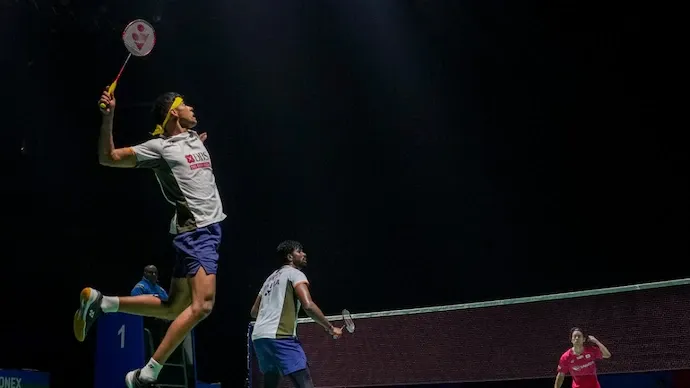
A brief Instagram story from Indian badminton star Satwiksairaj Rankireddy has triggered a nationwide conversation about athlete recognition and the unequal treatment of Olympic sports in India. Posted after the Indian badminton team returned from Denmark with a Thomas Cup bronze medal, the message reflected disappointment over the lack of public or institutional acknowledgment awaiting the players at home. The post rapidly went viral, reigniting debate about cricket’s overwhelming dominance in India’s sporting culture and the relative invisibility faced by athletes from other disciplines. The controversy has highlighted deeper structural issues involving sports governance, media priorities, commercial investment, and the emotional burden carried by elite athletes competing outside cricket’s spotlight.
A Twelve-Word Message That Sparked National Debate
Indian badminton player Satwiksairaj Rankireddy may not have intended to ignite a nationwide sporting debate, yet his brief Instagram story accomplished exactly that.
“Back home now. As usual, no one knows what happened over the past two weeks, and it seems like no one really cares.”
The statement, posted after India’s badminton contingent returned from Horsens, Denmark, with a Thomas Cup bronze medal, resonated deeply across social media and sports communities. Within hours, the post transformed into a larger conversation about recognition, institutional neglect, and the emotional realities faced by athletes competing outside India’s cricket-dominated ecosystem.
According to those present at the team’s arrival, there was little sign of celebration or public acknowledgment. No official welcome, no media frenzy, and no visible crowd greeted a team that had represented India on one of badminton’s biggest international stages.
The silence surrounding their return appeared to weigh heavily on Rankireddy — and eventually, on public consciousness.
Thomas Cup Achievement Overshadowed by Domestic Indifference
India’s bronze-medal finish at the Thomas Cup was a noteworthy achievement in international badminton.
Competing against some of the world’s most established badminton nations, the Indian team once again demonstrated the country’s growing strength in a sport that has steadily evolved into one of India’s most reliable Olympic disciplines.
However, the subdued reception following the team’s return highlighted a recurring problem in Indian sport: achievements in non-cricket disciplines often struggle to sustain public attention once the competition ends.
For many observers, Rankireddy’s message represented frustration accumulated over years rather than disappointment tied to a single event.
Athletes invest enormous physical and emotional energy preparing for international tournaments, often under intense pressure and with limited visibility compared to cricket stars. When such efforts are met with indifference at home, the emotional impact can be significant.
The debate triggered by the post therefore extended far beyond one airport reception.
Cricket’s Commercial Dominance Continues to Shape Visibility
The incident once again underscored the structural imbalance that defines India’s sports economy.
Cricket continues to dominate media coverage, sponsorship investment, fan engagement, and broadcasting revenues at an overwhelming scale. While that dominance has transformed India into one of the global financial centers of cricket, it has also marginalized several Olympic sports despite their international success.
Badminton, wrestling, boxing, athletics, and hockey have all produced elite Indian athletes in recent years, yet many continue to struggle for sustained recognition beyond isolated moments of national celebration.
The contrast becomes especially visible when athletes return from major international events without official receptions or meaningful public acknowledgment.
For critics, the issue is no longer about comparing sports directly but about ensuring equal respect for athletes representing India internationally regardless of discipline.
Rankireddy’s post captured that frustration in its simplest possible form.
Social Media Has Changed Athlete Expression
One reason the message resonated so widely is because social media has fundamentally altered the relationship between athletes and public discourse.
Previous generations of athletes often lacked platforms through which they could express frustration directly to the public. Today, a single post can bypass institutional filters and immediately shape national conversation.
Rankireddy’s statement succeeded precisely because of its brevity and authenticity. It did not appear carefully manufactured or politically calculated. Instead, it reflected raw disappointment from an athlete returning home after representing his country internationally.
That authenticity amplified public reaction.
In modern sport, athletes increasingly use digital platforms not only for branding but also for emotional expression and institutional critique. Supporters, in turn, have become more receptive to conversations surrounding athlete welfare, recognition, and mental fatigue.
The viral response demonstrated how strongly those themes now resonate within India’s sporting audience.
Indian Badminton’s Global Rise Deserves Greater Attention
The controversy is particularly significant given Indian badminton’s extraordinary growth over the past decade.
Once viewed as a niche sport domestically, badminton has evolved into one of India’s strongest international disciplines, producing world-class players capable of challenging traditional powerhouses such as China, Indonesia, and Denmark.
Athletes like Satwiksairaj Rankireddy have been central to that transformation, helping elevate India’s global reputation through consistent international performances.
Success at that level requires years of training, travel, sacrifice, and intense psychological resilience. Yet despite those efforts, badminton athletes frequently operate within far smaller commercial ecosystems compared to cricket.
Recognition therefore becomes more than symbolic. It influences sponsorship opportunities, public engagement, and long-term sustainability for both players and federations.
Recognition Is Now an Economic Issue as Much as a Cultural One
Modern sport functions within a commercial framework where visibility directly shapes financial outcomes.
Public recognition influences endorsement deals, sponsor confidence, media exposure, and overall athlete marketability. In sports outside cricket, such visibility often determines whether athletes can build financially sustainable careers.
This is why debates surrounding acknowledgment matter beyond emotional sentiment.
When international achievements receive limited attention domestically, it affects not only morale but also the broader economic ecosystem supporting Olympic sports in India.
Countries aspiring to become major global sporting powers increasingly recognize that athlete support extends beyond infrastructure and training facilities. It also includes public storytelling, institutional respect, and consistent visibility.
The reaction to Rankireddy’s post suggests many Indians now believe that balance remains incomplete.
The Debate May Fade, but the Problem Remains
As with many viral moments, public attention surrounding the controversy will eventually move elsewhere. Sporting cycles change rapidly, and India’s media landscape rarely remains focused on one issue for long.
Yet the questions raised by Satwiksairaj Rankireddy’s twelve-word message are unlikely to disappear entirely.
How should India recognize athletes competing outside cricket? What responsibility do sporting authorities carry in honoring international achievements? And can the country realistically aspire to become a multi-sport global power while continuing to prioritize visibility so unevenly?
The Thomas Cup bronze medal will remain part of Indian badminton history regardless of reception.
But the emotional reaction surrounding the team’s quiet return has revealed something equally important: for many athletes, the struggle is not only about winning for India.
It is about being remembered once they return home.
Comments