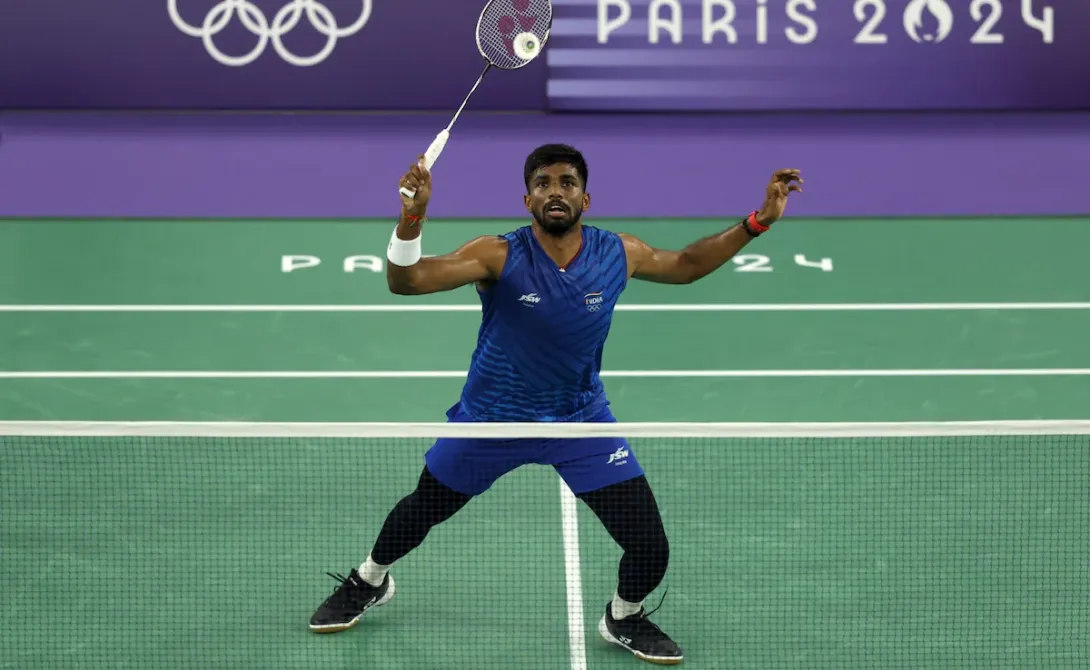
Indian badminton ace Satwiksairaj Rankireddy has intensified the conversation around recognition for Olympic sports after clarifying remarks made following India’s bronze-medal finish at the Thomas Cup 2026 in Denmark. The doubles specialist emphasized that his earlier comments were not motivated by a desire for personal attention but by concern over the limited celebration of achievements outside cricket. His statement has reignited discussions about media visibility, sponsorship inequality, and the broader cultural dynamics shaping Indian sport. As India continues to emerge as a multi-sport nation, the debate highlights the growing demand for equitable acknowledgment of athletes competing successfully on international stages.
Satwiksairaj Clarifies Position After Thomas Cup Reaction
Indian badminton star Satwiksairaj Rankireddy has moved to clarify his recent comments regarding the muted response to India’s bronze-medal performance at the Thomas Cup 2026.
The player, who played a pivotal role in India’s campaign in Horsens, Denmark, had earlier expressed disappointment over what he perceived as insufficient recognition for the team’s achievement. His remarks quickly gained traction across social media and sports circles, sparking wider discussions about the visibility afforded to non-cricket disciplines in India.
In a subsequent social media statement, Satwiksairaj explained that his comments were not intended to seek personal fame or individual validation. Instead, he said the issue reflected a broader need to cultivate a stronger culture of celebrating Indian sporting achievements across all disciplines.
The clarification has shifted attention from individual frustration to a much larger conversation surrounding the evolving identity of Indian sport.
Thomas Cup Bronze Reinforces India’s Badminton Rise
India’s podium finish at the Thomas Cup 2026 further strengthened the country’s growing reputation as a serious force in international badminton.
Over the last decade, Indian badminton has experienced remarkable progress through consistent performances at major global competitions, aided by improved infrastructure, professional coaching systems, and rising institutional investment.
Satwiksairaj has been central to this transformation. Widely regarded as one of the world’s leading doubles players, he has contributed significantly to India’s competitiveness on the international circuit through his aggressive style, tactical awareness, and consistency in high-pressure encounters.
The Thomas Cup medal therefore represented more than a single tournament success. It reflected the continued maturation of India’s badminton ecosystem and its ability to compete against traditional Asian powerhouses.
Recognition Gap in Indian Sports Comes Under Spotlight
The discussion triggered by Satwiksairaj’s comments has once again highlighted a longstanding imbalance within India’s sporting culture.
Despite increasing international success in badminton, athletics, wrestling, boxing, hockey, shooting, and chess, many athletes believe that achievements outside cricket continue to receive comparatively limited public attention and institutional celebration.
This disparity is particularly visible in media coverage and sponsorship allocation. Cricket remains overwhelmingly dominant within India’s commercial sports economy, attracting the majority of broadcasting revenue, advertising investment, and brand endorsements.
While non-cricket sports have witnessed substantial growth in recent years, athletes often argue that international achievements in Olympic disciplines are not consistently celebrated with the same intensity or visibility.
Satwiksairaj’s remarks therefore resonated because they reflected frustrations shared across multiple sporting communities.
Changing Dynamics of India’s Sports Economy
India’s sporting ecosystem has undergone major structural changes over the past decade, gradually evolving into a more diversified and commercially sophisticated industry.
Private investment, league-based competitions, and digital broadcasting platforms have expanded opportunities across several sports beyond cricket. Badminton, in particular, has benefited from increased corporate backing and rising audience engagement, helping players gain greater professional stability.
However, the gap between sporting performance and commercial visibility remains substantial.
Experts within the industry argue that broader recognition is essential not only for athlete morale but also for long-term development. Public attention directly influences sponsorship opportunities, grassroots participation, infrastructure investment, and the overall sustainability of sports ecosystems.
In that context, the debate surrounding recognition extends beyond symbolism. It carries real economic implications for athletes and federations attempting to compete globally.
Social Media Reshapes Athlete Communication
One of the most significant aspects of this episode has been the role of social media in amplifying athlete voices.
Modern athletes increasingly use digital platforms to communicate directly with supporters, clarify positions, and engage in broader public discourse without relying exclusively on traditional media channels.
Satwiksairaj’s follow-up statement demonstrated how social media has become an important space for athletes to frame conversations around institutional issues affecting sport.
Rather than escalating controversy, his clarification attempted to broaden the discussion toward collective national recognition and sporting culture. The response also highlighted the growing confidence among Indian athletes to speak openly about systemic concerns affecting their professions.
India’s Multi-Sport Ambitions Continue to Grow
The timing of the debate is particularly significant as India prepares for a major international sporting cycle that includes the Commonwealth Games 2026 and the Asian Games 2026.
India’s recent performances across Olympic disciplines have raised expectations that the country can establish itself as a consistent multi-sport global competitor rather than relying predominantly on cricket for international sporting identity.
Achieving that ambition, however, will require sustained investment not only in infrastructure and athlete preparation but also in public engagement and media representation.
Industry analysts increasingly believe that building a stronger culture of celebration across sports is essential to maintaining athlete motivation and encouraging future generations to pursue professional careers in diverse disciplines.
Beyond Individual Frustration, a Broader Message Emerges
Ultimately, Satwiksairaj Rankireddy has positioned his remarks as part of a larger conversation about how India values sporting excellence.
His clarification emphasized that the issue was never about individual acclaim but about ensuring that athletes representing the country across disciplines receive acknowledgment proportional to their achievements.
As India’s sporting ambitions continue to expand globally, the demand for more balanced recognition across sports is likely to become increasingly prominent.
The discussion surrounding the Thomas Cup bronze medal may therefore represent more than a temporary controversy. It reflects the growing pains of a sporting nation in transition — one attempting to redefine success beyond the boundaries of a single game while building a more inclusive and internationally competitive sporting culture.
Comments