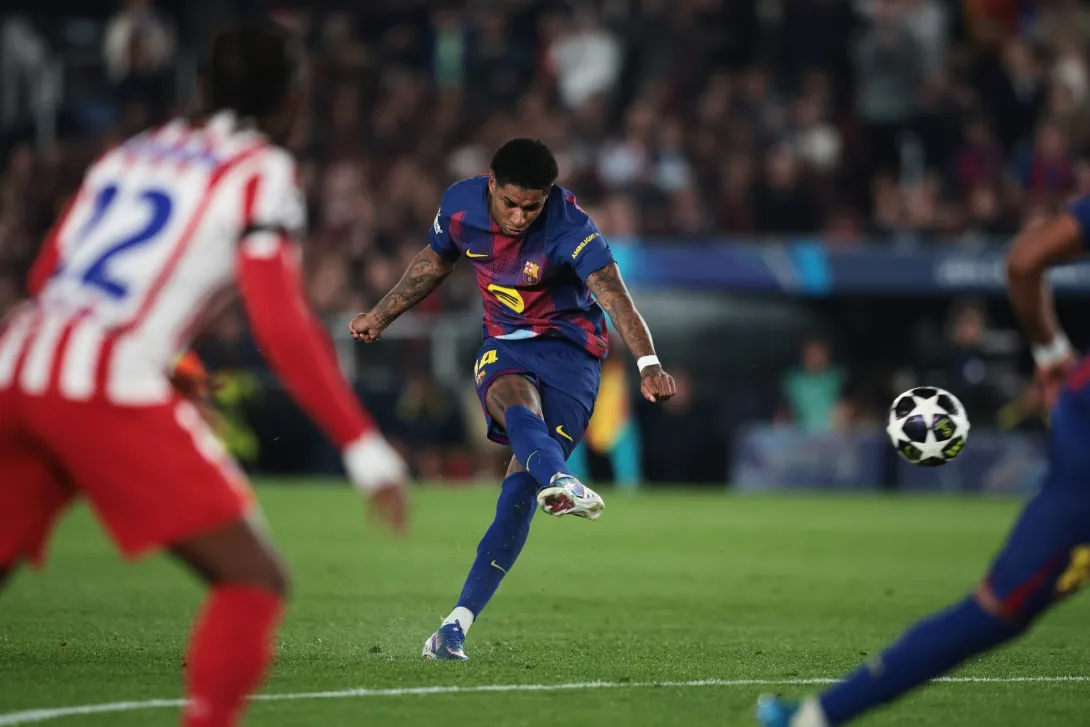
A critical turning point emerged in the high-profile encounter between FC Barcelona and Atlético Madrid as rising defender Pau Cubarsí was shown a red card. The dismissal significantly altered the match’s tactical balance, forcing Barcelona into a defensive posture while granting Atlético Madrid a numerical advantage. Beyond its immediate sporting impact, the incident underscores the broader pressures of elite competition, where split-second decisions carry both performance and commercial consequences. In a globally scrutinized league environment, such moments influence outcomes, team valuations, and strategic planning.
A Defining Moment in a Closely Contested Fixture
The sending-off of Pau Cubarsí introduced a decisive shift in what had been a tightly contested match. Encounters between Barcelona and Atlético Madrid are traditionally characterized by strategic discipline and marginal differences, making any disruption particularly consequential.
With Barcelona reduced to ten men, the team was compelled to recalibrate its approach almost instantly. The red card not only disrupted defensive organization but also curtailed attacking ambitions, allowing Atlético Madrid to seize control of the tempo.
Tactical Reconfiguration Under Pressure
Operating with a numerical disadvantage at the elite level demands swift and calculated adjustments. Barcelona transitioned into a more compact structure, prioritizing damage limitation over expansive play.
Atlético Madrid capitalized on the situation with measured aggression, exploiting spatial advantages while maintaining their characteristic defensive solidity. The episode highlighted how modern football increasingly hinges on adaptability, with tactical flexibility often determining outcomes in high-pressure scenarios.
Commercial and Competitive Ramifications
Matches involving globally recognized clubs such as Barcelona and Atlético Madrid are significant commercial events, drawing substantial broadcast audiences and sponsorship interest. Incidents like a red card can materially influence the narrative and outcome of such fixtures, thereby impacting viewer engagement and associated revenue streams.
From a financial perspective, results in marquee matches can affect league standings, qualification prospects, and prize allocations. These variables, in turn, shape sponsorship valuations and brand equity, reinforcing the interconnected nature of sporting performance and economic outcomes.
Developmental Implications for Emerging Talent
For Pau Cubarsí, the dismissal represents a formative moment in his professional journey. Young players competing at the highest level are often required to navigate intense scrutiny while maintaining composure under pressure.
Such experiences, though challenging, are integral to long-term development. They reinforce the importance of discipline, decision-making, and situational awareness—qualities essential for sustaining success in elite football environments.
Conclusion
The red card shown to Pau Cubarsí serves as a stark reminder of the fine margins that define top-tier football. In a match where tactical precision and mental resilience are paramount, a single moment can reshape both the sporting and commercial narrative. As the season progresses, this incident will stand as a case study in how discipline, adaptability, and high-stakes decision-making intersect in the modern game.
Comments