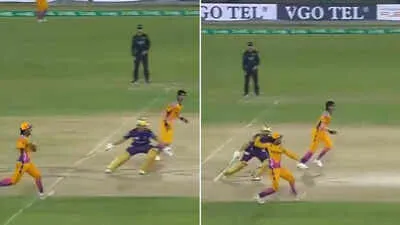
A moment of confusion during a free-hit delivery became the defining highlight of a Pakistan Super League contest, even as Peshawar Zalmi secured a convincing eight-wicket win over Quetta Gladiators. The unusual sequence, marked by a miscommunication between batters and a missed run-out opportunity, underscored the unpredictability of T20 cricket. While the outcome reflected Zalmi’s dominance, the incident drew widespread attention for its dramatic and unconventional nature. Beyond sport, such moments reinforce the commercial appeal of franchise leagues, where unpredictability, high engagement, and rapid storytelling drive audience interest and long-term economic value.
A Free-Hit Moment That Defined the Match
The turning point of the match came during a free-hit delivery, a scenario typically tilted in favor of the batting side. After a waist-high no-ball from Ali Raza, Abrar Ahmed stepped up to capitalize on the opportunity.
Instead of a routine scoring shot, the play devolved into confusion. Abrar gently steered the ball toward backward point and called for a quick single. At the other end, Usman Tariq had already advanced significantly before being asked to retreat. The hesitation created a critical moment of vulnerability.
The fielder initially aimed for a run-out at the striker’s end but abruptly redirected the throw toward the bowler’s end. The miscalculated attempt missed the stumps, allowing Tariq to survive. Under free-hit rules, a run-out remains a legitimate dismissal, making the missed opportunity particularly significant.
Peshawar Zalmi’s Controlled Execution
Despite the brief moment of chaos, Peshawar Zalmi displayed composure and strategic clarity throughout the match. Their eight-wicket victory reflected disciplined batting and efficient chase management.
The team maintained a steady scoring rate, minimizing risk while capitalizing on loose deliveries. Such performances highlight the importance of consistency and situational awareness in T20 formats, where even small lapses can alter outcomes.
Quetta Gladiators and the Cost of Missed Opportunities
For Quetta Gladiators, the match served as a reminder of how critical moments can define results. The failed run-out attempt during the free-hit sequence exemplified a broader inability to convert pressure into breakthroughs.
In high-intensity formats, execution under pressure often determines success. Missed opportunities—whether in the field or with the ball—can shift momentum irreversibly, as evidenced in this encounter.
The Strategic Complexity of Free-Hit Rules
The incident also underscores the nuanced dynamics of free-hit deliveries. While the batting side enjoys protection from most forms of dismissal, exceptions such as run-outs introduce an additional layer of complexity.
This hybrid rule structure demands heightened awareness from both teams. The confusion witnessed in this instance illustrates how even experienced players can misinterpret situations under pressure, reinforcing the need for clear communication and quick decision-making.
Entertainment Value and Commercial Impact
From a business standpoint, such unpredictable moments significantly enhance the appeal of franchise-based cricket. Leagues like the Pakistan Super League thrive on high-engagement content, where dramatic incidents fuel digital conversations and audience retention.
These moments translate into measurable economic value through increased viewership, sponsorship visibility, and social media traction. In an increasingly competitive sports marketplace, unpredictability serves as a key driver of growth and differentiation.
Conclusion: When Chaos Meets Control
The clash between Peshawar Zalmi and Quetta Gladiators encapsulated the dual nature of modern T20 cricket—where calculated strategy coexists with spontaneous drama. While Zalmi’s victory reflected clinical execution, the free-hit chaos provided a reminder of the sport’s inherent unpredictability.
As cricket continues to evolve into a global entertainment product, such moments not only captivate audiences but also reinforce the commercial strength of the format.
Comments