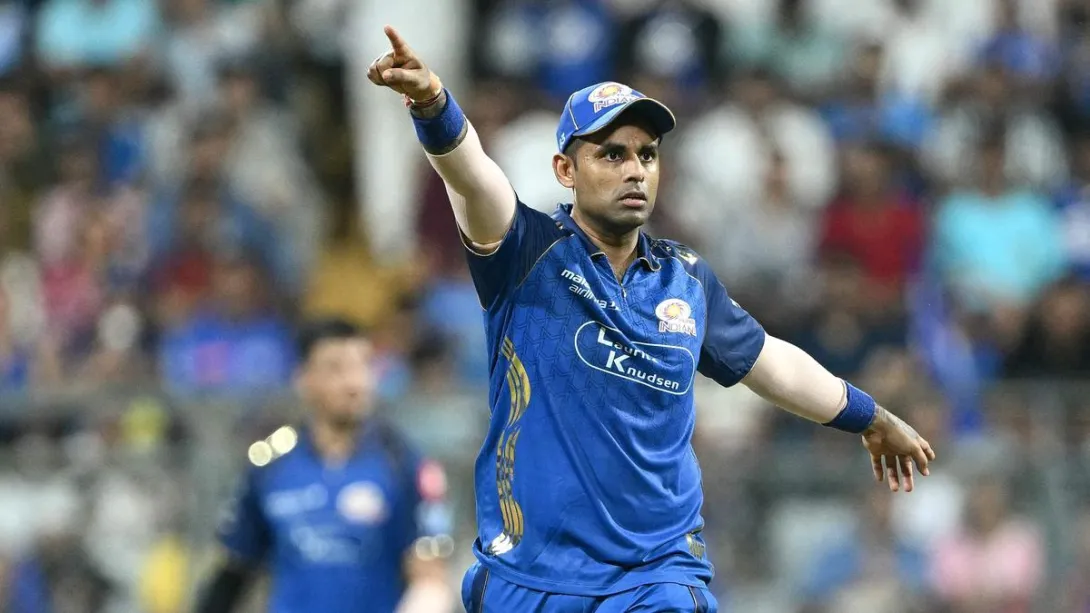
The continued absence of Hardik Pandya has emerged as a significant setback for Mumbai Indians as the Indian Premier League 2026 season enters its decisive stretch. The regular captain missed another fixture after reportedly suffering a back spasm, raising fresh concerns regarding player fitness and leadership stability within the Mumbai camp. Pandya’s absence from pre-match warmups further signaled that the franchise was unwilling to risk aggravating the injury despite mounting playoff pressure. With Mumbai navigating an increasingly competitive points table, the uncertainty surrounding one of their most influential all-rounders has intensified scrutiny over squad depth, workload management, and the physical demands of elite franchise cricket.
Mumbai Indians Continue Without Their Leader
Mumbai Indians once again took the field without captain Hardik Pandya, whose injury concerns continue to cloud the franchise’s campaign.
Pandya had already missed the previous fixture after reportedly experiencing a back spasm, and speculation regarding his return persisted until shortly before the toss. However, his absence during warmup sessions effectively confirmed that the all-rounder remained unavailable for selection.
Reports suggested that Pandya joined the squad late in Raipur, reinforcing indications that the franchise management and medical staff were closely monitoring his physical condition before making a final decision on participation.
In modern T20 cricket, even relatively minor injuries can carry major strategic implications, particularly when they involve players who contribute across multiple disciplines.
Hardik Pandya’s Value Extends Beyond Captaincy
The absence of Hardik Pandya represents more than the loss of a captain for Mumbai. Pandya’s importance lies equally in his dual role as a power hitter and seam-bowling all-rounder, making him one of the most tactically valuable players in franchise cricket.
His ability to influence matches in several phases provides balance to team composition and offers flexibility in bowling rotations and batting strategy. Without him, Mumbai are forced to restructure combinations and redistribute responsibilities across the squad.
Analysts frequently highlight that elite T20 teams are increasingly built around adaptable cricketers capable of performing multiple functions. Replacing such players is often far more complicated than filling a single specialist role.
Pandya’s unavailability therefore affects both Mumbai’s leadership framework and overall tactical structure.
Back Spasm Raises Workload Management Questions
The reported back spasm has once again drawn attention to the growing physical strain placed on high-performance cricketers competing in packed international and franchise calendars.
Fast-bowling all-rounders are particularly susceptible to workload-related injuries due to the repetitive physical stress associated with bowling, explosive batting, and intensive travel schedules. Sports science experts have repeatedly warned that managing recovery periods is becoming increasingly critical in the T20 era.
Franchises are now investing heavily in fitness monitoring systems, rehabilitation protocols, and sports medicine infrastructure to minimise long-term injury risks for marquee players.
Mumbai’s cautious handling of Pandya’s recovery suggests the franchise may be prioritising long-term availability over short-term urgency, particularly given the importance of maintaining fitness for the latter stages of the season.
Mumbai’s Playoff Aspirations Under Pressure
The timing of Pandya’s absence has intensified concerns within the Mumbai Indians camp as the playoff race tightens.
Leadership continuity and tactical stability often become decisive factors during the final weeks of the Indian Premier League season, where margins between qualification and elimination are exceptionally narrow.
While Mumbai possess one of the tournament’s most experienced squads, the prolonged absence of a central figure such as Pandya inevitably alters dressing-room dynamics and strategic planning.
Cricket analysts note that successful playoff campaigns generally depend on maintaining a stable leadership structure alongside consistent player availability.
IPL Continues to Highlight Demands of Modern Franchise Cricket
Pandya’s situation reflects a broader reality confronting modern professional cricket: balancing commercial intensity with athlete sustainability.
The Indian Premier League has evolved into one of the world’s most demanding sporting competitions, requiring elite athletes to maintain peak performance under relentless scheduling and scrutiny.
For franchises, protecting marquee players has become as strategically important as match preparation itself. Injuries not only affect competitive performance but also influence commercial visibility, fan engagement, and overall team momentum.
As Mumbai Indians await greater clarity regarding Hardik Pandya’s fitness status, the episode serves as another reminder that in contemporary T20 cricket, managing physical endurance has become inseparable from achieving sporting success.
Comments