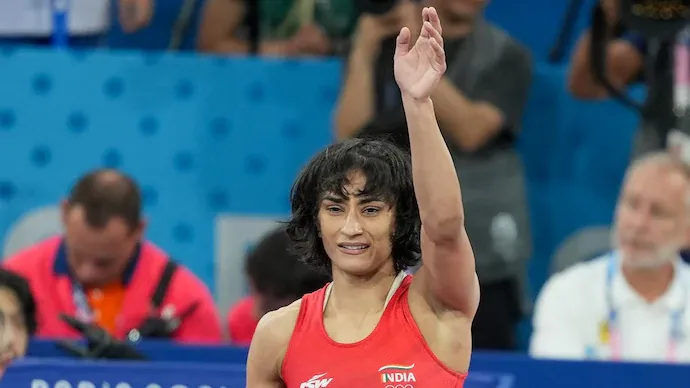
The comeback of Vinesh Phogat to competitive wrestling has developed into a high-profile institutional confrontation with the Wrestling Federation of India, intensifying scrutiny over governance practices in Indian sport. Ahead of the National Open Ranking Tournament in Gonda, the celebrated wrestler publicly contested a showcause notice issued by the federation, alleging that officials had incorrectly interpreted the timeline related to her return and eligibility status. The dispute has quickly expanded beyond a procedural disagreement, highlighting broader concerns surrounding transparency, athlete rights, and administrative accountability. With Indian wrestling already under public and regulatory scrutiny, the latest controversy threatens to deepen tensions between elite athletes and governing authorities.
Wrestling Comeback Overshadowed by Administrative Conflict
The expected return of Vinesh Phogat to domestic competition was initially viewed as an important moment for Indian wrestling, particularly ahead of a critical competitive cycle.
Instead, the focus has shifted toward a growing confrontation between the athlete and the Wrestling Federation of India. The federation issued a showcause notice questioning elements connected to Phogat’s comeback and competitive eligibility, triggering a sharp public response from the wrestler.
Phogat rejected the federation’s interpretation of events and argued that the timeline surrounding her return had been inaccurately presented. Her response transformed what may have remained an internal administrative matter into a nationally discussed governance issue.
The development once again placed Indian wrestling under intense public attention, not for sporting performance, but for institutional controversy.
Governance Concerns Intensify Around WFI
The latest dispute arrives during a period when the Wrestling Federation of India continues to face broader questions regarding governance standards, administrative transparency, and athlete management.
Sports governance specialists note that modern sporting institutions are increasingly evaluated not only by competitive outcomes but also by their ability to maintain procedural clarity and effective communication with athletes.
In high-profile cases involving internationally recognised competitors such as Phogat, administrative conflicts can rapidly evolve into reputational challenges for governing bodies.
Analysts argue that federations operating in today’s media environment must balance regulatory enforcement with transparent and professionally managed athlete relations. Failure to do so often risks public distrust and prolonged institutional instability.
Athlete Advocacy Changing the Power Dynamic
As one of India’s most recognisable wrestlers, Vinesh Phogat carries significant influence within the country’s sporting ecosystem. Her willingness to publicly challenge the federation reflects a wider transformation occurring across global sport, where athletes are increasingly asserting their rights and demanding greater accountability from governing authorities.
The era when federations exercised unilateral authority with minimal public scrutiny has weakened considerably. Elite athletes now possess powerful public platforms capable of shaping narratives, influencing opinion, and drawing attention to governance concerns.
Industry observers believe this evolving balance of power is forcing sporting institutions to modernise communication strategies and strengthen procedural transparency in order to maintain credibility.
National Tournament Faces Unwanted Distraction
The controversy has also overshadowed preparations for the National Open Ranking Tournament in Gonda, an event carrying major implications for wrestler selection pathways and future competition opportunities.
Instead of attention focusing solely on athletic performance and competitive readiness, the conversation surrounding the tournament has become dominated by administrative disputes and eligibility interpretation.
Such situations can negatively affect the sporting environment by increasing uncertainty among athletes and reducing confidence in institutional processes. Experts frequently warn that repeated governance disputes risk discouraging emerging talent and undermining the professional image of the sport.
Broader Implications for Indian Sports Administration
The standoff between Vinesh Phogat and the Wrestling Federation of India reflects larger structural tensions within Indian sports administration.
As Indian sport becomes more commercially valuable and internationally visible, federations are under growing pressure to operate with stronger compliance standards, clearer governance mechanisms, and more athlete-centric management systems.
Experts suggest that the outcome of the current dispute could shape future approaches to eligibility disputes, athlete communication protocols, and disciplinary procedures across multiple sporting disciplines.
For Phogat, the issue concerns professional integrity and fair treatment during a sensitive phase of her career. For the federation, it represents another significant governance test at a time when public accountability and institutional credibility remain under intense examination.
Comments