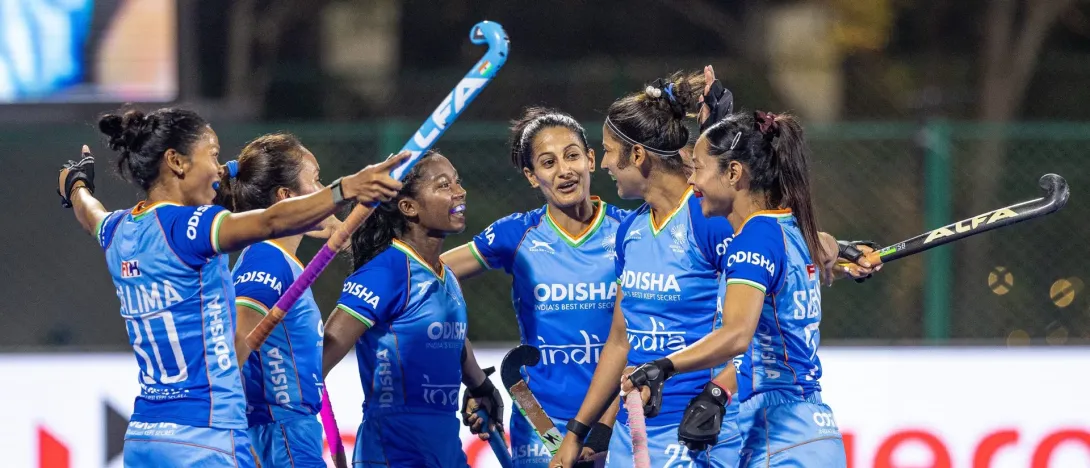
Hockey India has announced a Senior Women’s National Coaching Camp from May 11 to May 20, 2026, as part of an extensive preparation strategy for a crucial international season. The camp will precede the Indian team’s exposure tour of Australia ahead of the FIH Nations Cup in Auckland, New Zealand, scheduled from June 15 to June 21. The preparatory phase is also designed to strengthen India’s readiness for two major global events later this year — the FIH Hockey Women’s World Cup in Belgium and the Netherlands and the 2026 Asian Games in Japan. The initiative reflects Hockey India’s increasing emphasis on long-term planning, competitive conditioning, and international performance consistency.
Hockey India Begins Intensive Preparations for Crucial International Campaign
Hockey India has initiated a major preparatory phase for the national women’s team by confirming a Senior Women’s National Coaching Camp from May 11 to May 20, 2026.
The camp arrives at a strategically important period for Indian women’s hockey, with the national side preparing for an exceptionally demanding international calendar that includes the FIH Nations Cup, the Women’s Hockey World Cup, and the Asian Games later this year.
Officials view the camp as a foundational stage in the team’s broader performance roadmap, particularly as India aims to maintain its growing competitiveness on the global stage.
Following the domestic training phase, the squad will travel to Australia for an exposure tour intended to sharpen match readiness before the FIH Nations Cup in Auckland, New Zealand, from June 15 to June 21.
The sequence of preparation highlights Hockey India’s increasingly structured approach toward elite tournament planning.
Australia Exposure Tour Seen as Key Tactical Preparation
The Australian exposure tour is expected to serve as a critical component of India’s competitive build-up.
International exposure programs have become essential in modern hockey, particularly for teams seeking to improve adaptability against fast-paced and tactically sophisticated opponents. Australia remains one of the world’s strongest hockey environments, offering India an opportunity to test tactical systems, squad combinations, and physical conditioning against high-intensity competition.
For the coaching staff, the tour will provide valuable insight into player form, defensive organization, transition play, and fitness standards before entering a high-pressure tournament cycle.
Equally important is the psychological preparation such tours provide. Competing abroad under demanding conditions helps athletes adjust to international match tempo and strengthens mental resilience ahead of elite tournaments.
The Australian leg of preparation therefore carries significance beyond practice matches alone.
Nations Cup Represents More Than a Standalone Tournament
The FIH Nations Cup in Auckland is viewed internally as a strategically important event within India’s larger 2026 campaign.
Beyond rankings and international visibility, the tournament offers a valuable opportunity to assess squad depth and tactical flexibility before the Women’s Hockey World Cup later in the year.
Modern international hockey schedules require careful management of player workload, recovery cycles, and rotational planning. Tournaments such as the Nations Cup allow teams to evaluate combinations under real match pressure while refining systems ahead of larger competitions.
For India, a strong performance in New Zealand could also generate crucial momentum and confidence heading into the World Cup phase.
The tournament will likely serve as both a competitive objective and a performance benchmark for the national setup.
World Cup and Asian Games Define India’s Long-Term Ambitions
While the immediate focus remains on the Nations Cup, Hockey India’s broader strategic planning is centered around two marquee international events later in the year.
The FIH Hockey Women’s World Cup, scheduled in Belgium and the Netherlands from August 15 to August 30, represents one of the sport’s most prestigious global competitions. India will aim to build on recent international progress and establish itself as a consistent contender among the world’s leading hockey nations.
Shortly after the World Cup, the Indian team will participate in the 2026 Asian Games in Japan from September 19 to October 4.
The Asian Games carry enormous sporting and institutional significance for Indian hockey. Success at the continental level influences Olympic qualification pathways, athlete funding structures, federation confidence, and long-term development planning.
As a result, Hockey India’s current preparation strategy appears designed not merely for isolated tournament performance but for sustained competitiveness across a compressed international calendar.
Indian Women’s Hockey Continues Its Evolution
Indian women’s hockey has undergone a remarkable transformation over the past decade.
Once operating on the margins of mainstream sporting attention, the women’s team has gradually developed into one of India’s most respected Olympic disciplines through improved infrastructure, fitness programs, international exposure, and coaching systems.
The latest training initiative reflects a growing institutional commitment to sustaining that upward trajectory.
Unlike earlier eras when preparation cycles were often reactive or tournament-specific, Hockey India now appears increasingly focused on long-term performance continuity. This shift mirrors global high-performance sports models where structured planning, centralized camps, and sports science integration form the foundation of international competitiveness.
Maintaining consistency at the elite level, however, remains one of the most difficult challenges in international sport.
The coming months will therefore test not only player quality but also the effectiveness of India’s evolving preparation systems.
Structured High-Performance Planning Gains Importance
The design of the coaching camp reflects broader changes in international sports management.
Elite federations across the world increasingly emphasize integrated preparation systems involving tactical analytics, recovery science, conditioning protocols, and mental-performance training alongside technical development.
For women’s hockey, where the speed and physical intensity of the game continue to rise globally, systematic preparation has become indispensable.
Hockey India’s scheduling decisions suggest a stronger alignment with these modern high-performance standards.
The emphasis on exposure tours, centralized camps, and phased preparation indicates a federation attempting to build sustainable international competitiveness rather than relying on short-term momentum.
A Defining Competitive Cycle Lies Ahead
The 2026 season could become one of the most important periods in the recent history of Indian women’s hockey.
With three major international assignments approaching in rapid succession, the national team faces an opportunity to further elevate India’s global standing while also testing the maturity of its evolving sporting ecosystem.
Success during this cycle would strengthen confidence in Hockey India’s long-term developmental approach and reinforce India’s position among emerging powers in international women’s hockey.
The upcoming coaching camp may appear routine on the surface, but its significance extends far beyond ten days of training.
It marks the beginning of a carefully calibrated campaign aimed at converting preparation, structure, and international exposure into sustained competitive success on the global stage.
Comments