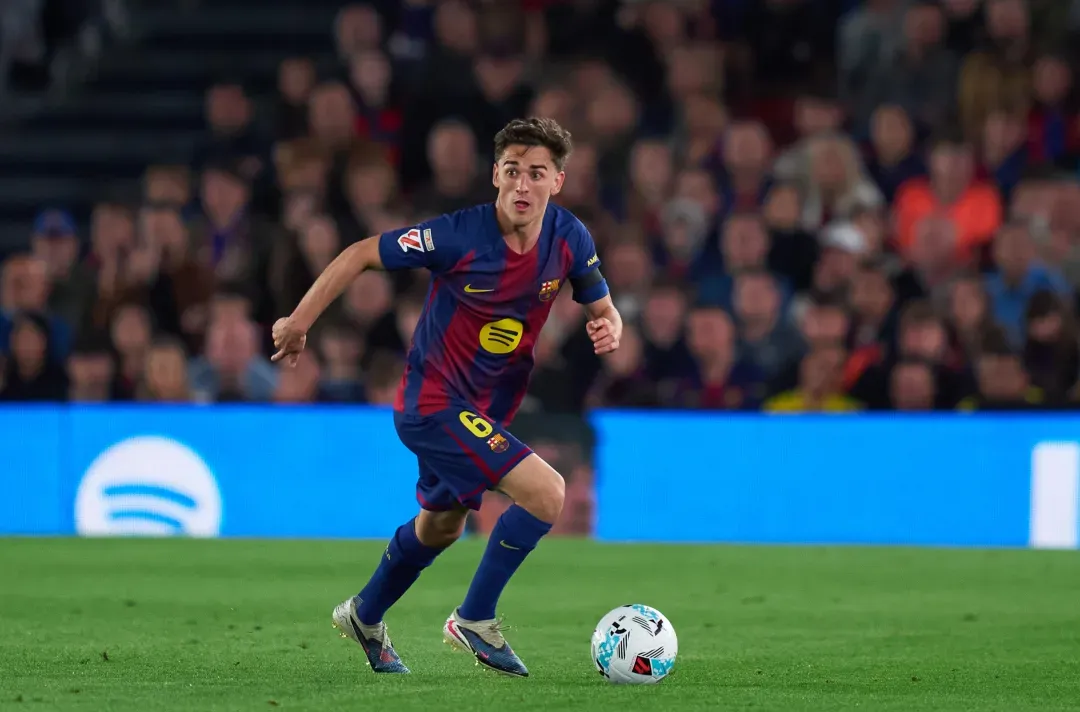
Barcelona head into Sunday’s Clasico against Real Madrid with a golden opportunity to secure the LaLiga title with three matches still remaining in the season. Hansi Flick’s side requires only a draw to mathematically confirm the championship, while Real Madrid arrive under mounting pressure following inconsistent domestic performances, a UEFA Champions League exit, and reported dressing-room tensions. Preparations for the high-profile encounter have reportedly been disrupted by a training-ground altercation involving Federico Valverde and Aurélien Tchouaméni, leaving Valverde unavailable through injury. The contrasting momentum of Spain’s two football giants has intensified anticipation around a fixture that could redefine the competitive balance in Spanish football.
Barcelona Close to Completing Domestic Dominance
Barcelona stand on the verge of reclaiming supremacy in Spanish football as they prepare for a potentially title-deciding Clasico against Real Madrid on Sunday evening.
The Catalan club requires only a draw to secure the LaLiga championship with three games remaining, underlining the consistency and tactical control the team has displayed throughout the campaign under manager Hansi Flick.
After several seasons marked by financial instability, managerial uncertainty, and rebuilding phases, Barcelona’s resurgence this season has represented both a sporting and institutional recovery. The team has combined defensive organization with attacking efficiency, allowing them to establish a commanding position at the top of the table.
Winning the title directly against Real Madrid would carry enormous symbolic value, reinforcing Barcelona’s re-emergence as the dominant force in Spanish domestic football.
Real Madrid Face Growing Internal and Competitive Pressure
Real Madrid enter the Clasico amid one of their most turbulent periods of the season.
Preparations for the decisive encounter have reportedly been overshadowed by a training-ground altercation involving Federico Valverde and Aurélien Tchouaméni. The incident is understood to have resulted in Valverde sustaining a head injury significant enough to rule him out of the match.
The absence of the Uruguayan midfielder represents a major setback for Madrid, given his importance to the side’s intensity, defensive transitions, and midfield balance.
Beyond the immediate sporting impact, the reported confrontation has fueled speculation surrounding tensions within the squad during a period of mounting pressure and disappointing results.
At elite clubs such as Real Madrid, internal instability often attracts substantial scrutiny, particularly when performances on the pitch begin to decline simultaneously.
Champions League Exit Intensifies Scrutiny
Madrid’s difficulties have extended beyond domestic competition.
The club’s elimination from the UEFA Champions League at the hands of Bayern Munich significantly increased pressure on both the players and coaching staff. European competition remains central to Real Madrid’s institutional identity, and failure in the tournament frequently reshapes public and media expectations surrounding the season.
Compounding those frustrations, Madrid have also dropped crucial points in LaLiga against Mallorca, Real Betis, and Girona in recent weeks, weakening their ability to sustain pressure on Barcelona at the top of the standings.
The combination of European disappointment and domestic inconsistency has created an atmosphere of uncertainty ahead of the most politically and emotionally charged fixture in Spanish football.
Hansi Flick’s Influence Reshapes Barcelona
A major factor behind Barcelona’s transformation has been the managerial influence of Hansi Flick.
The German coach has brought tactical discipline, structural balance, and improved game management to a squad that previously struggled with inconsistency in decisive moments. Under Flick, Barcelona have developed a clearer footballing identity centered on pressing intensity, positional control, and defensive cohesion.
Equally important has been the successful integration of younger players alongside established stars, allowing Barcelona to build both short-term competitiveness and long-term sustainability.
The possibility of clinching the title at the Santiago Bernabéu would further strengthen confidence in Flick’s project and provide institutional validation for Barcelona’s rebuilding strategy.
Clasico Holds Major Financial Significance
While the sporting rivalry dominates public attention, Sunday’s encounter also carries substantial financial and commercial implications.
For Barcelona, securing the LaLiga title would reinforce global brand momentum during a period in which the club continues to stabilize its financial position. Sporting success remains critical for attracting sponsorship revenue, strengthening commercial partnerships, and enhancing global marketability.
For Real Madrid, failure to disrupt Barcelona’s title celebrations could increase pressure surrounding transfer planning, squad investment, and future strategic decisions ahead of the summer window.
Modern elite football operates within an economic ecosystem where competitive success directly influences commercial valuation, broadcasting influence, and institutional leverage. As a result, the Clasico represents not only a sporting battle but also a contest with broader business consequences.
Tactical Dynamics Could Shape the Outcome
From a footballing perspective, the match is expected to revolve around midfield control and psychological composure.
Barcelona have excelled this season when dominating possession and maintaining compact defensive structures. Their ability to dictate tempo has frequently neutralized opposition attacks while maximizing efficiency in transition.
Real Madrid, by contrast, have struggled recently with defensive organization and consistency during key phases of matches. Valverde’s absence may further weaken Madrid’s ability to compete physically in midfield, particularly against Barcelona’s aggressive pressing system.
However, Clasico fixtures historically transcend conventional form analysis. Real Madrid’s attacking quality and experience in high-pressure situations ensure they remain capable of producing decisive moments despite recent instability.
A Potential Turning Point in Spanish Football
Sunday’s Clasico may ultimately be remembered as a defining moment in the evolving balance of power within Spanish football.
For Barcelona, the fixture presents an opportunity to complete a remarkable domestic campaign while signaling the beginning of a new competitive era under Hansi Flick.
For Real Madrid, the match represents both a final opportunity to delay Barcelona’s coronation and a chance to restore credibility after a difficult month marked by setbacks on and off the pitch.
The emotional and institutional stakes surrounding the encounter extend far beyond league points alone. Managerial authority, squad morale, transfer strategy, and public perception are all likely to be influenced by the outcome.
As two of football’s most powerful global institutions prepare to collide once again, the Clasico arrives not merely as a rivalry match, but as a contest that could shape the future trajectory of Spanish football itself.
Comments