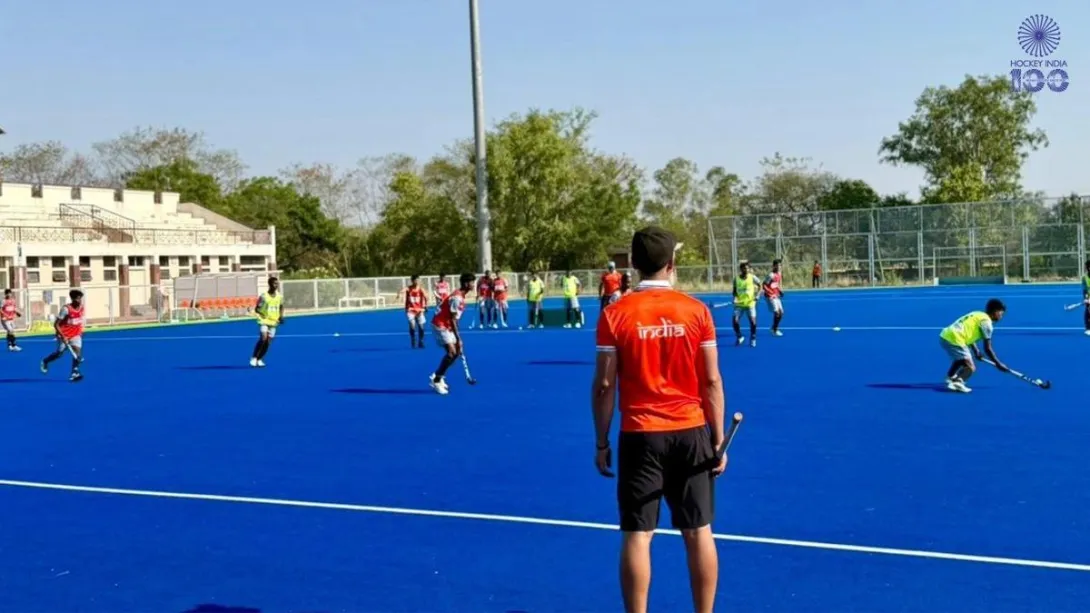
Hockey India has unveiled the 24-member Indian Under-18 men’s and women’s squads for the upcoming home series against Australia U-18 Hockey Team, scheduled from May 15 to 20. The series is expected to serve as a critical developmental platform for India’s emerging hockey talent as the country continues investing heavily in youth programs and international exposure. Facing one of the world’s most established hockey systems will offer Indian players valuable competitive experience ahead of future global tournaments. The announcement also reflects Hockey India’s broader long-term strategy of strengthening grassroots structures and creating a sustainable pipeline of elite players for international success.
Hockey India Focuses on Youth Development With Australia Series
Hockey India on Thursday announced the Indian Under-18 men’s and women’s squads for the upcoming bilateral home series against Australia U-18 Hockey Team.
The six-day series, scheduled from May 15 to May 20, is being viewed as an important step in India’s long-term hockey development framework, with selectors and coaching staff aiming to evaluate the next generation of talent under international competitive conditions.
The decision to organize a home series against Australia reflects India’s growing emphasis on exposing young athletes to elite-level opposition at an early stage of their careers.
For Indian hockey, such developmental tours and bilateral contests are increasingly becoming essential components of strategic planning rather than merely preparatory events.
Australia Challenge Seen as Crucial Competitive Test
Competing against Australia U-18 Hockey Team presents a significant challenge for India’s junior players.
Australia has long maintained one of the strongest hockey ecosystems globally, known for its physical intensity, tactical discipline, and highly structured player development programs. For India’s Under-18 squads, the series offers an opportunity to measure themselves against internationally respected standards.
The matches are expected to test not only technical ability but also adaptability, decision-making, and mental resilience under pressure — qualities regarded as increasingly important in modern international hockey.
Youth-level exposure against strong opposition often plays a decisive role in accelerating player maturity and preparing athletes for the demands of senior international competition.
Indian Hockey’s Grassroots Push Gains Momentum
The squad announcement also underlines the broader transformation underway within Indian hockey’s developmental structure.
Over recent years, India has expanded investments in grassroots programs, academy systems, sports science integration, and talent scouting networks aimed at identifying and nurturing young players across the country.
This long-term approach reflects lessons learned from leading hockey nations, where sustained success is built on robust junior pathways rather than isolated senior-level achievements.
Officials within Hockey India increasingly view junior international exposure as critical to maintaining India’s competitiveness at major global events, including the Olympics, World Cup, and continental championships.
The Australia series is therefore expected to serve both as a performance assessment exercise and a developmental milestone for emerging athletes.
Women’s Hockey Program Continues Strategic Growth
One of the most notable aspects of India’s recent hockey progress has been the rapid development of the women’s game.
The inclusion of a strong Under-18 women’s squad for the Australia series reflects the federation’s increasing commitment toward gender-balanced investment and long-term player development.
Indian women’s hockey has witnessed significant international progress over the last decade, creating greater public visibility and inspiring higher participation levels at junior stages. Administrators are now focused on ensuring that this momentum translates into sustained global competitiveness.
International exposure at the Under-18 level is considered especially valuable for young female athletes, helping accelerate tactical understanding and competitive confidence against high-quality opposition.
The series against Australia is therefore expected to play an important role in shaping the future depth of India’s women’s hockey program.
Commercial Interest in Hockey Continues to Expand
India’s continued investment in junior hockey also aligns with the sport’s improving commercial outlook.
Although cricket remains the dominant force within India’s sports economy, hockey has gradually regained visibility due to strong international performances, digital media growth, and increasing corporate engagement with Olympic sports.
Broadcasters and sponsors are increasingly recognizing the value of supporting developmental structures capable of producing globally competitive athletes. Junior international events contribute to this narrative by generating audience engagement while strengthening the sport’s long-term brand identity.
Industry experts believe that sustained grassroots investment is now essential not only for sporting success but also for enhancing commercial viability and fan engagement across generations.
International Exposure Becomes Essential in Modern Hockey
Modern hockey has evolved into a highly sophisticated sport shaped by analytics, conditioning, tactical systems, and rapid transitions.
As competition intensifies globally, federations are placing greater emphasis on preparing athletes for international environments from an early age. Bilateral junior series such as the upcoming Australia contest provide young players with practical experience that domestic tournaments alone cannot replicate.
Exposure to different playing styles, high-pressure match situations, and elite tactical structures helps accelerate development while allowing coaches to identify areas requiring improvement.
For India, strengthening this international learning process has become central to long-term sporting ambitions.
Future National Players Set for Important Opportunity
For many players selected in the Under-18 squads, the upcoming series could represent a defining moment in their sporting journey.
Strong performances against Australia may influence future national team selection pathways and provide valuable confidence heading into larger international competitions. Historically, several senior Indian hockey stars first established themselves during junior international assignments similar to this series.
The announcement by Hockey India therefore carries importance far beyond a routine squad release. It symbolizes India’s continued commitment to building sustainable excellence through structured youth development and international exposure.
As Indian sport continues to diversify and modernize, hockey’s emphasis on nurturing emerging talent reflects a broader national shift toward long-term high-performance planning and global competitiveness.
Comments