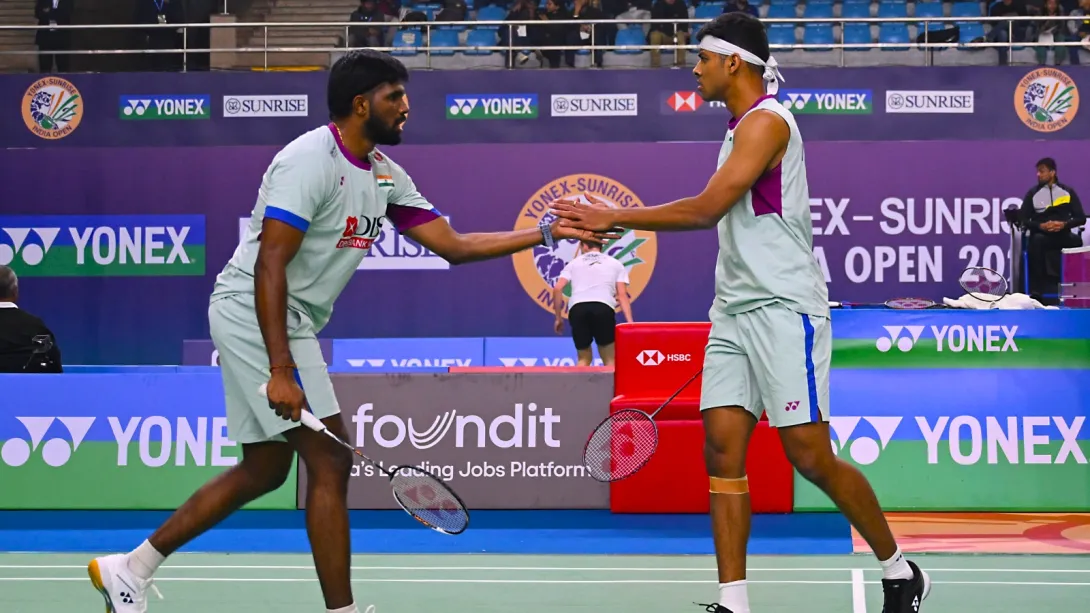
India’s top badminton players have publicly expressed frustration over the muted recognition following their performances at the Thomas Cup. Despite securing a bronze medal and having previously clinched gold in 2022, athletes including HS Prannoy, Chirag Shetty, and Satwiksairaj Rankireddy have highlighted a lack of public appreciation. Their remarks underscore broader concerns about India’s sports economy, where achievements outside cricket often fail to generate proportional visibility, commercial value, or societal acknowledgment, raising questions about long-term investment and athlete morale.
A Global Title, A Domestic Blind Spot
The Thomas Cup represents the highest level of international team competition in badminton, often regarded as the sport’s equivalent of a World Cup. However, as HS Prannoy pointedly observed, its branding and perception in India fail to reflect that stature.
This disconnect is not merely semantic. In a country where sporting relevance is often tied to visibility, nomenclature influences public engagement. The absence of a “World Cup” label arguably diminishes the tournament’s perceived prestige, limiting its resonance with a broader audience and, by extension, its commercial scalability.
Recognition as an Economic Multiplier
For Chirag Shetty, the issue transcends symbolic gestures. He emphasized that athletes are not seeking elaborate receptions or ceremonial fanfare, but rather consistent acknowledgment of their achievements.
In financial terms, recognition functions as a multiplier. Public visibility enhances an athlete’s brand equity, attracting sponsorships, endorsements, and media rights opportunities. Without adequate recognition, even globally competitive athletes risk remaining undervalued within India’s sports marketplace. This undercuts not only individual earning potential but also the broader commercial ecosystem surrounding non-cricket sports.
Emotional Fallout and Questions of Legacy
The most striking sentiment emerged from Satwiksairaj Rankireddy, whose reaction reflected deep emotional disillusionment. His assertion that he would hesitate to encourage his children to pursue badminton signals a profound erosion of faith in the system.
Such remarks carry implications beyond personal frustration. They highlight a systemic issue where sustained excellence does not guarantee societal validation. Over time, this could deter emerging talent, weakening the sport’s developmental pipeline and undermining India’s competitive prospects on the global stage.
Institutional Support Versus Cultural Engagement
The interaction, facilitated by the Sports Authority of India, illustrates a critical imbalance. While institutional frameworks have strengthened—providing athletes with training infrastructure, funding, and international exposure—the cultural ecosystem has not evolved at the same pace.
This divergence underscores a key challenge: policy-driven progress cannot fully compensate for a lack of organic public engagement. Media narratives, grassroots awareness, and fan culture must align with institutional efforts to create a sustainable and inclusive sports economy.
Redefining India’s Sporting Priorities
The concerns raised by HS Prannoy, Chirag Shetty, and Satwiksairaj Rankireddy reflect a pivotal moment in India’s sporting evolution. As the nation aspires to diversify its athletic success, it must also recalibrate how it values achievement across disciplines.
Recognition is not merely an emotional reward; it is an economic and cultural imperative. Without it, even historic victories risk fading into obscurity—leaving behind not celebration, but a growing sense of neglect among those who have carried the nation’s flag to global podiums.
Comments