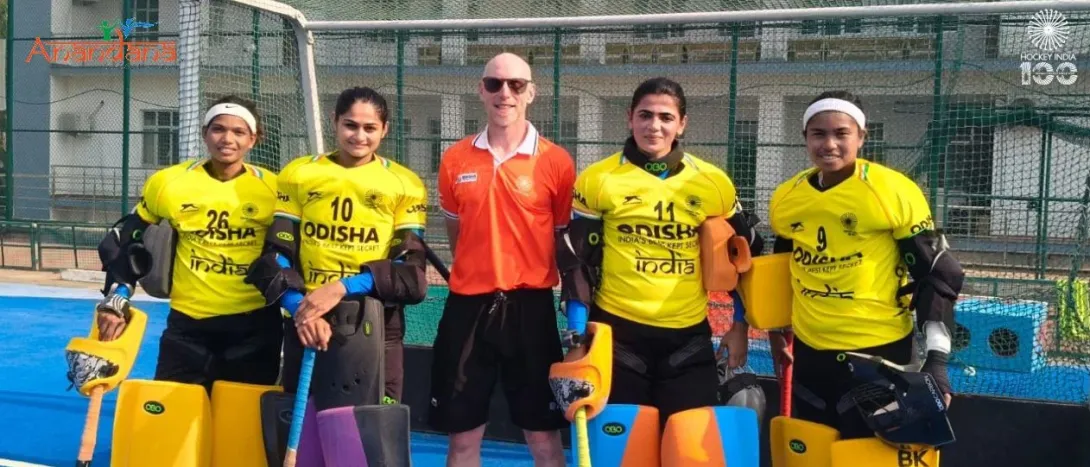
A high-intensity goalkeeping camp for the Indian Women’s Hockey Team concluded in Bengaluru on May 2, 2026, marking a focused effort to strengthen a critical position in elite hockey. Conducted over 11 days from April 22, the program was led by specialist coach David Williamson under the supervision of Chief Coach Sjoerd Marijne. Backed by Anandana, the Coca-Cola India Foundation, the initiative reflects a growing synergy between corporate philanthropy and sports performance. The camp emphasized technical refinement, mental conditioning, and tactical awareness, reinforcing India’s long-term ambitions to build a resilient, globally competitive women’s hockey program.
Targeted Training at the Core of High Performance
The conclusion of the specialized goalkeeping camp at the Sports Authority of India (SAI) facility in Bengaluru underscores a deliberate shift toward position-specific excellence in Indian women’s hockey. Over an 11-day period beginning April 22, national-level goalkeepers underwent rigorous training tailored to the demands of modern international play.
David Williamson, a globally respected goalkeeping coach, led the sessions with a sharp focus on reflex development, anticipation, and in-game adaptability. The program was structured to simulate high-pressure match scenarios, ensuring that athletes are better equipped to respond to the unpredictable dynamics of elite competition.
Leadership Alignment and Tactical Cohesion
Chief Coach Sjoerd Marijne’s oversight ensured that the camp’s objectives remained aligned with the broader tactical blueprint of the national team. His involvement signals an integrated approach to athlete development, where specialized training is not isolated but embedded within the team’s overall strategy.
This alignment is particularly crucial in hockey, where goalkeepers serve as both the last line of defense and the first point of attack transition. Enhancing their decision-making capabilities has a cascading effect on the team’s defensive solidity and counterattacking efficiency.
Corporate Sponsorship and the Economics of Excellence
The backing of Anandana, the Coca-Cola India Foundation, highlights the increasing role of corporate social responsibility in advancing India’s sports infrastructure. While no direct financial disclosures were made, such initiatives typically involve substantial investment in coaching expertise, logistics, and athlete support systems.
From a business perspective, these partnerships represent a dual-value proposition. They contribute to national sporting success while enhancing brand visibility and social impact metrics for corporate stakeholders. As India aims to elevate its global sporting footprint, private-sector participation is becoming an indispensable pillar of growth.
Building Depth and Competitive Resilience
Beyond immediate skill enhancement, the camp served as a strategic platform to build depth within the goalkeeping unit. In a sport where margins are razor-thin, having multiple high-caliber goalkeepers is essential for sustaining performance across tournaments and mitigating injury risks.
The emphasis on data-driven training methodologies and performance analytics reflects a broader modernization of India’s hockey ecosystem. By adopting global best practices, the program aims to close the gap with top-tier hockey nations and ensure consistent international competitiveness.
A Forward-Looking Blueprint for Indian Hockey
The successful execution of this goalkeeping camp signals more than just a training milestone—it represents a forward-looking investment in the structural evolution of Indian women’s hockey. By prioritizing specialization, fostering corporate partnerships, and embracing high-performance frameworks, the sport is steadily building a foundation for sustained success.
In an increasingly competitive global landscape, such initiatives are not optional but essential. For India, the path to podium finishes will depend on its ability to institutionalize excellence at every level—and this camp is a decisive step in that direction.
Comments