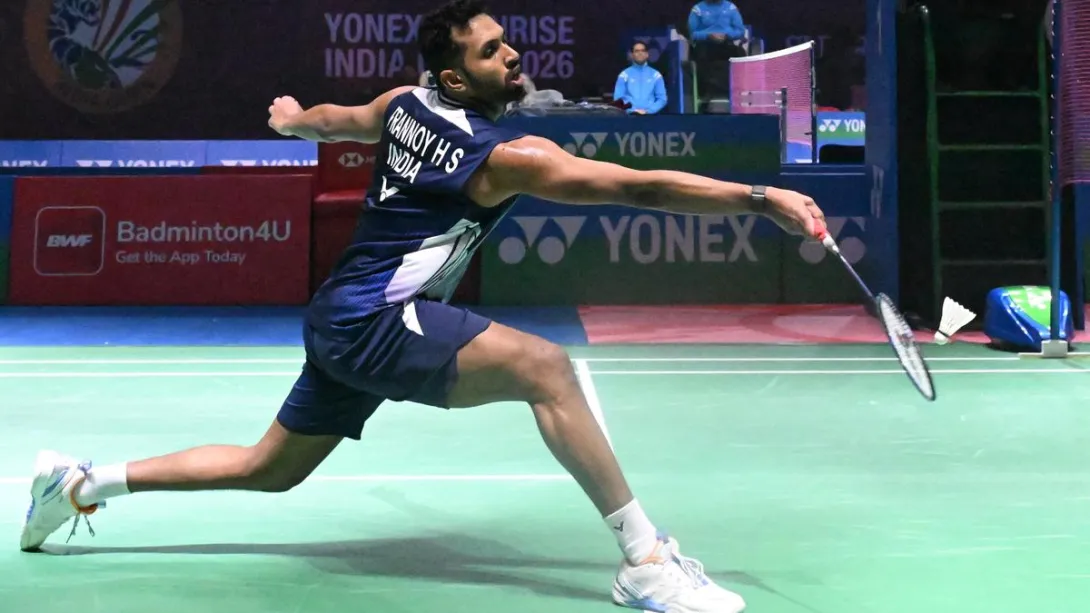
India concluded its Group A campaign at the Thomas Cup Finals with a closely contested 2-3 loss to China in Horsens. Despite resilient comeback victories from Ayush Shetty and HS Prannoy, India fell short against a structurally balanced Chinese side. The tie underscored the fine margins that define elite-level badminton, where depth and consistency across disciplines often determine outcomes. While the result may appear disappointing, India’s competitive showing reflects progress, even as it highlights critical areas for refinement in pursuit of sustained international success.
A High-Stakes Group A Decider
The final Group A fixture at the Thomas Cup Finals presented India with a formidable challenge against China, one of the most dominant forces in global badminton. Hosted in Horsens, the tie carried significant implications for momentum and positioning within the tournament.
India entered the contest with a clear objective: to assert competitiveness against an established powerhouse. While the outcome did not favor them, the narrow margin reflected a contest of high quality and intensity.
Individual Brilliance Fuels India’s Fightback
India’s resistance was anchored by standout performances from Ayush Shetty and HS Prannoy. Both players demonstrated composure under pressure, recovering from difficult situations to secure crucial victories.
These comeback wins were emblematic of India’s growing resilience in singles competition. Their ability to absorb pressure and respond decisively highlights a positive trajectory in individual player development.
China’s Structural Depth Makes the Difference
Despite India’s spirited effort, China’s comprehensive squad depth ultimately proved decisive. The Chinese team’s ability to maintain consistency across both singles and doubles disciplines gave them a strategic advantage in a tightly contested tie.
In team tournaments such as the Thomas Cup Finals, success is often determined not just by standout performances but by the collective strength of the lineup. China’s balanced composition allowed them to capitalize on key moments and secure the overall victory.
Strategic Gaps and Competitive Realities
The result highlights the evolving competitive landscape in international badminton. While India has made significant strides in singles play, the broader challenge lies in achieving consistency across all match formats.
From a strategic standpoint, strengthening doubles combinations and enhancing tactical adaptability will be essential. In high-level competitions, even minor inefficiencies can translate into decisive setbacks.
Broader Implications for India’s Campaign
Although the defeat concludes India’s Group A engagements on a subdued note, it also offers critical insights for future progression. Competing closely with a team of China’s caliber reinforces India’s potential while simultaneously outlining the path for improvement.
Such matches serve as benchmarks, enabling teams to recalibrate strategies and align resources toward long-term success in global tournaments.
Conclusion
India’s 2-3 loss to China in Horsens reflects both the promise and the challenges inherent in elite badminton. While Ayush Shetty and HS Prannoy delivered commendable performances, the overall result underscores the importance of depth and consistency. As the Thomas Cup Finals progresses, India’s focus will shift toward bridging these gaps and converting competitive performances into tangible success on the international stage.
Comments