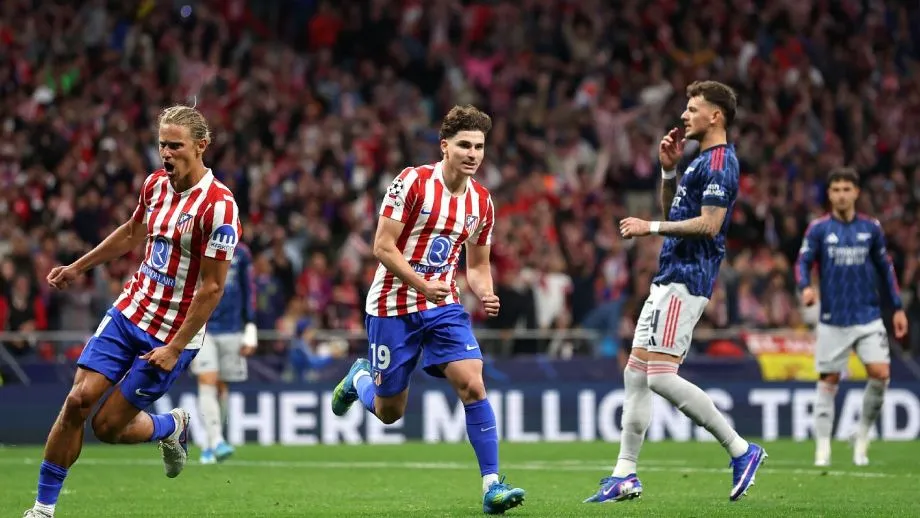
The UEFA Champions League semifinals have delivered a captivating opening chapter, leaving both ties delicately poised ahead of decisive second legs. A nine-goal spectacle between Paris Saint-Germain and Bayern Munich highlighted the competition’s attacking brilliance, while a tightly contested 1-1 draw between Arsenal and Atlético Madrid showcased tactical discipline. With matches set to conclude in Munich and London, qualification for Europe’s premier club final remains uncertain, underscoring both the competitive intensity and commercial magnitude of the tournament.
A Tournament Defined by Fine Margins
The UEFA Champions League has once again reaffirmed its reputation as football’s most compelling club competition. The semifinal stage, often regarded as the tournament’s strategic peak, has produced contrasting yet equally engaging narratives.
From a broader perspective, these fixtures represent not only sporting contests but also high-value commercial events. Clubs competing at this level benefit from substantial prize pools, global media exposure, and enhanced sponsorship opportunities.
PSG vs Bayern: A High-Scoring Masterclass
The first semifinal between Paris Saint-Germain and Bayern Munich unfolded as a remarkable attacking showcase at the Parc des Princes.
With nine goals shared between the sides, the match exemplified the evolving offensive philosophy of modern football. Rapid transitions, clinical finishing, and relentless tempo defined the encounter, leaving the outcome finely balanced.
Heading into the return leg in Munich, both teams face a complex strategic equation—balancing defensive stability with the need to capitalize on attacking momentum.
Arsenal vs Atlético: Tactical Precision on Display
In contrast, the second semifinal between Arsenal and Atlético Madrid offered a more measured and tactical contest.
The 1-1 draw in Madrid reflected disciplined defensive structures and calculated offensive execution. Both sides converted penalties, underscoring the importance of composure in high-pressure situations.
With the tie shifting to London for the second leg, marginal gains—whether through set-pieces or tactical adjustments—are likely to determine progression.
Strategic and Financial Stakes
Advancing to the final of the UEFA Champions League carries significant financial incentives. Prize money, broadcasting revenues, and commercial bonuses collectively contribute to a substantial economic uplift for participating clubs.
Moreover, success at this stage enhances global brand positioning, attracting new sponsorship deals and expanding international fan bases. Consequently, the upcoming fixtures are as much about financial outcomes as they are about sporting achievement.
The Road to the Final
With both semifinals evenly poised, the second legs in Munich and London promise heightened intensity and strategic depth. Teams must navigate the psychological pressures of knockout football while maintaining tactical discipline.
In such scenarios, experience, squad depth, and in-game adaptability often prove decisive. The ability to manage momentum swings and capitalize on key moments will likely determine which clubs advance.
Conclusion
The semifinal stage of the UEFA Champions League has delivered a compelling blend of attacking spectacle and tactical intrigue. With Paris Saint-Germain, Bayern Munich, Arsenal, and Atlético Madrid all still in contention, the path to the final remains uncertain. As the competition moves toward its climax, the interplay between performance and financial stakes will continue to define its global significance.
Comments