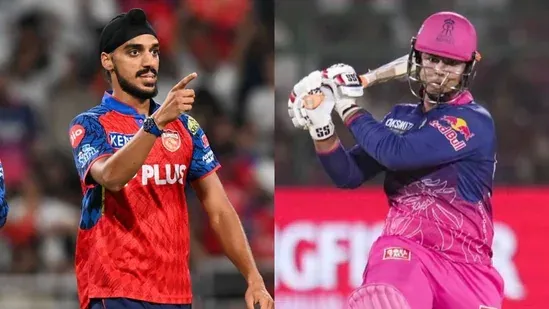
A high-profile face-off in the Indian Premier League 2026 between Arshdeep Singh and teenage prodigy Vaibhav Sooryavanshi delivered a compelling narrative of strategy versus instinct. Played at New Chandigarh, the contest began with Arshdeep executing a disciplined plan using precision yorkers on a bowler-friendly surface. However, Sooryavanshi’s swift counterattack overturned early control, reaffirming his growing dominance in the tournament. The exchange reflects a broader transformation in T20 cricket, where emerging talent is redefining performance benchmarks and influencing both sporting outcomes and the league’s commercial appeal.
A Calculated Start from Experience
The opening exchange between Arshdeep Singh and Vaibhav Sooryavanshi set the tone for a tactical duel. Arshdeep, despite a modest run of form this season, approached the contest with clarity and precision.
Deploying consecutive outswinging yorkers early in the over, he momentarily contained the young batter. On a surface offering assistance to seamers, the strategy appeared effective, suggesting that disciplined execution could neutralize even the most aggressive opponents.
Momentum Shifts: The Turning Point
The initial advantage, however, proved fleeting. Sooryavanshi quickly recalibrated his approach, transitioning from a defensive stance to controlled aggression. His response was decisive, dismantling the perceived advantage and shifting momentum in favor of his side.
This phase of play highlighted a defining feature of modern T20 cricket: the ability of batters to adapt instantly. Even well-executed deliveries are increasingly vulnerable against players who combine technical proficiency with fearless intent.
Redefining the Batter-Bowler Equation
The contest underscores a broader evolution in cricket’s competitive dynamics. Traditional hierarchies—where bowlers dictated terms through discipline and variation—are being challenged by a new generation of batters capable of rapid adaptation.
Sooryavanshi’s approach reflects the influence of advanced training methods, data analytics, and early exposure to high-pressure environments. As a result, young players are entering elite competitions with a level of preparedness that accelerates their impact.
Commercial Value of High-Impact Moments
Encounters like this extend beyond the boundary rope, contributing significantly to the IPL’s commercial ecosystem. Individual battles between established players and emerging stars drive viewership, enhance digital engagement, and elevate broadcast value.
For franchises, players such as Sooryavanshi represent high-return assets, capable of influencing both match results and brand perception. Simultaneously, bowlers like Arshdeep remain essential in maintaining competitive balance, ensuring the league’s unpredictability.
Conclusion: A Glimpse of Cricket’s Evolving Future
The duel between Arshdeep Singh and Vaibhav Sooryavanshi encapsulates the shifting landscape of T20 cricket. While experience and strategy continue to hold value, the rise of fearless young talent is redefining the game’s tempo and expectations.
As the IPL progresses, such encounters will shape not only the tournament’s narrative but also its economic trajectory. For now, Sooryavanshi’s emphatic response serves as a reminder that in modern cricket, adaptability and confidence can overturn even the most well-crafted plans.
Comments