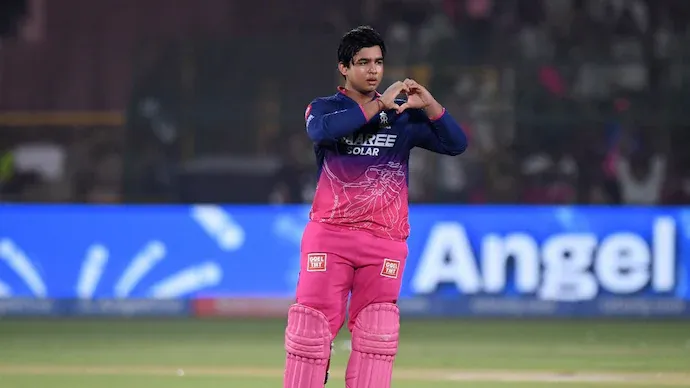
Fifteen-year-old Vaibhav Sooryavanshi has emerged as one of the most disruptive talents in the Indian Premier League 2026 season, setting a new benchmark as the fastest player to reach 400 runs. Representing Rajasthan Royals, he achieved the milestone in just 167 deliveries against Punjab Kings on April 28. In surpassing established names such as Andre Russell and Abhishek Sharma, his performance reflects a broader shift toward youth-centric dominance, reshaping both competitive dynamics and the commercial narrative of franchise cricket.
Record-Breaking Performance Redefines Efficiency
Sooryavanshi’s latest achievement is not merely a statistical milestone; it represents a recalibration of performance benchmarks in T20 cricket. Reaching 400 runs in 167 balls underscores a rare combination of consistency and striking efficiency, metrics that increasingly define success in the shortest format of the game.
By eclipsing the records previously held by Andre Russell and Abhishek Sharma, the young opener has established a new standard for scoring velocity. This metric, measured in balls faced rather than innings played, aligns with the IPL’s emphasis on impact-driven performance.
Youth as a Competitive and Financial Lever
The emergence of a 15-year-old as a headline performer signals a structural shift within the IPL ecosystem. Franchises are increasingly recognizing the dual value of young players: their long-term developmental upside and their immediate ability to influence match outcomes.
From a financial standpoint, investing in emerging talent offers a compelling return profile. Lower acquisition costs combined with high-impact performances create a favorable cost-to-output ratio, enhancing franchise valuation and operational efficiency.
Commercial Ripple Effects Across the League
High-impact performances have direct implications for the IPL’s commercial ecosystem. Players like Sooryavanshi drive audience engagement, boost television ratings, and amplify digital consumption across platforms.
This surge in attention translates into increased advertising revenues, stronger sponsorship deals, and enhanced brand equity for franchises. In an industry where visibility is directly tied to financial performance, such breakout stars become critical assets for stakeholders.
Data-Driven Cricket and the New Performance Paradigm
Modern cricket operates within a data-intensive framework, where metrics such as strike rate, boundary percentage, and scoring tempo are closely analyzed. Sooryavanshi’s record fits squarely within this paradigm, emphasizing efficiency over volume.
His ability to accumulate runs rapidly reflects a broader evolution in playing styles, driven by analytics and strategic planning. For teams, such performances are not just celebrated—they are studied, replicated, and integrated into long-term planning.
Conclusion: A Generational Shift in Motion
Vaibhav Sooryavanshi’s rise in IPL 2026 is more than a breakout story; it is indicative of a generational shift in cricket. His record-breaking feat highlights how youth, when supported by opportunity and infrastructure, can redefine established norms.
For the IPL, his success reinforces its status as a platform where innovation, talent, and commerce intersect. As the season unfolds, Sooryavanshi’s trajectory will remain a focal point—not just for its sporting significance, but for its broader implications on the future economics of cricket.
Comments