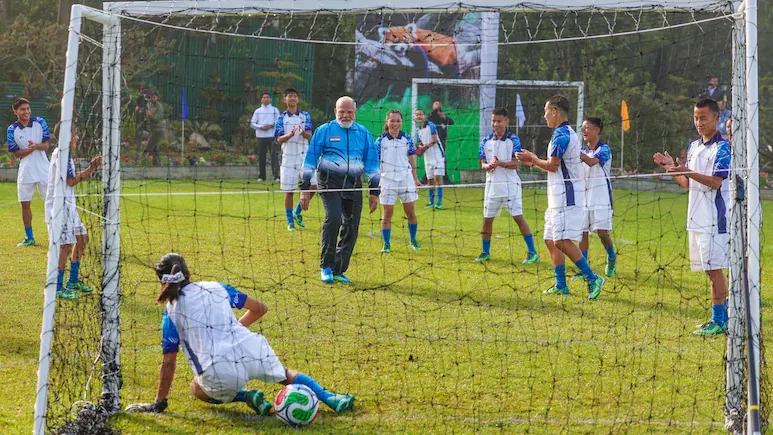
Prime Minister Narendra Modi’s impromptu football session with young players in Gangtok has drawn national attention, underscoring the cultural and economic significance of sport in India’s northeastern region. The interaction reflects a broader policy narrative that positions sports as a driver of youth engagement, regional development, and economic opportunity. With football deeply embedded in states such as Sikkim, Mizoram, Manipur, and Meghalaya, the region continues to emerge as a vital talent hub. Analysts view the Prime Minister’s outreach as both symbolic and strategic, reinforcing the government’s focus on grassroots sports as a cornerstone of long-term national development.
A Public Gesture with Strategic Undertones
Prime Minister Narendra Modi on Tuesday participated in a friendly football session with local youth in Gangtok, describing the experience as a “lovely morning” and an “energising session.” The interaction, shared through posts on X, offered a glimpse into a relaxed yet purposeful engagement with young citizens.
While informal in nature, such appearances often serve to amplify national priorities—in this case, the promotion of sports culture and youth participation.
Northeast India: A Football-Centric Ecosystem
The northeastern states, including Sikkim, Mizoram, Manipur, and Meghalaya, have long distinguished themselves as strongholds of football in India.
Unlike much of the country where cricket dominates commercial and cultural attention, football in these regions commands a loyal following, supported by local leagues, community participation, and a steady stream of emerging talent. This regional preference has gradually positioned the Northeast as a critical contributor to India’s football talent pipeline.
Sports as a Vehicle for Economic and Social Capital
From a policy and economic standpoint, the promotion of sports extends beyond recreation. It intersects with employment generation, infrastructure development, and regional branding. Encouraging grassroots participation can stimulate investment in training facilities, coaching ecosystems, and sports-related enterprises.
The Prime Minister’s engagement aligns with a broader vision of leveraging sports as a tool for inclusive growth. By spotlighting youth participation in regions like Sikkim, the government reinforces the importance of decentralizing opportunity and nurturing talent across geographies.
Football’s Expanding Commercial Potential
India’s sports economy is undergoing a gradual diversification, with football gaining traction alongside cricket. Increased media coverage, sponsorship interest, and league development have contributed to the sport’s growing commercial viability.
The Northeast’s entrenched football culture offers a unique advantage in this context. As stakeholders seek to expand the sport’s footprint, the region’s existing fan base and talent pool provide a strong foundation for scalable growth.
Youth Engagement and National Integration
Football in the Northeast is deeply intertwined with identity, aspiration, and community cohesion. For many young players, the sport represents a pathway to professional success and broader recognition.
By engaging directly with youth in Gangtok, Narendra Modi has reinforced the role of sports in fostering national integration and empowering the next generation.
Conclusion
The football session in Gangtok may appear symbolic, but its implications extend into policy, economics, and cultural influence. It underscores the Northeast’s growing importance in India’s sports landscape and highlights the potential of grassroots engagement.
As India continues to invest in its sporting future, regions like Sikkim and its neighbors are poised to play an increasingly influential role—both in nurturing talent and shaping the country’s evolving sports economy.
Comments