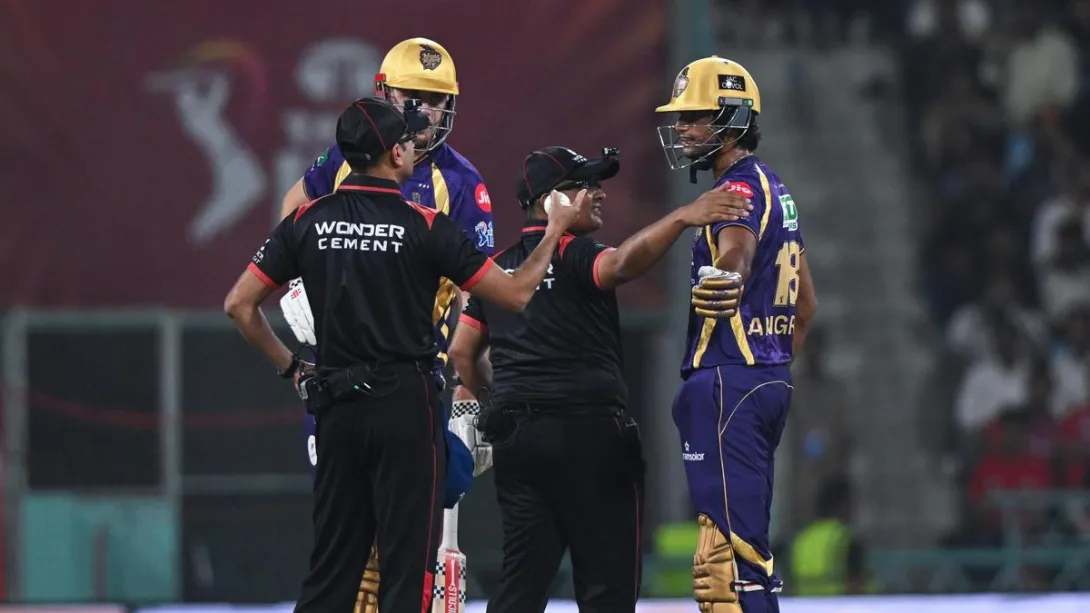
An unusual and controversial dismissal took center stage in the Indian Premier League as Angkrish Raghuvanshi of Kolkata Knight Riders was ruled out for obstructing the field during a match against Lucknow Super Giants on April 26, 2026. The rare decision, seldom seen in modern T20 cricket, has reignited discussions around rule interpretation and umpiring discretion. Beyond its immediate impact on the match, the incident highlights the IPL’s evolving regulatory environment and its influence on both competitive outcomes and the league’s broader commercial and audience engagement dynamics.
A Rare Law Comes Into Play
Cricket’s rulebook contains several provisions that are rarely invoked, and “obstructing the field” stands among the least common. The dismissal of Angkrish Raghuvanshi brought this obscure law into sharp focus during a high-profile IPL encounter.
The ruling is applied when a batter is deemed to have deliberately interfered with the fielding side’s attempt to complete a play. In this case, the on-field officials determined that the action met the threshold for obstruction, leading to Raghuvanshi’s dismissal.
Such decisions are inherently subjective, often relying on the umpire’s interpretation of intent, which makes them a frequent source of debate.
Match Impact and Tactical Consequences
The dismissal had immediate implications for Kolkata Knight Riders’ innings. Losing a batter under unconventional circumstances can disrupt rhythm and force a recalibration of strategy.
In T20 cricket, where outcomes are often decided by narrow margins, unexpected events can significantly alter momentum. The incident provided Lucknow Super Giants with a crucial breakthrough, potentially shifting the balance of the contest.
For Kolkata, the moment underscored the importance of situational awareness and adherence to the finer details of the game’s laws.
Umpiring, Interpretation, and Governance
The episode highlights the critical role of umpires in enforcing cricket’s laws, particularly those that require subjective judgment. While technological advancements have reduced ambiguity in many aspects of decision-making, certain rulings—such as obstruction—remain dependent on human interpretation.
In a league as high-profile as the IPL, maintaining consistency and transparency in officiating is essential. Decisions of this nature often prompt broader discussions among governing bodies, analysts, and stakeholders about the clarity and application of rules.
From a governance standpoint, such incidents can influence future guidelines and training for match officials.
Commercial and Audience Engagement Dimensions
Controversial and rare moments are a defining feature of modern sports entertainment. Incidents like Raghuvanshi’s dismissal tend to generate significant traction across digital platforms, driving engagement and extending the lifecycle of match-related content.
For broadcasters and sponsors, this translates into increased visibility and audience interaction. While the primary objective remains fair competition, the IPL’s commercial ecosystem benefits from heightened interest generated by such talking points.
This dual impact—sporting and commercial—reinforces the league’s position as both a competitive tournament and a global entertainment product.
Conclusion: When the Unusual Defines the Narrative
The dismissal of Angkrish Raghuvanshi serves as a reminder that even the rarest rules can shape outcomes in high-stakes cricket. It underscores the importance of awareness, discipline, and split-second decision-making in a format defined by speed and pressure.
As the IPL season progresses, this incident will likely remain a reference point in discussions around rule enforcement and fairness. It also highlights the league’s enduring appeal—where unpredictability and drama are as integral as skill and strategy.
Comments