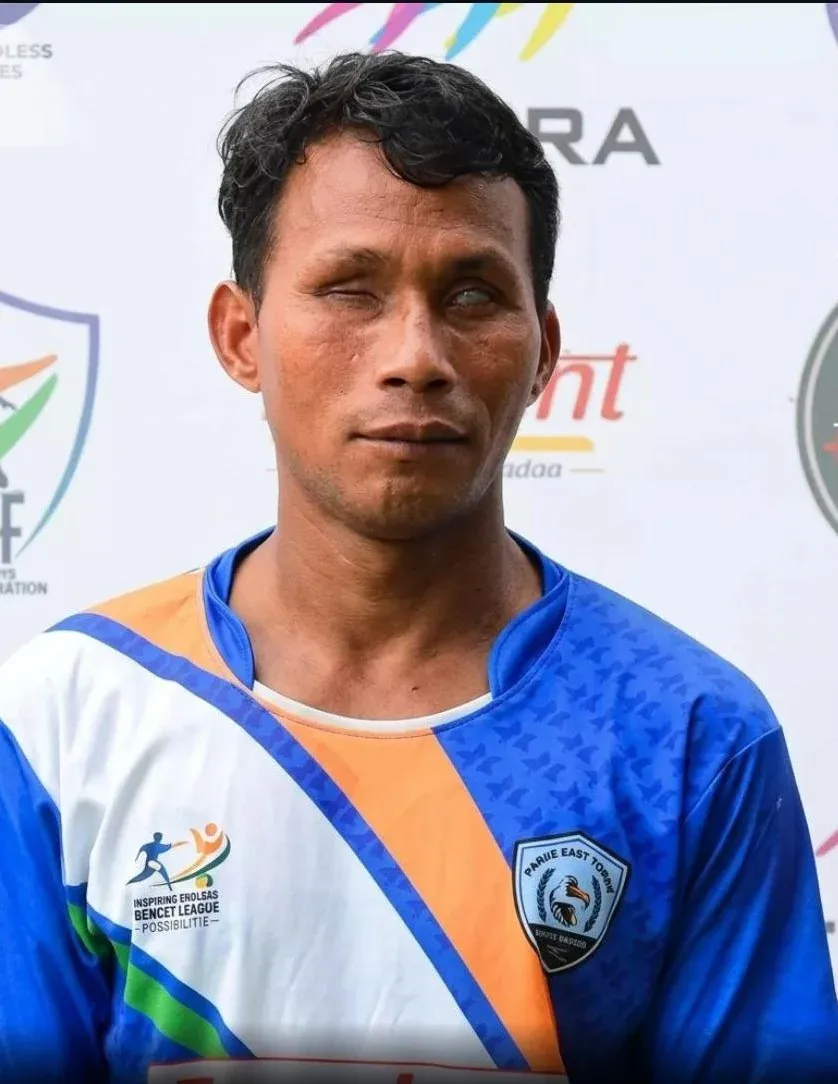
Marak’s emergence as a leading figure in Indian blind football reflects both individual excellence and the growing prominence of para sports in the country. Honored with the Kiang Nangbah Award in 2023, he has delivered standout performances, including a hat-trick against Uzbekistan and a decisive role in Meghalaya’s fourth national title triumph. Competing in a highly specialized five-a-side format that relies on auditory precision and coordinated guidance, Marak exemplifies technical skill and mental discipline. His success highlights the increasing institutional recognition and commercial potential of inclusive sports within India’s evolving athletic and economic landscape.
A Consistent Performer with National Recognition
Marak has established himself as a cornerstone of India’s blind football circuit through sustained high-level performances. His recognition with the Kiang Nangbah Award in 2023 underscores his contribution to the sport and his standing as a leading athlete from the region.
One of his most notable achievements came in an international fixture against Uzbekistan, where he recorded a memorable hat-trick. The performance not only demonstrated his attacking prowess but also elevated his profile within the competitive landscape of para football.
Driving Meghalaya’s Competitive Success
Marak’s influence extends beyond individual milestones. He played a pivotal role in guiding Meghalaya to its fourth national blind football title, reinforcing the state’s position as a dominant force in the discipline. His ability to deliver under pressure and integrate seamlessly into team strategies has been instrumental in sustaining this success.
Such achievements also reflect the effectiveness of regional training ecosystems that prioritize skill development and competitive exposure in para sports.
Understanding the Mechanics of Blind Football
Blind football is a specialized five-a-side format that demands exceptional sensory adaptation and teamwork. All outfield players are blindfolded, ensuring a level playing field, and rely entirely on auditory cues—specifically the sound emitted by a bell embedded within the ball.
The sport is supported by a structured guidance system involving three sighted individuals: a goalkeeper, a goal guide positioned behind the opposition goal, and a coach on the sidelines. These guides provide continuous verbal instructions, enabling players to navigate space, coordinate movement, and execute tactical plays.
Cognitive Skill and Tactical Intelligence at the Core
Success in blind football is defined as much by cognitive sharpness as by physical ability. Players must process auditory signals rapidly, maintain spatial awareness, and make split-second decisions under pressure.
Marak’s performances illustrate a high level of tactical intelligence and sensory coordination. His capacity to translate sound cues into precise movements and scoring opportunities highlights the sophistication required to excel in this format.
Economic and Social Implications for Para Sports
The rise of athletes like Marak signals a broader shift in India’s sports economy, where inclusive disciplines are gaining visibility and institutional backing. Increased recognition can drive sponsorship interest, media coverage, and investment in infrastructure tailored to para athletes.
From a commercial standpoint, the expansion of disability sports represents an emerging market segment with untapped potential. As success stories gain traction, they contribute to building a more inclusive and financially sustainable sports ecosystem.
Conclusion
Marak’s journey in blind football encapsulates a narrative of resilience, skill, and strategic excellence. His contributions to Meghalaya’s achievements and his individual accolades reflect the growing competitiveness of para sports in India. As awareness and investment continue to rise, athletes like him will not only shape sporting outcomes but also redefine the contours of inclusivity and opportunity within the broader athletic landscape.
Comments