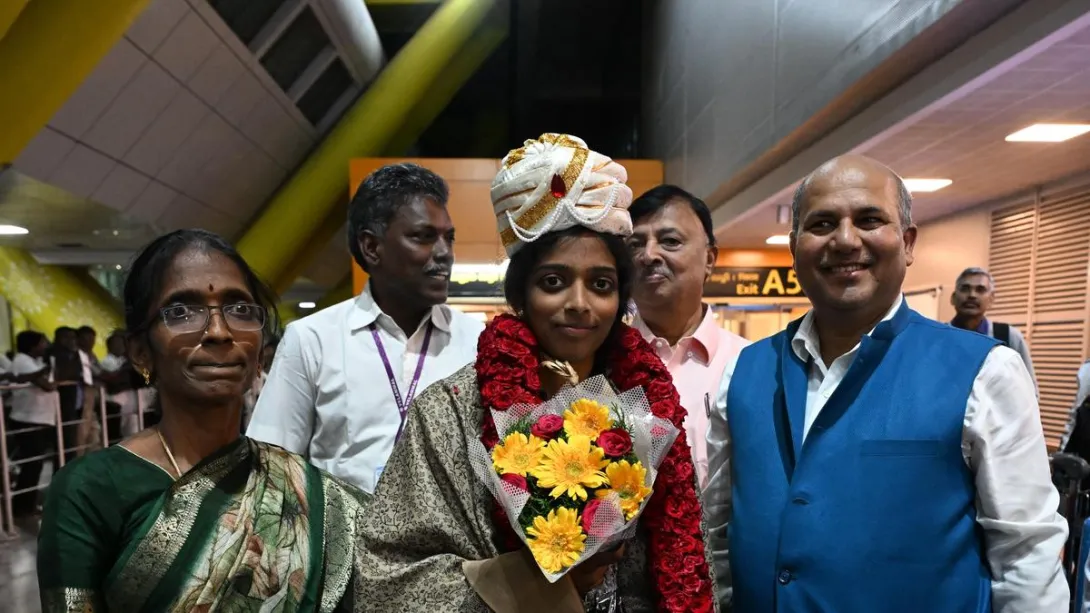
India is preparing to assert its growing dominance in global chess by bidding to host the upcoming World Championship matches, a move driven by both competitive success and strategic foresight. The All India Chess Federation has expressed confidence following the qualification of two Indian contenders—reigning open champion D. Gukesh and women’s challenger R. Vaishali. This convergence of elite talent and administrative ambition signals India’s intent to elevate its global standing, leveraging the event’s commercial, cultural, and institutional potential to strengthen its footprint in the international chess ecosystem.
Strategic Bid Reflects Institutional Confidence
The All India Chess Federation’s announcement to pursue hosting rights for the World Championship matches marks a significant step in India’s sporting strategy. Speaking on April 19, 2026, AICF Head of Operations A.K. Verma highlighted the federation’s optimism, rooted in the rare alignment of two Indian players competing at the highest level of the sport.
This development provides India with a compelling narrative in the bidding process. Hosting rights for such a prestigious event are often influenced not only by infrastructure readiness but also by the host nation’s relevance within the competitive landscape. In this regard, India’s current position is particularly advantageous.
Dual Representation Strengthens India’s Case
The presence of D. Gukesh as the reigning world champion in the open section underscores a generational shift in global chess leadership. His rise reflects the effectiveness of India’s talent development systems and the increasing depth of its player base.
Equally significant is the challenge mounted by R. Vaishali in the women’s category. Her progression to the शीर्ष level highlights the growing inclusivity and competitiveness of India’s chess ecosystem. Together, their participation enhances the country’s credibility as a host, offering both sporting legitimacy and strong audience engagement potential.
Economic Upside and Commercial Viability
From a financial perspective, hosting the World Chess Championship presents a range of economic opportunities. The event is expected to attract sponsorship investments, broadcasting partnerships, and international tourism, all of which contribute to revenue generation.
In addition, such a global event can stimulate ancillary sectors, including hospitality, logistics, and media production. For the AICF, securing hosting rights would not only elevate its institutional profile but also create long-term commercial value through increased investor confidence and expanded stakeholder engagement.
Soft Power and Global Positioning
Beyond immediate financial gains, the bid carries significant implications for India’s soft power strategy. Chess, with its intellectual heritage and historical roots in the Indian subcontinent, offers a unique platform for cultural diplomacy.
Hosting the championship would allow India to project its legacy while showcasing its modern organisational capabilities. This dual narrative—tradition combined with innovation—can strengthen the country’s global image and reinforce its influence within international sporting bodies.
Competitive Bidding Landscape
Despite the advantages, the path to securing hosting rights is unlikely to be straightforward. Other nations with established infrastructure and financial resources are expected to enter the fray, intensifying competition.
To succeed, India must present a robust proposal encompassing world-class venues, seamless logistics, and strong financial backing. Execution will be critical, as stakeholders will evaluate not only the bid’s vision but also its feasibility and delivery capacity.
Conclusion
India’s bid to host the World Chess Championship matches represents a convergence of sporting excellence and strategic ambition. With D. Gukesh and R. Vaishali leading the charge, the nation is well-positioned to make a compelling case on the global stage. If successful, the initiative could redefine India’s role in international chess—from a prolific talent producer to a central hub for the sport’s most prestigious events—while unlocking substantial economic and reputational value.
Comments