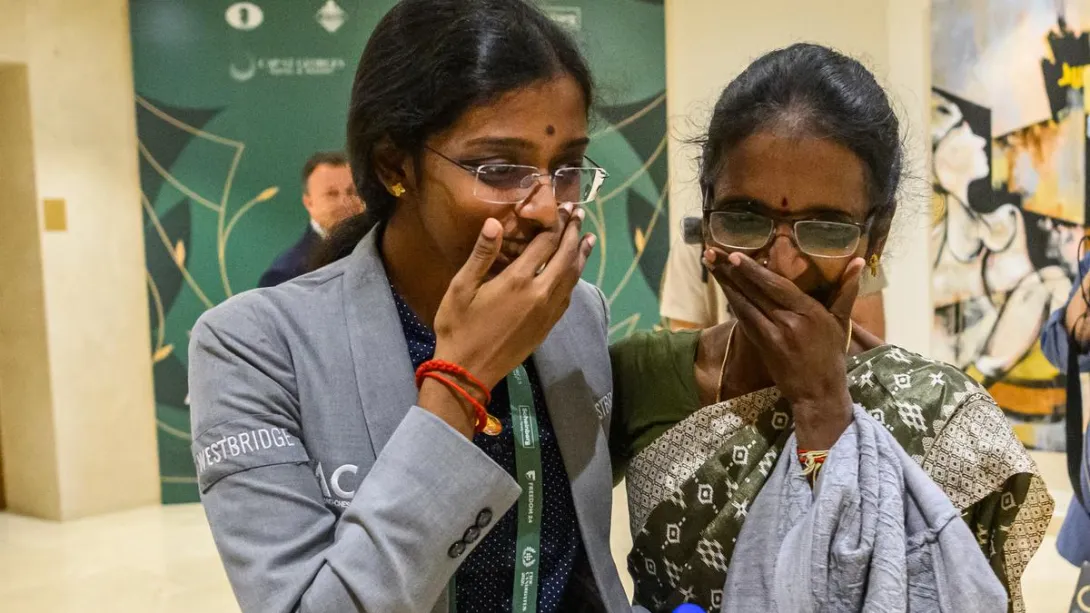
Vaishali Rameshbabu’s victory at the 2026 FIDE Women’s Candidates Tournament marks a transformative moment for Indian chess, positioning her as the next challenger for the Women’s World Championship. Her success reflects not only individual excellence but also the maturation of India’s chess ecosystem, driven by structured training, technological integration, and institutional support. The achievement enhances India’s global standing in the sport while opening new commercial avenues through sponsorships and endorsements. As chess continues to gain traction as a competitive and intellectual sport, Vaishali’s win underscores the intersection of performance, strategy, and long-term value creation in modern athletics.
A Landmark Achievement in Global Chess
Vaishali Rameshbabu has secured a defining career milestone by winning the FIDE Women's Candidates Tournament 2026, earning the right to compete for the Women’s World Championship title.
This victory places her among the elite in international chess, highlighting her ability to perform consistently against top-tier opponents. It also reinforces India’s growing reputation as a powerhouse in the global chess landscape.
Tactical Precision and Competitive Edge
Vaishali’s success can be attributed to a blend of strategic discipline and adaptability. In a tournament format that demands sustained excellence, her ability to navigate complex positions and capitalize on critical opportunities proved decisive.
Modern chess at this level is increasingly influenced by advanced preparation, including engine-based analysis and data-driven strategies. Vaishali’s performance reflects a seamless integration of these elements with classical positional understanding.
India’s Expanding Chess Ecosystem
The rise of players like Vaishali is indicative of a broader transformation within Indian chess. Over the past decade, the country has invested in grassroots development, coaching infrastructure, and international exposure.
This ecosystem has produced a steady pipeline of world-class talent, positioning India as a key contributor to the global chess circuit. Success at marquee events further accelerates this growth by attracting investment and increasing visibility.
Commercial Impact and Market Opportunities
Achievements at prestigious tournaments such as the Candidates significantly enhance an athlete’s commercial profile. Vaishali’s victory is expected to unlock new sponsorship opportunities, endorsements, and global partnerships.
From a business perspective, such milestones contribute to the monetization of chess as a sport. Increased media coverage and audience engagement create opportunities for stakeholders, including sponsors, broadcasters, and event organizers.
Pathway to the World Championship
With this victory, Vaishali advances to the final stage of competition—the Women’s World Championship match. This phase represents the pinnacle of the sport, requiring meticulous preparation and psychological resilience.
The transition from tournament play to a head-to-head championship format introduces new strategic dimensions, making preparation a critical factor in determining the outcome.
Conclusion: A Defining Moment for India’s Sporting Future
Vaishali Rameshbabu’s triumph is more than a personal achievement—it is a reflection of India’s evolving sporting ecosystem and its capacity to produce world-class talent. Her success underscores the importance of structured development, strategic planning, and sustained investment in niche sports.
As she prepares for the World Championship, Vaishali stands at the forefront of a new era in Indian chess—one defined by ambition, excellence, and global influence.
Comments