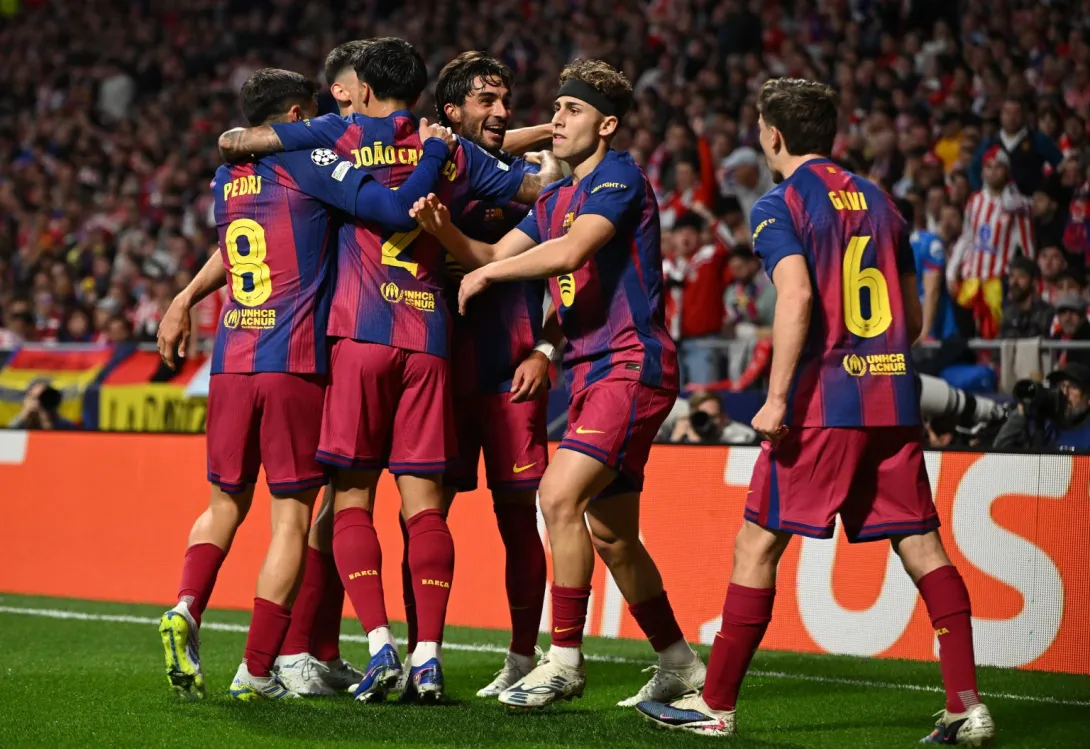
FC Barcelona fell short of a UEFA Champions League semi-final berth after a tightly contested clash with Atletico Madrid, highlighting both the club’s resurgence and its unresolved structural weaknesses. Under Hansi Flick, Barcelona displayed intensity, tactical clarity, and youthful energy, led by the emerging influence of Lamine Yamal. However, defensive instability, disciplinary lapses, and limited squad depth ultimately proved decisive. The result underscores a broader narrative: Barcelona is rebuilding with purpose, yet remains a work in progress in the high-stakes environment of elite European competition.
Match Context: A Contest Decided by Margins
Barcelona entered the decisive fixture with a realistic opportunity to advance, needing only a composed and disciplined performance. Early phases suggested they were on course, as the team quickly neutralized the aggregate deficit and imposed control over the tempo.
Yet, as often witnessed in elite European competitions, the outcome was shaped not by dominance alone but by critical moments. Tactical discipline, defensive awareness, and situational decision-making ultimately determined the result, leaving Barcelona to reflect on an opportunity that slipped away despite a commendable effort.
Positives: Indicators of a Rebuilding Power
Tactical Identity and Competitive Spirit
Under Hansi Flick, Barcelona demonstrated a clear tactical evolution. The team played with urgency, cohesion, and attacking intent, signaling a departure from previous inconsistencies in European fixtures.
Their ability to dictate play and create sustained pressure reflects a growing tactical maturity. More importantly, the performance reinforced a renewed sense of identity—one rooted in intensity, structured pressing, and collective belief.
Emergence of Youth as a Strategic Asset
A defining feature of Barcelona’s resurgence is its reliance on youth development. Players emerging from the club’s academy system bring not only technical quality but also a deep understanding of the club’s philosophy.
At the forefront is Lamine Yamal, whose composure and creativity have elevated him into a central role despite his age. His influence in high-pressure situations provides Barcelona with a unique competitive edge, both tactically and psychologically.
Leadership Transition and Long-Term Vision
The match also highlighted a subtle but significant leadership transition within the squad. Yamal’s willingness to take responsibility signals the emergence of a new leadership core, one that could define Barcelona’s trajectory over the next decade.
This shift aligns with the club’s broader strategic vision—building a sustainable, youth-driven model capable of competing at the highest level without excessive reliance on external acquisitions.
Challenges: Structural Gaps That Persist
Defensive Vulnerabilities
Despite their attacking prowess, Barcelona’s defensive record remains a critical concern. The inability to secure clean sheets in consecutive Champions League fixtures points to systemic issues in defensive organization.
At this level, even minor lapses are punished decisively. For a club aspiring to reclaim European dominance, defensive stability must become a foundational priority.
Discipline and Game Management
Another recurring issue is disciplinary control. Red cards in consecutive encounters against Atletico Madrid disrupted tactical balance and placed the team at a numerical disadvantage during crucial phases.
Such patterns indicate deeper concerns around game management and composure under pressure—areas that require immediate attention to ensure consistency in high-stakes matches.
Squad Depth and Substitution Impact
While the starting lineup delivered a cohesive performance, the lack of impact from substitutions exposed limitations in squad depth. Even experienced players struggled to maintain the team’s intensity and rhythm after entering the field.
In knockout tournaments, depth often determines success. Barcelona’s inability to leverage its bench effectively underscores the need for strategic reinforcement and better integration of rotational players.
Conclusion: Progress Amid Imperfection
Barcelona’s elimination from the Champions League represents a nuanced outcome—disappointing in result yet encouraging in trajectory. The team’s performance reflects a club in transition, balancing immediate expectations with long-term rebuilding.
With emerging talents like Lamine Yamal and a clear tactical framework under Hansi Flick, the foundation for future success is evident. However, addressing defensive frailties, improving discipline, and strengthening squad depth will be essential to convert promise into tangible achievements.
In elite football, the difference between success and failure often lies in the smallest details. For Barcelona, mastering those details will define the next phase of its resurgence.
Comments