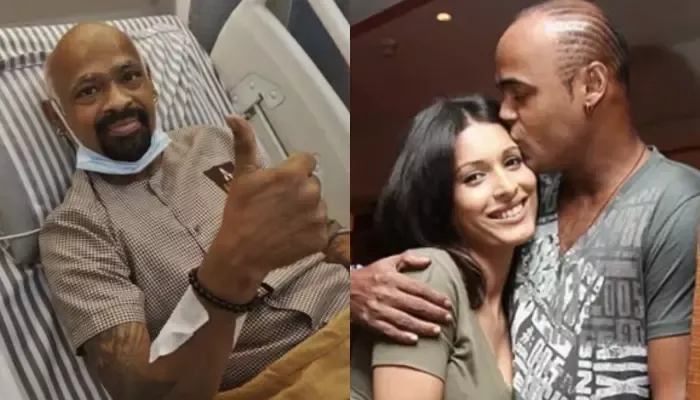
Recent reports surrounding the health of former Indian cricketer Vinod Kambli have sparked widespread concern and speculation. Claims of serious medical complications, including a brain clot and elevated stroke risk, have circulated in public discourse. However, his wife, Andrea Hewitt, has strongly refuted these assertions, describing them as misleading and exaggerated. The conflicting narratives highlight the growing tension between media reporting and personal privacy in the digital age. Beyond the immediate issue, the episode underscores broader themes of athlete welfare, reputational risk, and the responsibility of information dissemination in high-profile cases.
Conflicting Reports and Public Reaction
The health status of Vinod Kambli has recently become a subject of intense scrutiny, with multiple accounts presenting differing perspectives. Reports suggested that the former cricketer had been battling a serious neurological condition, including the presence of a brain clot and a heightened risk of stroke. These claims quickly gained traction, prompting concern among fans and the wider cricketing community.
Such developments illustrate how information—particularly relating to public figures—can rapidly evolve into widespread narratives, often without comprehensive verification. In high-visibility cases, speculation tends to amplify uncertainty, creating reputational and emotional challenges for those involved.
Family Response and Rebuttal
In a decisive response, Andrea Hewitt publicly dismissed the circulating claims, asserting that Kambli’s condition had been misrepresented. She expressed shock at the nature of the reports and emphasized that her husband is stable and managing his health adequately.
Her intervention reflects a broader pattern in which families of public figures increasingly step forward to counter misinformation. By directly addressing the issue, she sought to restore clarity and protect both personal dignity and public perception. The response also highlights the critical role of primary sources in shaping credible narratives.
Health, Privacy, and Media Ethics
The episode raises important questions about the ethics of reporting on personal health matters. While public interest in prominent personalities is inevitable, the boundary between legitimate reporting and speculative intrusion remains delicate.
In financial and business terms, reputation functions as a valuable intangible asset. For former athletes like Kambli, whose post-retirement opportunities may depend on public perception, inaccurate reporting can have tangible consequences. Sponsorships, speaking engagements, and media roles are often influenced by credibility and image, making reputational management a key consideration.
Athlete Welfare Beyond the Spotlight
Kambli’s situation also brings renewed attention to the broader issue of athlete welfare after retirement. While modern sports ecosystems increasingly emphasize financial security and health support, earlier generations often lacked structured mechanisms for long-term care.
This gap has prompted stakeholders to reconsider frameworks around medical assistance, insurance coverage, and psychological support for retired professionals. The evolving conversation suggests a shift toward more holistic approaches that extend beyond active playing years.
Information Integrity in the Digital Age
The rapid spread of unverified claims underscores the challenges posed by today’s information ecosystem. In an era where digital platforms accelerate the dissemination of news, the responsibility for accuracy becomes even more critical.
For audiences, distinguishing between verified updates and speculative content is increasingly complex. For institutions and individuals, maintaining transparency while safeguarding privacy is a delicate balancing act. The Kambli episode exemplifies how quickly narratives can diverge—and the importance of timely clarification.
Conclusion: A Call for Responsible Discourse
The unfolding situation surrounding Vinod Kambli is not merely a personal matter but a reflection of larger systemic dynamics. It highlights the intersection of media responsibility, public curiosity, and individual privacy.
As discussions continue, the focus must shift toward ensuring factual accuracy and respecting personal boundaries. For observers and stakeholders alike, the episode serves as a reminder that credibility—whether in journalism or public life—remains a cornerstone of trust in an increasingly complex information landscape.
Comments