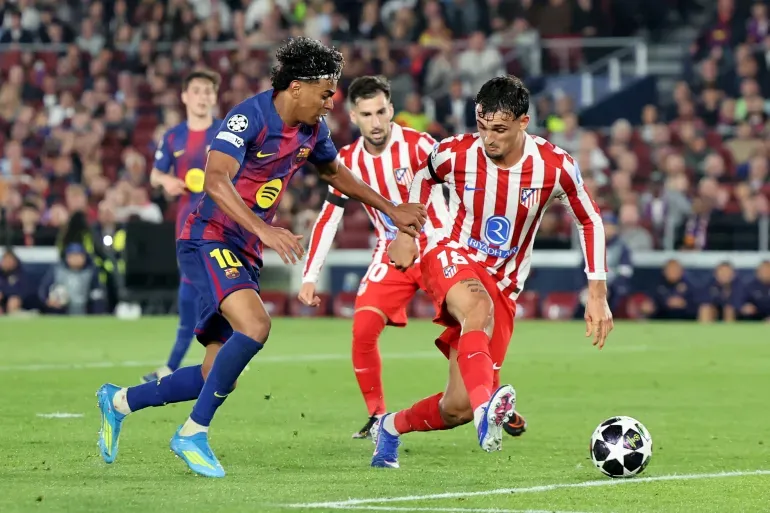
The governing body of European football, UEFA, has dismissed a formal complaint from FC Barcelona regarding a disputed handball incident during their UEFA Champions League quarterfinal first-leg defeat to Atletico Madrid. The controversy stemmed from a 2-0 victory for Atletico Madrid at Camp Nou, where a defensive action involving Marc Pubill prompted protests from the Catalan club. The ruling arrives just hours before the decisive second leg, intensifying competitive pressure. The decision reinforces the authority of on-field officiating in elite European competitions and limits scope for retrospective intervention.
UEFA Upholds On-Field Decision
The European football governing authority, UEFA, has formally rejected Barcelona’s appeal concerning a contested handball incident during their UEFA Champions League quarterfinal first-leg clash against Atletico Madrid.
The decision confirms that the original match result—Atletico Madrid’s 2-0 win at Camp Nou—will stand without alteration, maintaining the competitive structure of the tie ahead of the return fixture.
The Incident That Sparked Controversy
The dispute centers on an on-field moment involving Atletico defender Marc Pubill, who was seen handling the ball after what appeared to be a goal-kick situation. FC Barcelona argued that the incident merited further review and could have influenced the outcome of the match.
However, UEFA’s ruling indicates that the governing body found no sufficient basis to intervene or alter the match proceedings post-facto.
High-Stakes Context Ahead of Second Leg
The timing of the decision adds further intensity to an already finely balanced European tie. With Atletico Madrid holding a 2-0 advantage from the first leg, tactical pressure now shifts sharply onto Barcelona as they prepare for the decisive return match.
For FC Barcelona, the focus will now rest entirely on overturning the deficit through on-field performance rather than administrative recourse.
Officiating Integrity and European Football Governance
The ruling once again highlights the strict framework under which UEFA operates in relation to match officiating. Even in the era of advanced video review systems, post-match interventions remain rare and highly restricted.
This reinforces a central principle of elite football governance: match outcomes are primarily determined during play, with limited scope for retrospective alteration.
Psychological and Tactical Implications
Beyond procedural clarity, the decision carries significant psychological implications ahead of the second leg. Atletico Madrid enter the fixture with both a goal advantage and regulatory validation of the first-leg result, strengthening their competitive position.
Barcelona, meanwhile, must now navigate both tactical challenges and mental pressure as they attempt to recover from a two-goal deficit in a high-stakes knockout scenario.
Outlook: Focus Returns to the Pitch
With UEFA’s decision now final, attention shifts entirely to the upcoming second leg. The outcome will determine progression in the UEFA Champions League quarterfinals and potentially shape the trajectory of both clubs’ European campaigns.
In elite football, such moments often define seasons, and both teams now face a decisive test of execution, discipline, and composure under pressure.
Comments