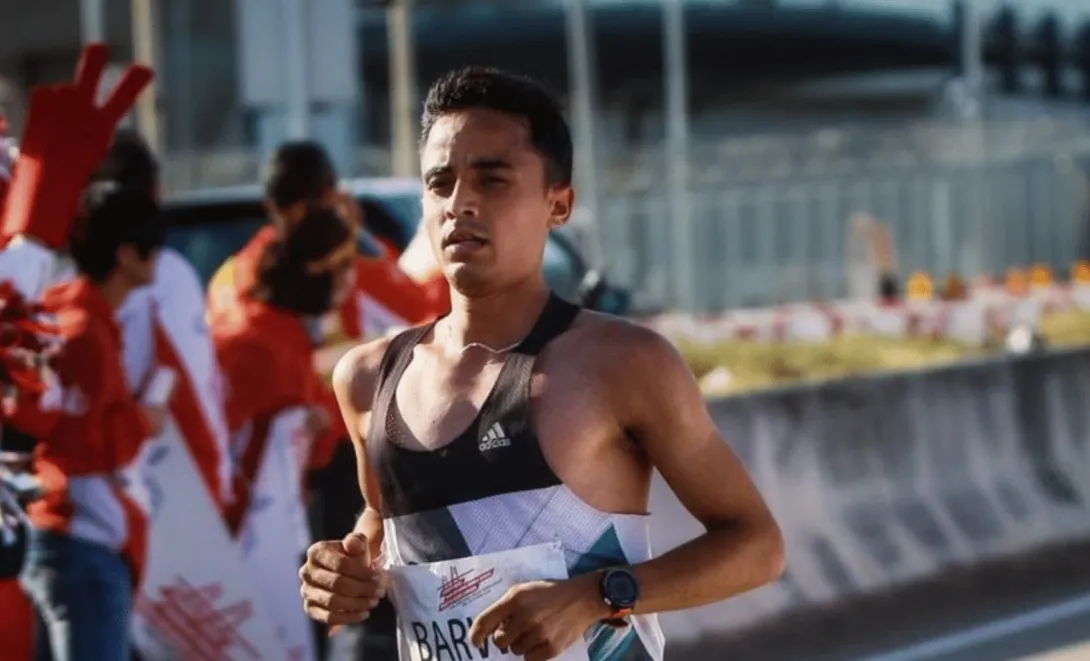
In a watershed moment for Indian athletics, Sawan Barwal delivered a record-breaking performance at the NN Marathon Rotterdam on April 12, 2026, clocking 2:11:58 in his debut over the 42.195 km distance. The 28-year-old surpassed the longstanding national mark of 2:12:00 set by Shivnath Singh in 1978, ending one of the oldest records in Indian sport. While the improvement was marginal at two seconds, its symbolic weight is profound, reflecting a structural shift in India’s endurance running ecosystem and renewed global competitiveness.
A Breakthrough Performance on the World Stage
Sawan Barwal’s achievement in Rotterdam marks a defining milestone for Indian distance running. Competing in one of Europe’s fastest marathon circuits, Barwal executed a disciplined race strategy to register a time of 2:11:58—an effort that places him among the most competitive Indian marathoners in history.
What makes the feat particularly noteworthy is that it came in his first attempt at the full marathon distance, underscoring both his preparedness and the growing sophistication of India’s training systems.
Ending a Historic 1978 Benchmark
The previous national record, set by Shivnath Singh in 1978 in Jalandhar, had stood as a near-untouchable benchmark for 48 years. Over time, it evolved into a symbol of both excellence and stagnation within Indian athletics, as multiple generations of runners fell short of surpassing it.
Barwal’s performance, surpassing the mark by just two seconds, may appear incremental on paper. However, in elite marathon running—where margins are razor-thin—such gains often represent years of incremental progress in training, nutrition, and race execution.
The Science Behind the Success
Modern marathon performance is increasingly shaped by data analytics, biomechanical efficiency, and advanced recovery protocols. Barwal’s run reflects the integration of these elements, highlighting a shift from traditional training methods to a more scientific, performance-driven approach.
His ability to sustain pace across 42.195 km demonstrates not only physical endurance but also tactical intelligence—an essential trait for competing at the global level.
Economic and Institutional Implications
From a business and policy perspective, Barwal’s achievement could act as a catalyst for increased investment in Indian athletics. Success at the international level often drives corporate sponsorship, government funding, and grassroots participation.
As India seeks to diversify its sporting portfolio beyond cricket, breakthroughs in disciplines like marathon running can enhance the country’s global sporting brand. This, in turn, creates opportunities for infrastructure development, talent identification programs, and private-sector engagement.
Resetting the Benchmark for Future Athletes
National records serve as both milestones and motivators. By lowering a decades-old benchmark, Barwal has redefined the performance ceiling for Indian marathoners, setting a new standard for aspiring athletes.
His success is likely to inspire a new generation of runners, encouraging greater participation and competitiveness in long-distance events.
More Than a Record: A Symbol of Transformation
While the numerical improvement over the previous record is modest, the broader significance of Barwal’s achievement cannot be overstated. It represents the culmination of systemic progress within Indian athletics and signals the beginning of a new competitive phase.
Sawan Barwal’s record-breaking run is not merely an individual triumph—it is a reflection of a nation’s evolving sporting ambitions, where long-standing limitations are being challenged and redefined on the global stage.
Comments