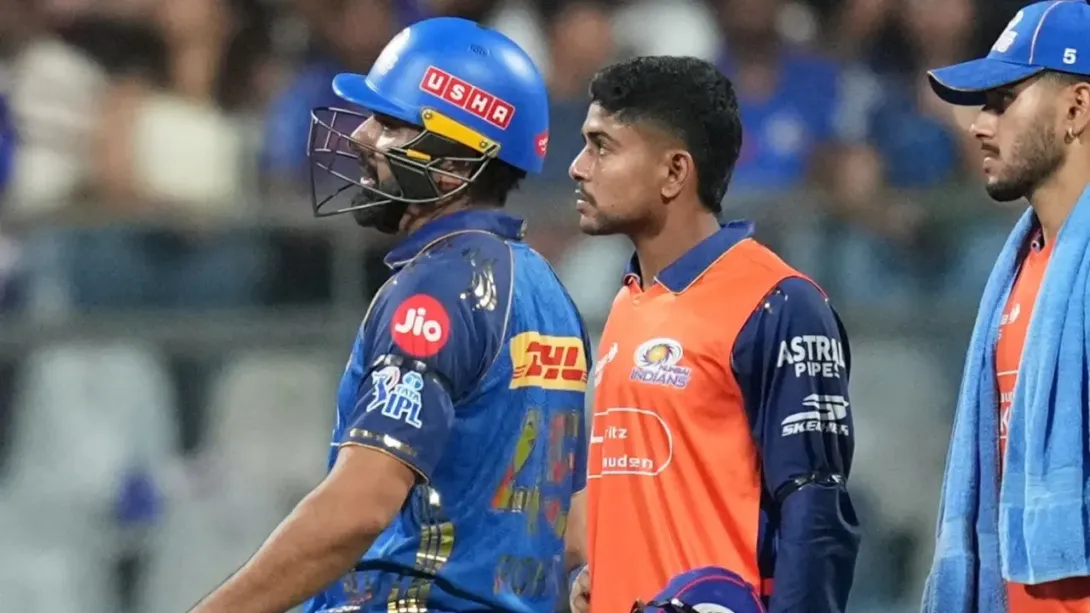
A high-intensity encounter in the Indian Premier League between Mumbai Indians and Royal Challengers Bengaluru was overshadowed by injury concerns to two of Indian cricket’s biggest assets—Rohit Sharma and Virat Kohli. Rohit retired hurt during a demanding chase, while Kohli briefly exited the field with an ankle issue. Beyond the immediate sporting implications, the developments raise concerns over player workload management and long-term fitness, particularly in a tournament ecosystem valued in billions of rupees (Rs.), where star players are integral to both performance outcomes and commercial value.
A High-Scoring Contest Marred by Setbacks
The match between Mumbai Indians and Royal Challengers Bengaluru at Wankhede Stadium delivered the kind of high-scoring spectacle that defines the Indian Premier League. Chasing a formidable target of 241, Mumbai Indians were expected to rely heavily on their experienced core.
However, the contest took a decisive turn when injuries disrupted momentum, shifting the narrative from competition to concern.
Rohit Sharma’s Early Exit Alters the Chase
Rohit Sharma showed early intent but began struggling with discomfort shortly into his innings. After scoring 19 off 13 deliveries, he appeared to be limping and required on-field medical attention.
Despite attempting to continue, the severity of the issue forced him to retire hurt. His absence significantly impacted Mumbai’s chase, as the team eventually fell short by 18 runs in a match that demanded sustained batting depth.
Virat Kohli’s Injury Adds to Concerns
On the opposing side, Virat Kohli also experienced physical discomfort, leaving the field temporarily due to an ankle concern. Although less severe in immediate impact, the incident added to the broader narrative of player fitness in a demanding tournament.
For franchises and stakeholders, the fitness of marquee players remains a critical variable influencing both performance and audience engagement.
Performance vs. Player Workload: A Growing Challenge
The Indian Premier League operates within a tightly packed schedule, placing significant physical demands on players. Frequent travel, high-intensity matches, and limited recovery time increase the risk of injuries.
From a strategic standpoint, franchises must balance the need for immediate results with long-term player sustainability. Injuries to key players can disrupt team dynamics and affect campaign outcomes.
Financial and Commercial Implications
In a league where revenues are measured in multi-crore rupees (Rs.), the availability of star players like Rohit Sharma and Virat Kohli carries substantial commercial weight. Their presence drives viewership, sponsorship deals, and fan engagement.
Injury-related absences not only impact on-field performance but also have downstream effects on broadcasting value and brand partnerships, highlighting the interconnected nature of sport and business.
Strategic Outlook: Managing Risk in a High-Stakes Season
As the tournament progresses, both Mumbai Indians and Royal Challengers Bengaluru will need to closely monitor player fitness and adopt proactive workload management strategies.
Ensuring the availability of key players during critical phases of the season will be essential for maintaining competitive momentum.
Conclusion
The match between Mumbai Indians and Royal Challengers Bengaluru underscored the unpredictable nature of elite sport, where injuries can reshape outcomes in an instant. For Rohit Sharma and Virat Kohli, the focus now shifts to recovery and readiness. In a high-value sporting ecosystem, maintaining player fitness is not merely a medical priority—it is a strategic imperative that influences both competitive success and financial sustainability.
Comments