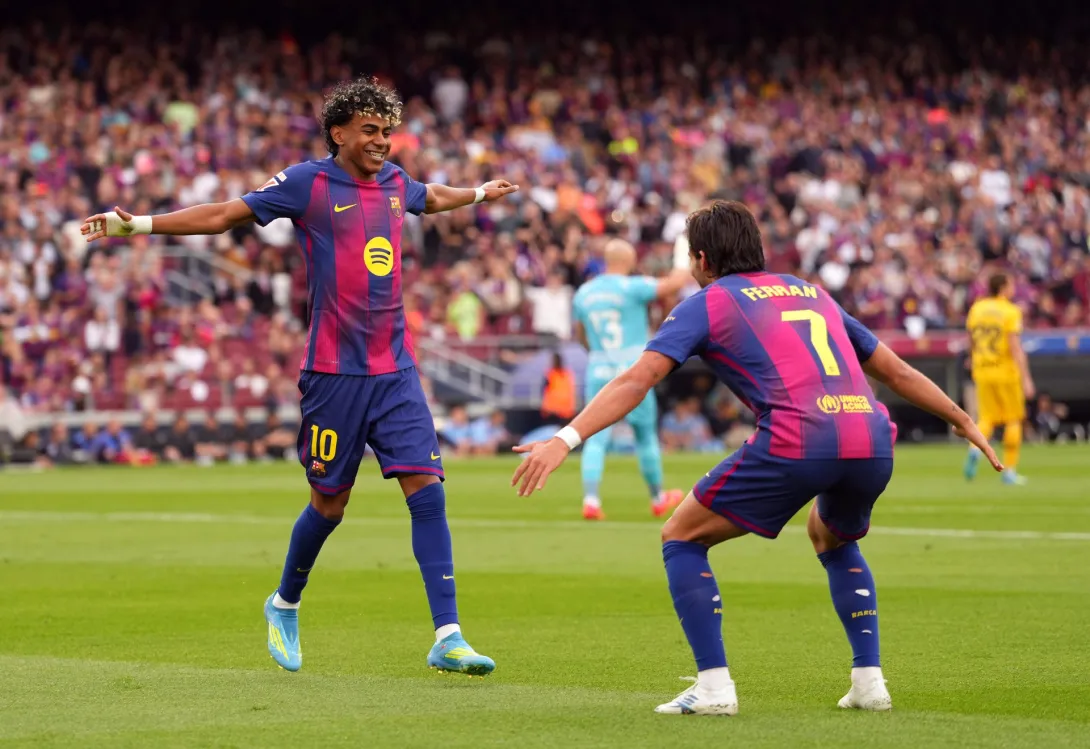
FC Barcelona have adopted a powerful psychological approach ahead of their UEFA Champions League quarter-final clash against Atlético Madrid, emphasizing unity and belief within the squad. Through a symbolic “Believe” message inspired by Ted Lasso, the club has reinforced a collective mindset aimed at overcoming adversity. Manager Hansi Flick has played a central role in fostering this culture. Beyond tactics, the initiative highlights the growing importance of psychological conditioning in elite sport, where mental resilience often determines success in high-stakes competitions.
A Message Beyond Tactics
FC Barcelona have turned to symbolism and psychology as they prepare for one of the most critical fixtures of their season against Atlético Madrid. In the lead-up to the Champions League quarter-final second leg, the club shared a simple yet powerful message across its digital platforms: “Believe.”
Accompanied by the phrase “believe to feel alive,” the campaign reflects a deeper effort to instill confidence and unity within the squad at a decisive moment in their European campaign.
Inspiration from Popular Culture
The messaging draws inspiration from the widely acclaimed series Ted Lasso, known for its emphasis on optimism, teamwork, and emotional intelligence in sports environments. Within Barcelona’s dressing room, a poster bearing the slogan has been prominently displayed, echoing the show’s iconic motif.
Players have been seen engaging with the message physically—placing their hands on the poster—symbolizing collective commitment and shared belief in the team’s objectives.
Leadership and Cultural Alignment
At the center of this initiative is manager Hansi Flick, whose leadership extends beyond tactical preparation. By fostering a unified mindset, Flick is reinforcing the importance of mental resilience alongside technical execution.
Such leadership strategies are increasingly critical in modern football, where psychological readiness can often differentiate between success and failure in tightly contested matches.
The Role of Psychology in Elite Performance
In high-pressure tournaments like the UEFA Champions League, mental conditioning has become a key component of performance strategy. Teams invest significantly in sports psychology to enhance focus, confidence, and adaptability under stress.
Barcelona’s “Believe” campaign exemplifies this trend, highlighting how emotional cohesion and belief systems can influence on-field outcomes. The initiative reflects a broader shift toward holistic performance management in elite sports.
Commercial and Brand Implications
Beyond the sporting context, such campaigns also carry commercial significance. Emotional storytelling and strong messaging enhance fan engagement, strengthening the club’s global brand identity.
For FC Barcelona, initiatives like this contribute to sustained fan loyalty and digital interaction, which are integral to revenue streams valued in multi-million euros (Rs. equivalent) through sponsorships, merchandise, and media rights.
Strategic Outlook: Can Belief Translate into Results?
While symbolic gestures cannot replace tactical execution, they can provide the मानसिक edge required in निर्णायक moments. Barcelona’s challenge lies in translating this collective belief into disciplined performance on the pitch.
Against a formidable opponent like Atlético Madrid, success will depend on the seamless integration of mental strength and technical precision.
Conclusion
FC Barcelona’s “Believe” campaign underscores the evolving nature of modern football, where psychological resilience is as critical as tactical acumen. As the team prepares for a defining encounter, this emphasis on unity and confidence could prove instrumental. In a competition defined by narrow margins, belief—when combined with execution—may well determine Barcelona’s fate in Europe.
Comments