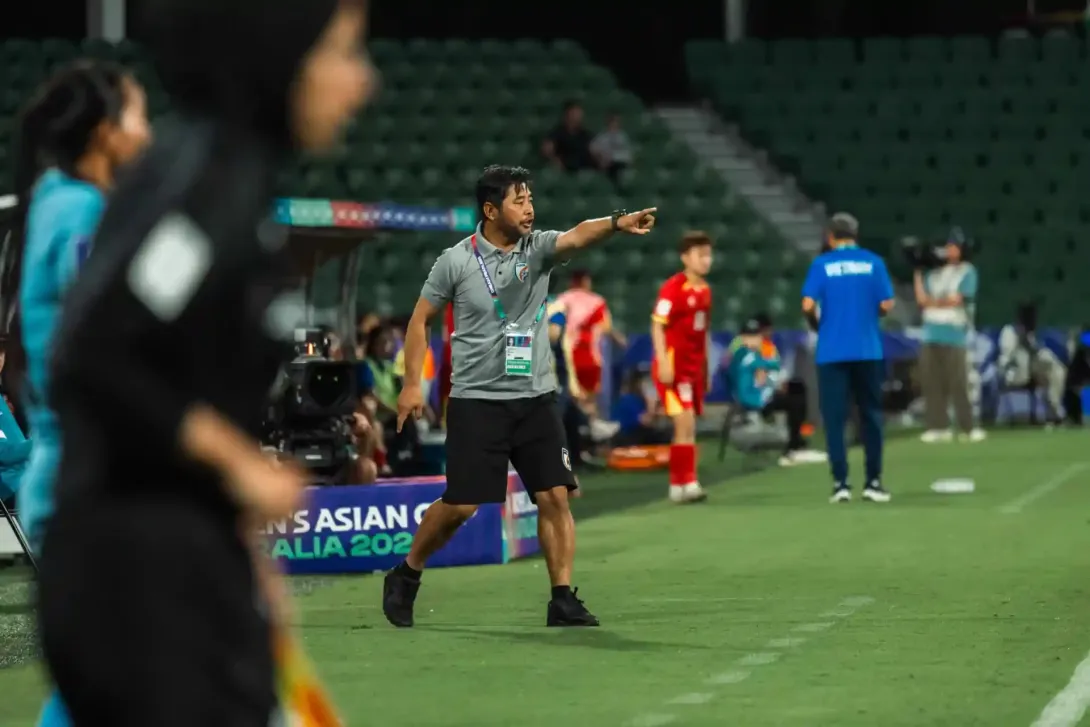
India’s women’s national football team is poised for a critical reset as it enters the FIFA Series 2026 in Kenya, following a difficult outing at the AFC Women’s Asian Cup. Opening against the host nation on April 11 at Nyayo National Stadium, the campaign reflects more than a return to competition—it marks the beginning of a structured rebuilding phase. With emphasis on tactical refinement, youth integration, and long-term competitiveness, the Blue Tigresses are leveraging this tournament as a platform to recalibrate performance metrics and reestablish credibility in international women’s football.
A Defining Moment for India’s Women’s Team
The India women’s national football team enters the FIFA Series 2026 at a pivotal juncture. The disappointment of an early exit from the AFC Women’s Asian Cup has prompted a reassessment of strategy, preparation, and execution.
The opening fixture against the Kenya women’s national football team at Nyayo National Stadium in Nairobi represents the first tangible step in this recalibration process. Beyond the result, the focus will be on performance indicators such as cohesion, adaptability, and tactical discipline.
Learning from Setbacks: A Catalyst for Reform
India’s recent campaign in the AFC Women’s Asian Cup exposed vulnerabilities in squad depth and match readiness. However, within high-performance environments, such outcomes often serve as inflection points for reform.
The technical staff is expected to emphasize structured gameplay, improved defensive organization, and enhanced physical conditioning. These adjustments align with broader global trends in women’s football, where marginal gains in preparation and analytics increasingly determine competitive outcomes.
FIFA Series 2026: A Platform for Strategic Development
The FIFA Series 2026 is designed to provide consistent international exposure for developing teams. For India, participation offers a controlled environment to test new combinations and integrate emerging talent into the senior setup.
This approach underscores a shift from short-term results to long-term capacity building. By prioritizing player development and tactical experimentation, the team aims to build a sustainable foundation capable of delivering results in future continental and global competitions.
Economic and Commercial Dimensions of Women’s Football
The resurgence of the India women’s national football team carries increasing commercial significance. Women’s football in India is gradually attracting corporate investment, media partnerships, and grassroots funding initiatives.
A competitive showing at the FIFA Series 2026 could enhance brand visibility and unlock new revenue streams, including sponsorship agreements and broadcasting opportunities. As global interest in women’s sports accelerates, India stands to benefit from aligning performance with marketability.
Building the Next Competitive Cycle
The tournament in Nairobi is not merely an isolated event; it marks the beginning of a new developmental cycle for Indian women’s football. Key priorities include:
- Youth Integration: Expanding the talent pipeline through academies and domestic competitions.
- Tactical Evolution: Adopting flexible systems to counter diverse international opponents.
- Performance Analytics: Leveraging data to optimize training, recovery, and match strategies.
These initiatives reflect a long-term vision aimed at narrowing the gap with higher-ranked teams.
Conclusion
India’s campaign in the FIFA Series 2026 represents a strategic reset rather than a routine participation. The lessons from the AFC Women’s Asian Cup have laid the groundwork for a more disciplined and forward-looking approach.
As the Blue Tigresses face the Kenya women’s national football team, the emphasis will be on rebuilding confidence, refining systems, and establishing a roadmap for sustained international competitiveness. In doing so, the team is not only redefining its sporting ambitions but also contributing to the broader evolution of women’s football in India.
Comments