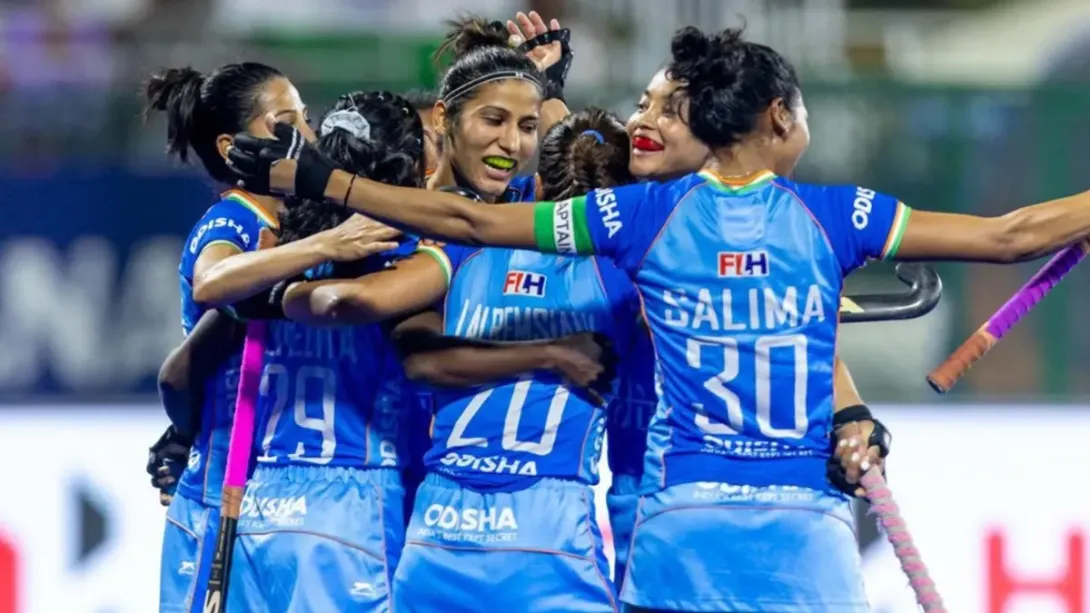
The India women's national field hockey team has embarked on a strategically significant tour to Buenos Aires for a four-match series scheduled from April 13 to April 17. Departing from Kempegowda International Airport, the team faces a critical leadership transition as regular captain Salima Tete misses the tour due to illness. In her absence, senior forward Navneet Kaur will assume captaincy responsibilities. The series is expected to test India’s tactical resilience, squad depth, and adaptability against a strong Argentine side.
Strategic Tour Amid Competitive Pressures
The departure of the India women's national field hockey team signals the commencement of an important international assignment in Buenos Aires. The four-match series offers India an opportunity to benchmark its performance against one of the world’s most competitive teams.
Argentina’s consistent presence among the elite in women’s hockey ensures that the series will be both demanding and revealing. For India, such engagements are essential to refine tactical frameworks, enhance match temperament, and build consistency against top-tier opposition.
Leadership Transition and Its Implications
A key storyline surrounding the tour is the absence of regular captain Salima Tete, whose illness has ruled her out of the series. Her leadership, particularly in midfield orchestration, has been central to India’s recent performances.
Stepping into this leadership vacuum is Navneet Kaur, a seasoned forward with considerable international experience. Her appointment as stand-in captain reflects a strategic decision to rely on experience and composure. Navneet’s ability to lead from the front—both literally and figuratively—will be crucial in maintaining team cohesion and competitive intensity.
Tactical Adjustments and On-Field Dynamics
The shift in leadership is likely to influence India’s tactical approach. With Navneet Kaur at the helm, there may be a greater emphasis on attacking transitions and offensive pressure. However, balancing aggression with defensive discipline will remain critical against a technically proficient Argentine side.
The absence of Salima Tete could also necessitate adjustments in midfield structure, requiring other players to assume greater responsibility in ball distribution and game control. Such scenarios often serve as a litmus test for squad depth and adaptability.
Broader Impact on Indian Hockey’s Growth Trajectory
Beyond the immediate competitive context, the tour carries broader implications for Indian women’s hockey. International exposure against elite opponents plays a pivotal role in elevating performance standards and enhancing global rankings.
Strong performances can translate into increased visibility, attracting sponsorships and institutional investment. As the sport continues to gain traction in India, consistent international results are essential to sustaining momentum and expanding its commercial footprint.
Outlook: A Test of Resilience and Depth
As the series unfolds from April 13 to April 17 in Buenos Aires, the focus will be on how effectively the team navigates its leadership transition. The ability to deliver cohesive performances under altered circumstances will provide valuable insights into the squad’s maturity and long-term potential.
Conclusion
The Argentina tour represents a defining moment for the India women's national field hockey team. With Navneet Kaur stepping in for Salima Tete, the team faces both challenge and opportunity. The outcomes of this series will not only influence immediate results but also shape India’s strategic direction in the evolving landscape of international women’s hockey.
Comments