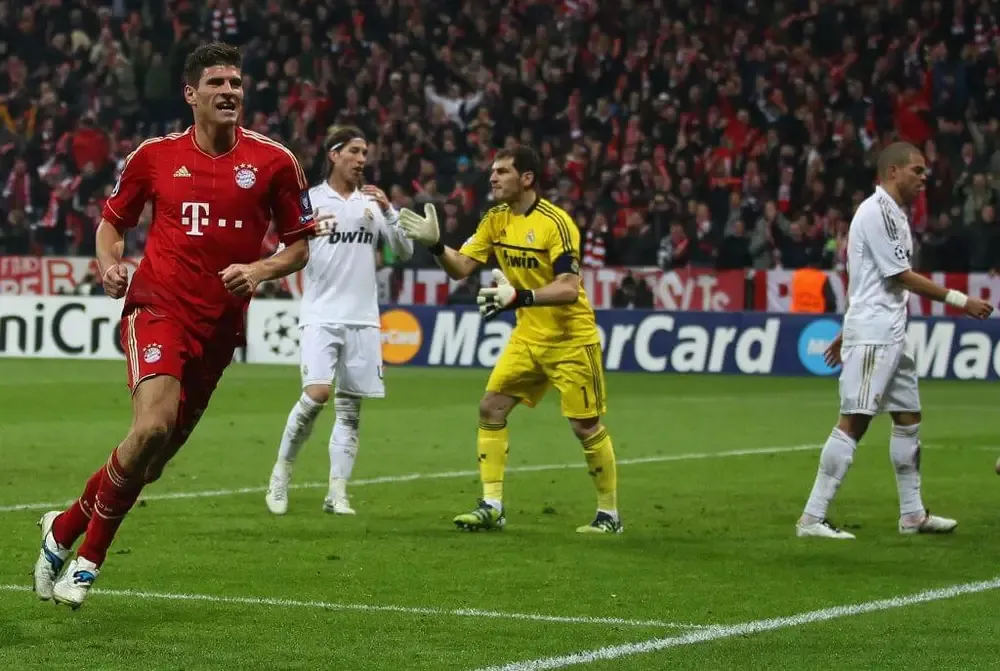
FC Bayern Munich secured a vital first-leg advantage against Real Madrid CF in a high-profile European fixture, strengthening its position in one of football’s most commercially influential competitions. The result places Bayern in a favorable tactical and financial position ahead of the return leg, where progression could unlock significant revenue streams tied to broadcasting rights and sponsorships. For Real Madrid, the setback introduces pressure to deliver a comeback performance. Beyond the sporting narrative, the match underscores the economic weight of elite European football and its impact on global sports business dynamics.
Bayern Munich Executes a Calculated Game Plan
FC Bayern Munich delivered a disciplined and strategically sound performance to secure a first-leg lead over Real Madrid CF. The German club combined defensive organization with efficient attacking transitions, ensuring control over key phases of play.
This measured approach reflects Bayern’s broader operational philosophy—precision, efficiency, and adaptability—traits that have consistently underpinned its domestic and European success. By capitalizing on critical moments, Bayern has positioned itself advantageously for the decisive return fixture.
Real Madrid Faces a Familiar Test of Resilience
Despite the setback, Real Madrid CF remains a formidable contender, particularly given its historic reputation for comebacks in European competitions. The Spanish club now faces the challenge of overturning the deficit, a scenario it has navigated successfully in the past.
The focus will be on tactical recalibration and improved execution in the second leg. Real Madrid’s ability to respond under pressure will be critical, not only for progression but also for maintaining its status as a dominant force in global football.
Economic Implications of a High-Profile Fixture
Matches between clubs of this stature carry substantial financial implications. Progression in elite European competitions often translates into significant earnings from prize money, sponsorship bonuses, and enhanced broadcasting revenues.
For FC Bayern Munich, maintaining its advantage could result in incremental financial gains that strengthen its already robust commercial portfolio. Conversely, Real Madrid CF faces potential revenue implications should it fail to advance, highlighting the high-stakes nature of such encounters.
Global Brand Value and Market Influence
Both Bayern Munich and Real Madrid rank among the most valuable brands in international sports. Fixtures between them attract millions of viewers worldwide, amplifying their commercial reach and reinforcing long-term sponsorship agreements.
From a business perspective, performance in these marquee matches directly influences brand perception, fan engagement, and market expansion strategies. Success on the pitch often translates into increased merchandise sales, digital engagement, and global fanbase growth.
Looking Ahead
As the tie progresses, attention will shift to the return leg, where tactical nuance and मानसिक resilience will determine the outcome. Bayern Munich will aim to consolidate its lead, while Real Madrid will seek to script another memorable comeback.
In the broader context of the sports economy, the result will shape not only competitive trajectories but also financial outcomes and brand narratives. The intersection of performance and profitability ensures that this clash remains significant far beyond the boundaries of the pitch.
Comments