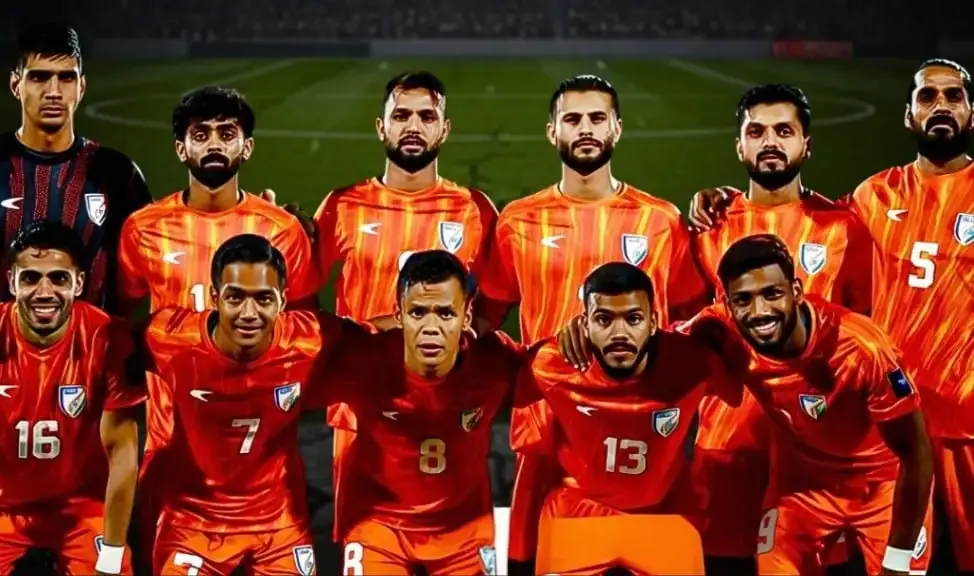
The participation of the India national football team in the Unity Cup 2026 marks a pivotal step in the globalization of Indian football. Scheduled in London from May 26 to May 30, the tournament will feature competitive fixtures against Nigeria national football team, Jamaica national football team, and Zimbabwe national football team. Beyond competition, the event underscores a broader transformation in football economics, where diaspora engagement and global fanbases drive value creation. For India, the Unity Cup presents both a sporting challenge and a strategic opportunity to expand its international footprint.
A Strategic Leap for Indian Football
India’s entry into the Unity Cup 2026 signals a deliberate move toward greater international integration. The tournament, structured as a four-team knockout competition, provides the Blue Tigers with exposure to diverse playing styles and competitive environments.
Such participation reflects a broader ambition: positioning Indian football within a global ecosystem where visibility and engagement are as critical as on-field performance.
The Emergence of Diaspora-Centric Competitions
The Unity Cup represents a new paradigm in international football. Traditionally, friendly matches served as preparatory exercises with limited commercial significance. However, modern invitational tournaments are increasingly designed as hybrid events—combining sport, culture, and commerce.
In metropolitan hubs like London, large diaspora communities create ready-made audiences. This dynamic transforms matches into cultural festivals, enhancing ticket demand, sponsorship appeal, and broadcast reach. The result is a commercially viable model that extends beyond conventional sporting frameworks.
Competitive Landscape and Tactical Exposure
Facing teams such as Nigeria, Jamaica, and Zimbabwe introduces India to varied tactical systems and physical intensities. Each opponent brings distinct strengths, from athleticism to technical flair, offering valuable learning opportunities.
For the Indian squad, success will hinge on adaptability and execution under pressure. Even in defeat, exposure to such competition is likely to accelerate development and improve international competitiveness.
Commercial Upside and Brand Positioning
Participation in globally hosted tournaments carries measurable financial implications. Increased visibility among international audiences can enhance sponsorship prospects and elevate broadcast value.
For Indian football, the Unity Cup serves as a platform to strengthen brand identity, particularly among diaspora communities that maintain strong emotional and cultural connections to the national team. This engagement can translate into long-term revenue streams and expanded market reach.
Institutional Vision and Long-Term Strategy
For All India Football Federation, the decision to compete in the Unity Cup aligns with a forward-looking strategy aimed at internationalization. By engaging in high-profile events, the federation seeks to build credibility, attract investment, and foster global partnerships.
This approach reflects a recognition that modern football success is shaped not only by results but also by strategic positioning within the global sports economy.
Conclusion
India’s debut in the Unity Cup 2026 encapsulates a broader shift in football’s global landscape—where diaspora engagement, commercial innovation, and competitive ambition intersect. For the Blue Tigers, the tournament offers more than a series of matches; it represents an अवसर to redefine their international identity. As the sport continues to evolve, such initiatives will be instrumental in bridging the gap between potential and performance, both on and off the field.
Comments