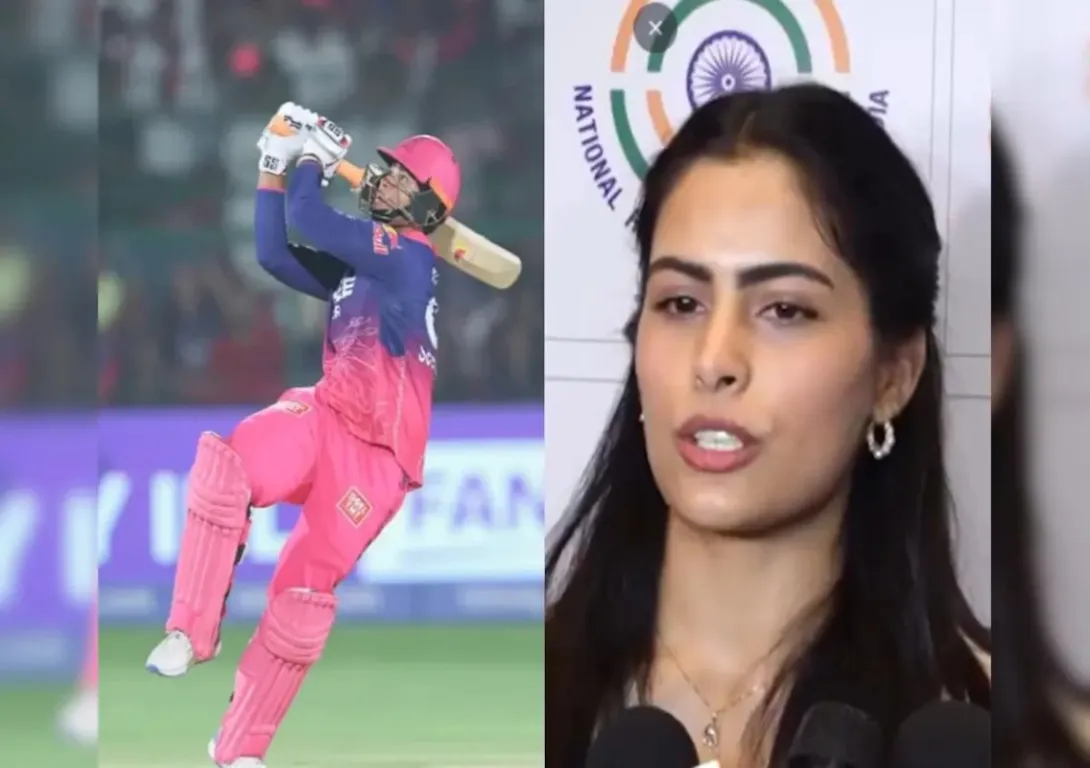
An offhand media question directed at Olympic shooter Manu Bhaker regarding young cricket talent Vaibhav Suryavanshi has sparked a wider national conversation about the hierarchy of sports in India. The interaction occurred during the 75th anniversary celebrations of the National Rifle Association of India, where Bhaker responded diplomatically to the query. However, the framing of the question itself drew significant attention online, with many social media users criticising what they perceived as an overemphasis on cricket compared to Olympic sports. The episode has reignited discussions on media bias, athlete recognition, and structural inequalities in Indian sporting culture.
A Routine Question That Escalated Into a National Debate
During a commemorative event marking the 75th anniversary of the National Rifle Association of India, Olympic medalist Manu Bhaker was asked to comment on the rapid rise of teenage cricket prospect Vaibhav Suryavanshi.
While the question appeared routine within a sporting context, it quickly became a catalyst for broader public discussion. Bhaker responded with composure and encouragement, acknowledging the young athlete’s emergence, but the framing of the question itself became the focal point of attention.
Social Media Reaction and Public Discourse
Following the exchange, social media platforms saw widespread debate over the appropriateness of the question. A significant section of users argued that it reflected a persistent tendency in Indian sports discourse to centre cricket above other disciplines.
Others viewed the reaction as an overinterpretation, suggesting that cross-sport references are natural in multi-sport environments. However, the dominant narrative online highlighted concerns about unequal visibility and recognition for non-cricket athletes.
Cricket’s Structural Dominance in India’s Sporting Ecosystem
The discussion has once again highlighted the structural imbalance within India’s sporting ecosystem, where cricket enjoys disproportionate media coverage, commercial investment, and public engagement.
In contrast, Olympic sports such as shooting—where athletes like Manu Bhaker have achieved international success—often struggle for comparable visibility despite delivering consistent results on the global stage.
This disparity extends into sponsorship opportunities, broadcast prioritisation, and long-term athlete branding potential.
Emerging Athletes and Media Narratives
The reference to Vaibhav Suryavanshi, a rising figure in Indian cricket, reflects the growing attention given to youth talent in the country’s most commercially dominant sport.
However, the juxtaposition of athletes from vastly different sporting ecosystems raises questions about narrative balance in sports journalism. Analysts suggest that while celebrating emerging talent is important, contextual sensitivity is essential when drawing comparisons across disciplines.
The Role of Media Framing in Sport
The incident has also brought renewed scrutiny to how media framing influences public perception. The way questions are structured in interviews can subtly shape narratives around sporting importance and athlete hierarchy.
In this case, critics argue that the framing inadvertently reinforced cricket’s dominance, even within an event dedicated to celebrating achievements in shooting sports.
Conclusion
The interaction involving Manu Bhaker and references to Vaibhav Suryavanshi at an event hosted by the National Rifle Association of India has evolved into a broader commentary on India’s sporting priorities.
Beyond the immediate exchange, the episode underscores a deeper structural issue: the unequal distribution of attention and resources across sports. As India continues to produce world-class talent across multiple disciplines, the challenge lies in ensuring balanced recognition and equitable visibility in both media and public discourse.
Comments