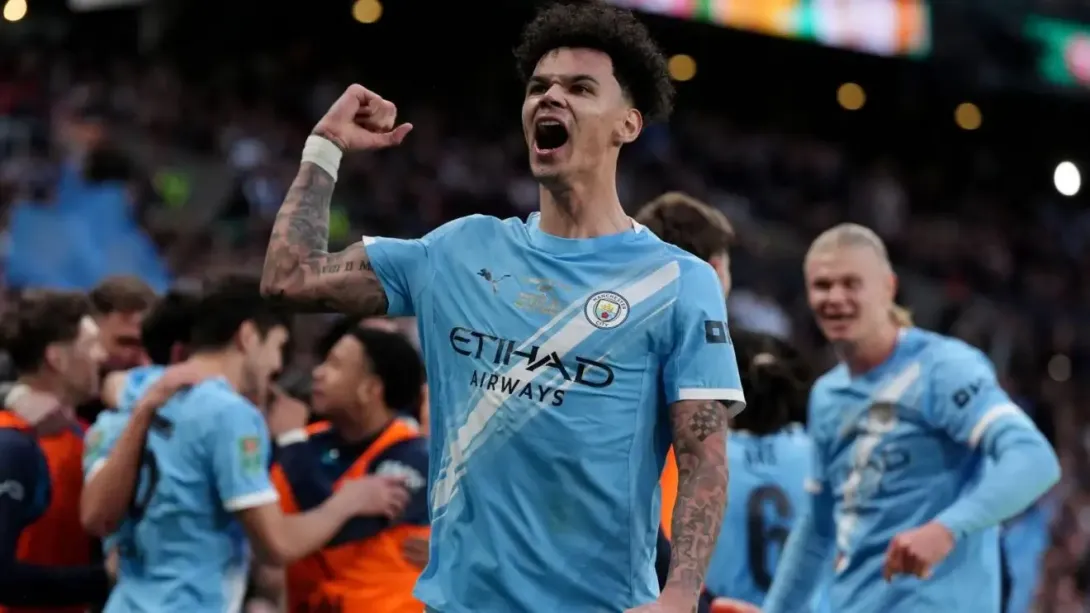
Manchester City F.C. defeated Arsenal F.C. to claim the EFL Cup title in a closely watched final that underscored the competitive intensity of English football. City’s disciplined structure, clinical finishing, and tactical cohesion proved decisive against an Arsenal side that showed moments of promise but struggled to convert opportunities into goals. The result further strengthens Manchester City’s reputation as one of Europe’s most dominant football institutions. Beyond sporting success, the victory highlights the growing commercial and strategic value of domestic cup competitions within the modern football economy.
A High-Profile Showdown in English Football
The final of the EFL Cup—commonly known as the Carabao Cup—brought together two of England’s most influential football institutions: Manchester City F.C. and Arsenal F.C..
The match carried significant weight for both clubs. For Manchester City, the fixture represented another opportunity to reinforce its dominance in domestic competitions. Arsenal, meanwhile, entered the contest seeking silverware that could validate the club’s ongoing competitive revival.
Played before a global audience, the encounter demonstrated the increasing international reach of English football’s domestic tournaments.
Tactical Discipline Drives Manchester City’s Success
From the outset, Manchester City F.C. displayed the strategic composure that has become synonymous with its modern football philosophy. The team controlled possession, dictated the tempo, and maintained a well-structured formation that limited Arsenal’s attacking momentum.
City’s ability to convert opportunities into goals proved decisive. Efficient passing sequences, intelligent movement off the ball, and disciplined defensive positioning created a balanced performance that left little room for error.
Football analysts observed that the victory reflected not only individual brilliance but also the effectiveness of Manchester City’s broader sporting model—one built on tactical sophistication and squad depth.
Arsenal’s Challenge in Breaking Defensive Structure
Despite the defeat, Arsenal F.C. demonstrated flashes of attacking creativity throughout the match. The club attempted to apply pressure through quick transitions and forward movement, particularly during phases when it pushed higher up the pitch.
However, Manchester City’s organized defensive structure limited Arsenal’s ability to create consistent scoring opportunities. Passing channels were effectively closed, and key attacking spaces were neutralized by City’s disciplined back line.
For Arsenal, the result represents both a setback and an important learning moment as the club continues its pursuit of sustained competitiveness at the highest level.
The Economic and Strategic Value of Domestic Cups
While often overshadowed by the Premier League and European competitions, the Carabao Cup plays an increasingly strategic role within the football ecosystem.
Winning the tournament provides clubs with more than just silverware. It enhances brand value, strengthens fan engagement, and reinforces a winning culture that can influence performance across multiple competitions.
For Manchester City, consistent success across domestic tournaments reflects a long-term investment strategy that combines elite coaching, advanced analytics, and significant financial backing.
Momentum for the Season Ahead
The triumph in the EFL Cup provides Manchester City F.C. with additional momentum as it continues competing for major domestic and European titles.
For Arsenal F.C., the final serves as a reminder of the marginal differences that define elite football. Strengthening attacking efficiency and maintaining composure in decisive moments will be critical as the club aims to translate progress into trophies.
As the season unfolds, the outcome of this final will likely influence the broader narrative of English football—where competitive excellence, strategic investment, and global visibility continue to reshape the sport’s economic and sporting landscape.
Comments