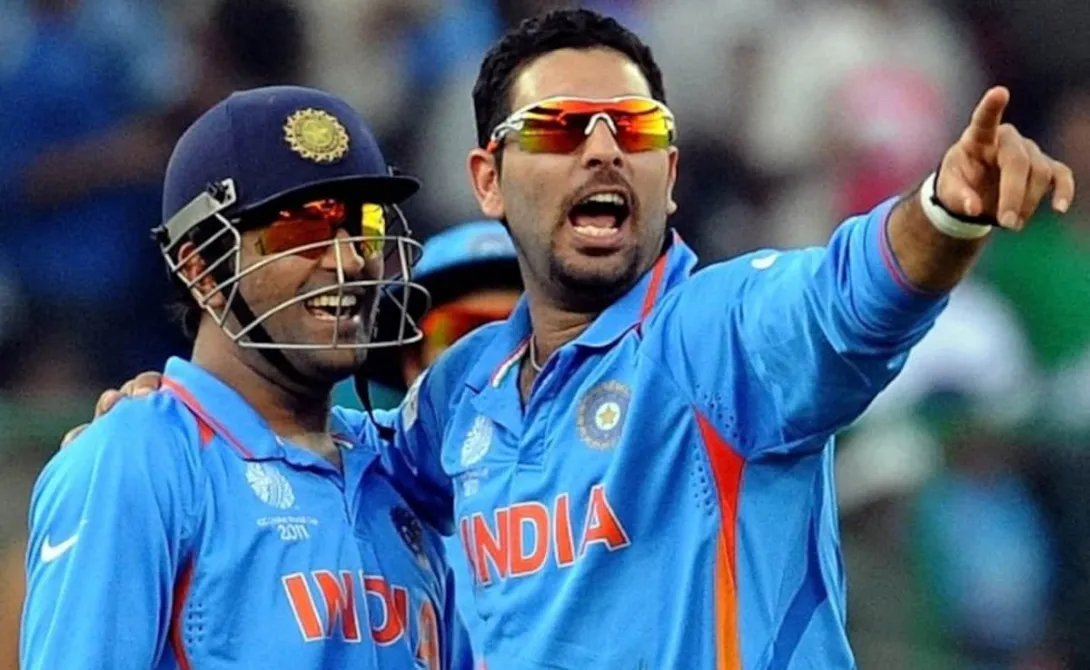
Comments from Yuvraj Singh have reignited debate around leadership strategy within Sunrisers Hyderabad during the ongoing Indian Premier League season. By questioning the rationale behind the franchise’s captaincy decision, Singh has drawn attention to the broader implications of leadership choices in a high-stakes, multi-billion-rupee sporting ecosystem. With franchises investing upwards of Rs. 10 crore in key personnel, captaincy is increasingly viewed as a strategic asset rather than a symbolic role. The discussion highlights how governance, performance accountability, and brand value intersect in modern cricket’s most commercially dynamic league.
A Debate That Extends Beyond the Boundary
The IPL is not merely a cricket competition; it is a sophisticated business ecosystem where leadership decisions can influence both sporting outcomes and financial performance. Yuvraj Singh’s remarks have amplified scrutiny on Sunrisers Hyderabad’s captaincy framework, raising questions about strategic clarity.
In professional sport, captaincy serves as the operational nucleus of a team. It shapes tactical execution, player confidence, and the ability to respond to dynamic match situations. Any perceived misalignment in leadership selection can quickly evolve into a broader governance debate.
Financial Stakes and Leadership Accountability
Franchise cricket operates on a model where capital allocation mirrors corporate investment strategies. Teams commit significant resources—often exceeding Rs. 8 crore to Rs. 15 crore for marquee players—making leadership decisions central to maximizing returns.
A captain’s role, therefore, transcends on-field responsibilities. It directly impacts player utilization, match outcomes, and ultimately revenue streams derived from sponsorships and media rights. From this perspective, Singh’s critique underscores the financial dimension of leadership accountability.
Strategic Cohesion and Team Performance
One of the central concerns in the ongoing debate is whether the captaincy aligns with the team’s overall strategy. Successful franchises typically exhibit coherence between leadership style, squad composition, and long-term vision.
Yuvraj Singh’s comments suggest that effective captaincy requires not only tactical expertise but also the ability to command authority within the dressing room. Leadership credibility often determines how well players execute plans under pressure—a critical factor in T20 cricket’s fast-paced environment.
Market Perception and Brand Equity
In the IPL’s commercially charged landscape, perception can be as influential as performance. Public observations from respected figures like Yuvraj Singh can shape narratives around a franchise’s decision-making competence.
For Sunrisers Hyderabad, maintaining stakeholder confidence is essential. Sponsors, investors, and fans closely monitor leadership stability, as it directly influences brand equity and long-term valuation. Even isolated critiques can have ripple effects in a league driven by visibility and engagement.
Governance Standards in a Multi-Billion-Rupee League
The broader issue highlighted by this episode is the importance of governance in franchise cricket. As the IPL continues to expand its global footprint, expectations around transparency and strategic rigor have intensified.
Franchises are increasingly evaluated not just on match results but on how effectively they manage leadership transitions, talent development, and resource allocation. Singh’s remarks, in this context, reflect a growing demand for professionalism and data-driven decision-making.
Conclusion: Captaincy as a Strategic Imperative
The scrutiny surrounding Sunrisers Hyderabad’s captaincy decision illustrates a fundamental shift in how leadership is perceived in modern cricket. It is no longer a ceremonial designation but a critical lever of competitive and financial success.
Yuvraj Singh’s intervention serves as a timely reminder that in a league defined by high investment and intense competition, leadership must deliver measurable value. For franchises aiming to remain competitive, aligning captaincy with long-term strategy is not optional—it is essential.
Comments