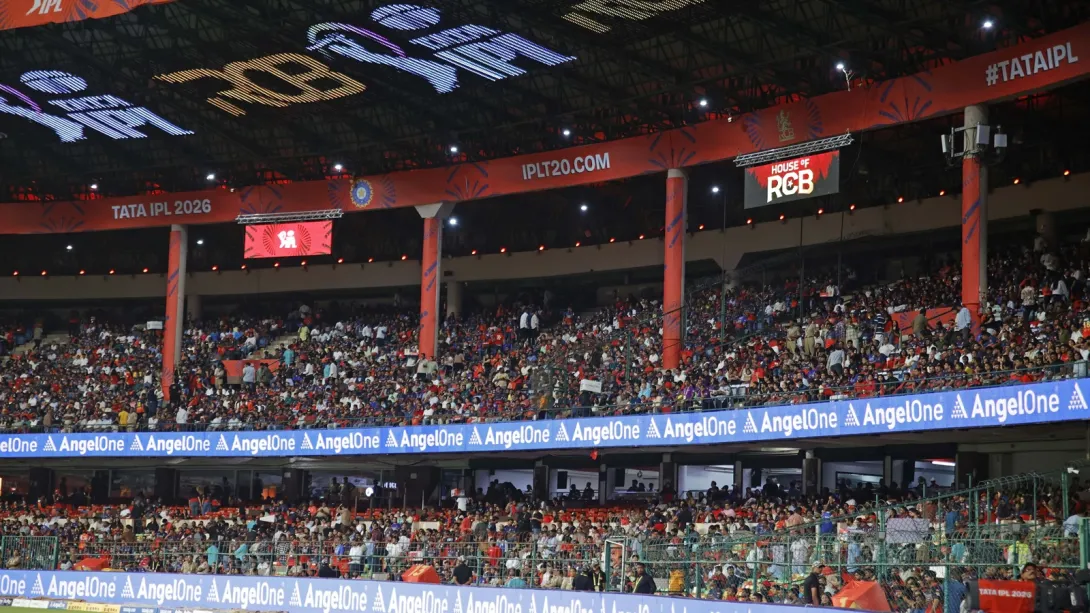
A dispute over stadium entertainment has placed the Indian Premier League (IPL) under scrutiny after Chennai Super Kings (CSK) lodged a formal complaint with the Board of Control for Cricket in India (BCCI). The issue stems from a song played during CSK’s April 5 away match against Royal Challengers Bengaluru (RCB), which the franchise deemed culturally insensitive. The track, associated with stereotypical portrayals of South Indian identity, was played ahead of CSK’s innings at Bengaluru’s M. Chinnaswamy Stadium. The episode raises broader questions about governance standards, brand risk, and cultural awareness within one of cricket’s most commercially significant leagues.
Incident Triggers Formal Complaint
The controversy unfolded during a high-profile fixture in the Indian Premier League, when Chennai Super Kings formally objected to the in-stadium audio played at their away game against Royal Challengers Bengaluru. The match, held on April 5 at the M. Chinnaswamy Stadium, witnessed the broadcast of a track containing the phrase “Dosa, idli, sambar, chutney, chutney” moments before CSK began their innings.
According to the franchise, the song—widely circulated in meme culture—carries undertones of regional stereotyping. CSK’s management characterized the timing and selection as inappropriate, arguing that such elements detract from the professionalism expected in a global sporting product.
Governance and Oversight in Focus
The complaint has been escalated to the Board of Control for Cricket in India, which oversees operational and commercial standards across IPL venues. While individual franchises manage on-ground execution in collaboration with host associations, the league’s governing body retains ultimate responsibility for maintaining uniform protocols.
From a governance standpoint, the episode highlights a structural vulnerability: decentralized control over stadium entertainment. In a tournament with multi-billion-rupee valuations and global broadcast reach, inconsistencies in execution—however minor—can trigger reputational repercussions.
Commercial Stakes and Brand Sensitivity
The IPL is not merely a sporting competition; it is a sophisticated commercial ecosystem. Franchises such as CSK operate as high-value brands with extensive sponsorship portfolios, media rights dependencies, and deeply engaged regional identities. Any perceived cultural insensitivity risks undermining this carefully cultivated equity.
Brand analysts note that fan loyalty in India is often intertwined with linguistic and cultural pride. Consequently, even symbolic missteps can have disproportionate consequences, potentially influencing merchandise sales, digital engagement, and sponsor sentiment. In financial terms, safeguarding brand perception is as critical as optimizing on-field performance.
The Evolving Role of Stadium Experience
Over the past decade, IPL venues have transformed into immersive entertainment hubs, where music, commentary, and fan engagement strategies are meticulously curated. However, the Bengaluru incident underscores the fine balance between localized flavor and national inclusivity.
What may be perceived as humorous or routine in one context can be interpreted as insensitive in another, particularly in a diverse market like India. The challenge for organizers lies in standardizing content guidelines without diluting the vibrancy that defines the IPL experience.
A Test Case for Institutional Response
The BCCI’s handling of the complaint will likely set a precedent for future incidents involving cultural representation. Industry observers expect a review of in-stadium content protocols, potentially leading to stricter compliance frameworks and centralized oversight mechanisms.
For the IPL, which continues to expand its global footprint and attract international investment, maintaining a reputation for professionalism and inclusivity is non-negotiable. The current episode, while limited in scope, serves as a reminder that in a league of such scale, even peripheral elements can carry strategic significance.
Conclusion: Beyond a Single Song
At its core, the controversy is less about a specific track and more about the standards governing a premier sporting property. As the IPL evolves into a global entertainment powerhouse, its stakeholders must navigate the complexities of cultural nuance with heightened sensitivity.
For CSK, the complaint reflects a broader commitment to protecting its identity and stakeholder interests. For the league, it is an अवसर—an opportunity—to reinforce the principles of respect, inclusivity, and operational excellence that underpin long-term commercial success.
Comments