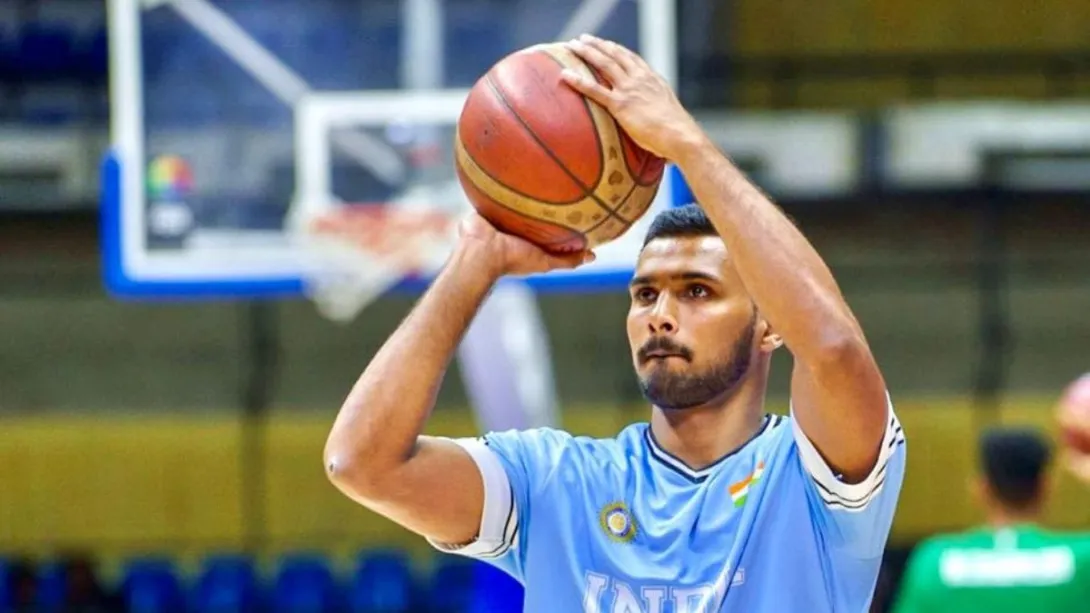
A quiet transformation is unfolding on basketball courts across India, where a new financial model is redefining how grassroots sports development can operate sustainably without depending on corporate sponsorship, venture capital, or government grants. Spearheaded by Ulhas KS, the initiative functions through a tiered contribution structure in which financially privileged athletes subsidize training access for those from weaker economic backgrounds. Positioned as a system of intentional design rather than charity, the model blends social entrepreneurship with sports infrastructure development. As India searches for scalable and inclusive sporting ecosystems beyond cricket, the initiative is increasingly being viewed as a potential blueprint for balancing financial sustainability with equitable athletic opportunity.
A New Sports Funding Framework Is Emerging Quietly
Across several basketball courts in India, a different kind of economic experiment is taking shape — one that challenges conventional assumptions surrounding sports development and financial sustainability.
Unlike many modern athletic ecosystems built on corporate sponsorships, investor funding, or institutional grants, this model functions through internal redistribution. Participants who can afford premium training fees effectively support infrastructure and operational costs, while those from lower-income backgrounds contribute reduced amounts or receive access entirely free of charge.
At the center of this initiative is Ulhas KS, who has consciously rejected the language of charity and philanthropy.
Instead, he describes the structure as “design” — a carefully engineered system intended to make sports participation accessible without compromising financial viability.
The distinction is subtle but significant. It transforms assistance from an act of benevolence into a structural principle embedded directly into the ecosystem itself.
Beyond Charity: A System Built Around Sustainability
India’s grassroots sports sector has long struggled with a difficult balancing act.
High-quality coaching, infrastructure, and athlete development programs require funding, yet expensive participation costs often exclude talented athletes from economically weaker communities. Traditional approaches typically rely on sponsorships, subsidies, or donor-driven support, many of which fluctuate unpredictably.
The framework developed by Ulhas KS approaches the problem differently.
Rather than depending on external intervention, the model creates a self-sustaining internal economy. Those with greater financial capacity contribute more, indirectly financing opportunities for those unable to pay.
The result resembles a hybrid between a sports academy and a social enterprise — commercially functional yet socially inclusive.
Importantly, the structure avoids presenting free access as an act of sympathy. Instead, it normalizes participation across economic backgrounds by integrating affordability directly into operational planning.
That design philosophy reflects a growing global shift toward sustainability-focused social models rather than purely donation-based systems.
Grassroots Sports in India Continue to Face Structural Barriers
The emergence of such a model highlights broader funding challenges within Indian sport.
While India has significantly expanded its sporting ambitions over the past decade, financial support remains heavily concentrated around cricket. Olympic and grassroots disciplines frequently operate within fragmented funding environments where access to coaching and facilities remains inconsistent.
Basketball, despite increasing urban popularity and growing youth engagement, continues to face infrastructure limitations and relatively modest commercial investment compared to more established sports.
As a result, many promising athletes struggle to access professional training environments during critical developmental stages.
Traditional academy models often encounter an uncomfortable trade-off: raising fees improves sustainability but reduces accessibility, while lowering costs increases inclusion but weakens operational stability.
The basketball initiative led by Ulhas KS attempts to bridge that divide by distributing economic responsibility internally rather than externally.
Social Enterprise Principles Are Reshaping Sports Development
The initiative also reflects a broader transformation occurring globally in the intersection between sports and social entrepreneurship.
Increasingly, grassroots athletic programs are adopting hybrid operational models that combine commercial discipline with social objectives. These systems recognize that pure philanthropy frequently struggles with scalability, while purely profit-driven structures risk excluding large segments of society.
Ulhas KS’s approach appears to sit precisely between those two extremes.
By positioning inclusion as a structural feature rather than a charitable afterthought, the model creates a more stable and psychologically balanced environment for athletes from different economic backgrounds.
This is particularly important in youth development ecosystems, where dignity and belonging can significantly influence long-term participation and confidence.
Modern social enterprise frameworks often prioritize empowerment over dependency. The basketball ecosystem being built across these courts appears designed around exactly that principle.
Basketball’s Expansion in India Creates Strategic Opportunity
The timing of this initiative is especially relevant given basketball’s gradual rise within India’s sporting landscape.
Although the sport remains commercially smaller than cricket or football, basketball has experienced consistent growth at the school and community level, particularly in urban centers. International leagues, digital streaming, and youth engagement programs have expanded visibility and interest among younger audiences.
However, growth in participation has not always been matched by equal expansion in infrastructure and accessible training systems.
This gap creates a strategic opportunity for grassroots models capable of combining affordability with quality coaching.
If sustainable ecosystems can be built at the local level, basketball could potentially emerge as one of India’s most scalable urban sports over the next decade.
In that context, the model developed by Ulhas KS may represent more than a local initiative. It could become part of a broader conversation regarding how India finances sporting access beyond elite institutional structures.
Economic Inclusion May Become Competitive Advantage
One of the initiative’s most significant implications lies in its approach to talent identification.
India’s population offers extraordinary athletic potential, yet economic inequality frequently prevents gifted athletes from entering organized sports systems early enough to maximize development opportunities.
By reducing financial barriers without eliminating operational sustainability, the basketball ecosystem expands the talent pool available for competitive development.
In business terms, inclusion becomes not merely a moral objective but a strategic advantage.
Broader participation increases the likelihood of discovering elite-level talent while simultaneously strengthening community engagement and long-term ecosystem resilience.
This philosophy increasingly aligns with global sports development trends, where accessibility is viewed as essential to building competitive national sporting systems.
The Human Impact Extends Beyond Basketball
While the initiative is rooted in sport, its social implications reach much further.
Organized athletic environments often provide mentorship, discipline, emotional structure, and community support for young participants. For many children from financially vulnerable backgrounds, access to sport can influence educational outcomes, social confidence, and long-term life opportunities.
The basketball courts therefore function not only as training spaces but also as community ecosystems.
By integrating athletes from diverse economic backgrounds within a shared environment, the model subtly challenges the exclusivity that frequently defines private sports training systems.
That integration may ultimately become one of its most important contributions.
A Quiet Model With National Relevance
At present, the initiative remains relatively understated compared to India’s major commercial sporting institutions.
There are no billion-dollar valuations attached to it. No celebrity investors dominate headlines. No large-scale corporate branding campaigns define its identity.
Yet its significance may lie precisely in that simplicity.
In a country searching for scalable and inclusive approaches to grassroots sports development, the financial architecture taking shape on these basketball courts offers an alternative vision — one where sustainability and accessibility coexist rather than compete.
Ulhas KS insists the system is not charity.
Increasingly, it appears he may be designing something far more influential.
Comments