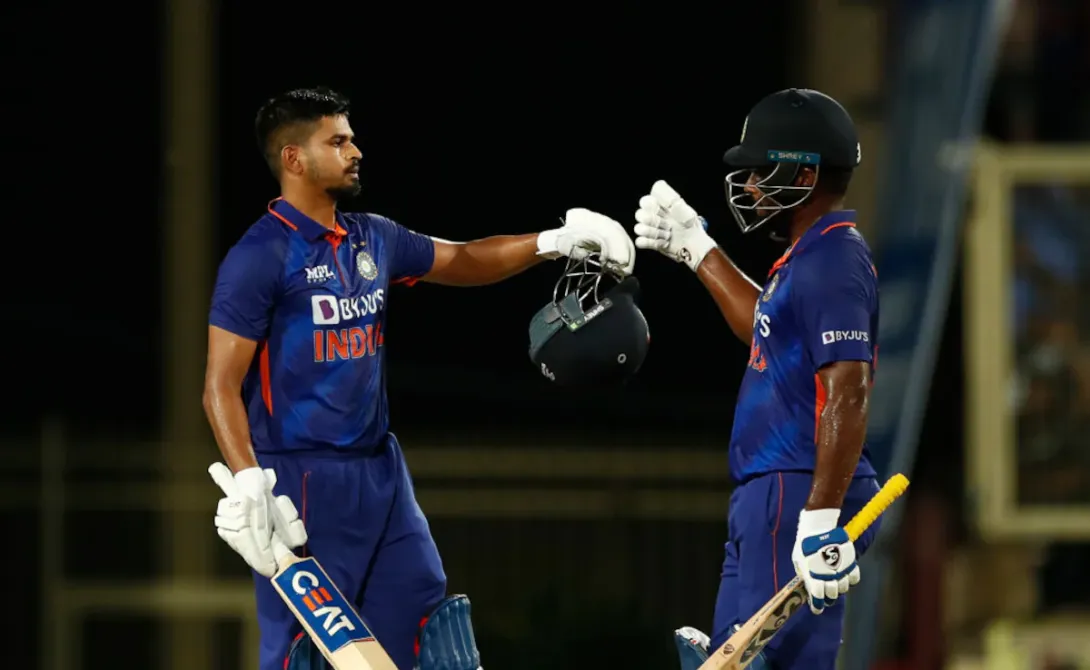
Indian cricket appears to be approaching a significant leadership transition in the T20 format, with growing speculation that the current captaincy structure could soon undergo a major reshuffle. Reports indicate that selectors and senior decision-makers are evaluating future leadership candidates capable of guiding the national side through the next phase of global white-ball competition. Among the leading contenders are Shreyas Iyer and Sanju Samson, both of whom have strengthened their credentials through consistent performances and proven leadership experience in franchise cricket. Samson’s impressive resurgence with Chennai Super Kings during IPL 2026 has further intensified the conversation surrounding India’s evolving captaincy roadmap.
Indian Cricket Signals Possible Leadership Transition
India’s T20 cricket setup appears to be entering a period of strategic recalibration as discussions surrounding the national captaincy gain momentum. While no formal announcement has been made by the Board of Control for Cricket in India (BCCI), multiple reports suggest that selectors are actively assessing long-term leadership alternatives ahead of upcoming ICC tournaments and future bilateral assignments.
The developments indicate that Indian cricket administrators may be preparing for a generational shift aimed at ensuring continuity, tactical innovation, and long-term squad stability in the shortest format of the game.
Leadership in contemporary T20 cricket extends beyond on-field decision-making. Captains are increasingly expected to function as strategic managers capable of balancing player workloads, adapting rapidly to match conditions, and maintaining cohesion within high-pressure environments. Against this backdrop, the emergence of new leadership candidates reflects the broader modernization of India’s cricketing structure.
Shreyas Iyer Emerges as a Strong Strategic Candidate
Among the names gaining significant traction is Shreyas Iyer, whose reputation as a composed and tactically astute cricketer has strengthened considerably over recent seasons.
Iyer’s leadership credentials have evolved through his performances in franchise cricket, where he has consistently demonstrated calmness under pressure and an ability to manage complex match situations effectively. His batting reliability in middle-order scenarios has also enhanced his standing within the national setup, making him a multifaceted option for selectors seeking stability and leadership continuity.
Cricket analysts increasingly view Iyer as a modern T20 leader — proactive in strategy, adaptable in approach, and capable of commanding respect within a dressing room filled with high-profile players. His growing influence within India’s white-ball ecosystem has naturally positioned him among the foremost contenders for the role.
Sanju Samson’s Revival Reshapes the Captaincy Debate
Equally notable is the rapid rise of Sanju Samson as a legitimate candidate in the leadership conversation. The wicketkeeper-batter has enjoyed a remarkable resurgence since joining Chennai Super Kings ahead of the IPL 2026 season.
Samson’s recent performances with the bat have reinforced his reputation as one of India’s most naturally gifted stroke-makers, but it is his maturity and composure that appear to have elevated his leadership profile.
Although he does not captain Chennai Super Kings, his presence within one of the IPL’s most tactically sophisticated franchises has reportedly contributed to his development as a decision-maker and senior dressing-room figure. Observers have noted greater consistency in his game management, situational awareness, and overall temperament — qualities often associated with successful international captains.
His prior leadership experience with Rajasthan Royals has further strengthened his credentials. During his tenure, Samson earned recognition for maintaining a balanced leadership style while fostering a competitive team environment despite fluctuating results.
Chennai Super Kings’ Influence on Leadership Development
The role of Chennai Super Kings in Samson’s transformation cannot be overlooked. Widely regarded as one of the IPL’s most professionally managed franchises, CSK has built a reputation for nurturing tactical discipline, emotional composure, and role clarity among players.
Operating within such an environment appears to have refined Samson’s understanding of leadership dynamics at the elite level. Even without the formal title of captain, his integration into the CSK structure has reportedly enhanced his standing among selectors evaluating future leadership possibilities.
This evolution reflects a broader trend in modern cricket, where franchise ecosystems increasingly serve as incubators for future national captains.
Indian Cricket’s Leadership Model Continues to Evolve
The growing competition for India’s T20 captaincy underscores the depth of leadership talent currently available within the national setup. Unlike previous eras dominated by singular personalities, contemporary Indian cricket is developing multiple leadership options capable of adapting to different tactical and competitive environments.
Selectors are likely to prioritize candidates who combine consistent performance with emotional intelligence, strategic flexibility, and strong communication skills. The increasing influence of data analytics, workload management, and franchise cricket has fundamentally transformed the expectations associated with captaincy roles.
In this context, both Shreyas Iyer and Sanju Samson represent distinct but compelling leadership profiles capable of guiding India through the next phase of T20 cricket.
A Defining Decision Awaits Indian Cricket
As speculation intensifies, Indian cricket administrators face a decision that could shape the national team’s competitive trajectory for years to come. Leadership transitions in modern cricket are rarely symbolic; they influence tactical identity, player culture, and long-term team development.
Whether selectors ultimately place their trust in the strategic calmness of Shreyas Iyer or the evolving maturity of Sanju Samson, the ongoing debate reflects a broader reality — India is preparing for a new era of T20 leadership defined by adaptability, intelligence, and modern cricketing sophistication.
Comments