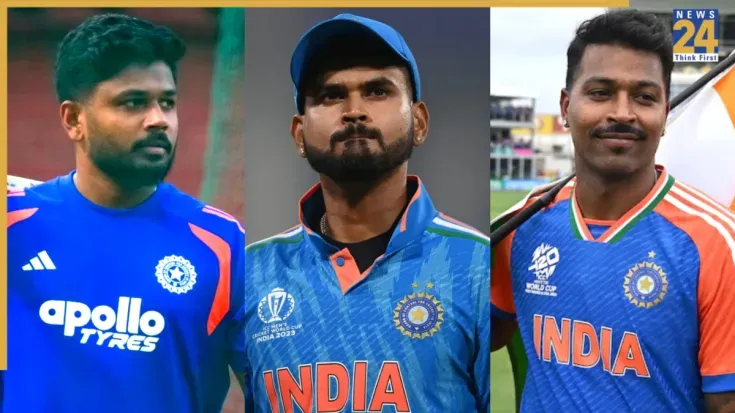
The debate surrounding India’s T20 captaincy has intensified in recent days, with media outlets and cricketing circles actively speculating on possible leadership changes. Despite the growing volume of discussion, no official communication has been issued, leaving the situation firmly in the realm of conjecture. The uncertainty has led to multiple names being circulated as potential candidates, creating a fluid and rapidly evolving narrative. Observers describe the unfolding scenario as akin to a “musical chairs” dynamic, where positions appear to shift continuously without confirmation. Amid this atmosphere of speculation, informed voices within the cricket ecosystem remain largely reserved, reflecting a broader pause in formal decision-making at the administrative level.
Rising Speculation Around India’s T20 Leadership
The question of India’s T20 captaincy has emerged as a dominant talking point across sports media, drawing sustained attention from analysts, commentators, and fans alike. Over the past several days, discussions have intensified significantly, despite the absence of any official announcement from governing authorities.
The conversation has largely been shaped by speculation, with multiple names being discussed as possible successors or contenders. However, none of these discussions have been formally validated, and no definitive direction has been communicated regarding leadership changes.
This lack of clarity has created a fertile environment for conjecture, with narratives evolving rapidly in the absence of authoritative confirmation.
“Musical Chairs” Analogy Captures Fluid Situation
The ongoing discourse has increasingly been likened to a game of musical chairs, reflecting the uncertainty surrounding leadership positioning.
In this analogy, multiple potential candidates are seen as circulating within the framework of selection discussions, yet no final decision has been publicly established. The comparison highlights the transient and speculative nature of current reporting, where perceived frontrunners may shift frequently depending on evolving narratives.
Such fluidity is not uncommon in high-profile sporting decisions, where leadership roles are often evaluated through a combination of performance metrics, long-term strategic planning, and team balance considerations.
Silence From Official Channels Adds to Uncertainty
One notable aspect of the current situation is the absence of formal communication from key decision-making bodies within the cricketing structure.
This silence has contributed significantly to the rise in speculation, as media outlets and commentators attempt to interpret potential scenarios without official reference points. In professional sporting environments, such gaps in communication often lead to narrative expansion driven by external interpretation rather than confirmed information.
At this stage, there appears to be no publicly available indication of a finalized decision regarding the leadership structure of India’s T20 setup.
Leadership in Modern Cricket: Beyond Symbolic Responsibility
In contemporary international cricket, captaincy extends well beyond symbolic leadership on the field. It is now a multidimensional role that influences tactical execution, squad selection dynamics, dressing room culture, and long-term strategic direction.
For a team of India’s stature, leadership decisions carry additional weight due to the scale of public engagement, commercial interests, and performance expectations associated with the national side.
As a result, captaincy transitions are typically approached with careful deliberation, ensuring alignment between immediate competitive goals and broader developmental strategies.
Media Ecosystem Amplifies Narrative Volatility
The current phase of speculation also highlights the influence of the modern media ecosystem in shaping sporting narratives.
In the absence of official confirmation, discussions tend to expand rapidly across digital platforms, where multiple interpretations and projections circulate simultaneously. This creates a dynamic environment in which perception often evolves faster than verified information.
The result is a narrative landscape that is both highly engaged and inherently unstable, particularly when it involves leadership roles within prominent sporting institutions.
A Decision Awaited in a Climate of Speculation
As things stand, the question of India’s T20 captaincy remains unresolved, with no official announcement to confirm or deny ongoing speculation.
The current phase appears to represent a transitional period in which internal evaluation is likely ongoing, but not yet concluded in public terms.
Until formal clarity emerges, discussions are expected to continue across media and cricketing circles, driven by both analytical interest and fan engagement.
What remains clear is that leadership decisions in modern cricket are no longer isolated administrative choices—they are high-impact decisions that shape competitive identity, public perception, and strategic direction on a national scale.
Comments