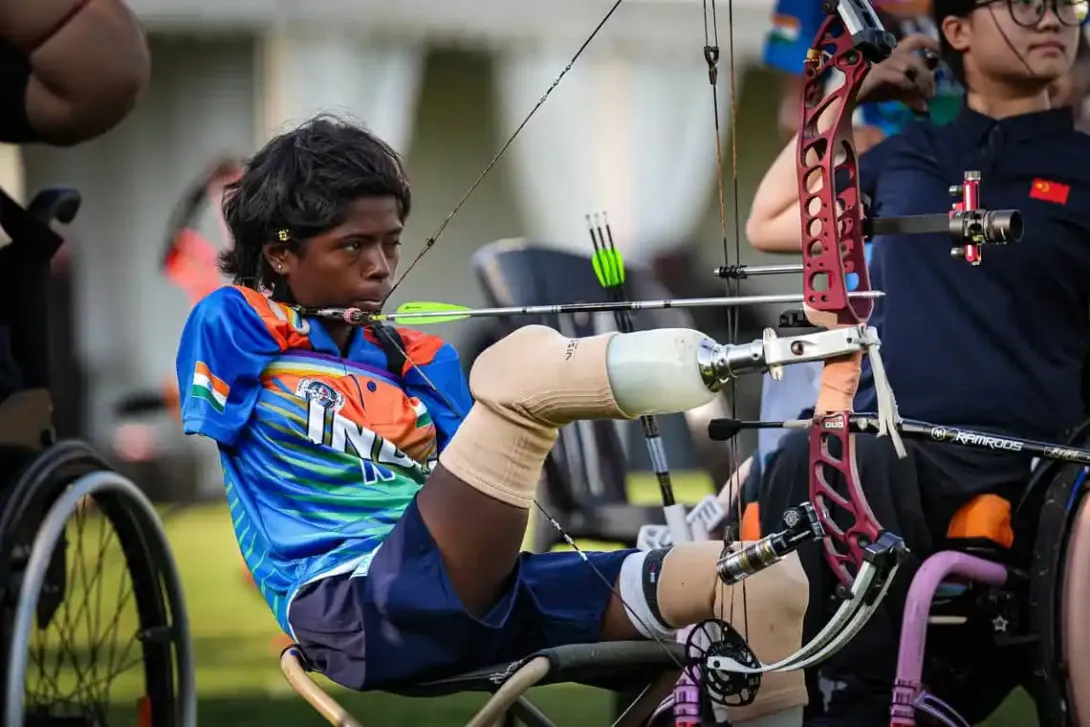
India delivered a dominant showing at the World Archery Para Series Bangkok, led by a gold medal in the compound women’s team event. The pairing of Sheetal Devi and Payal Nag clinched victory with a 150–147 win over Kazakhstan, underscoring composure under pressure. The result formed part of a wider medal surge, particularly in team categories across compound and recurve formats. Beyond sporting success, the performance signals a strengthening para-sports ecosystem in India, where investment, talent development, and institutional focus are beginning to yield consistent international returns.
A Statement Victory in Bangkok
India’s gold medal triumph in the compound women’s team event marked a defining moment at the World Archery Para Series. Sheetal Devi and Payal Nag combined technical precision with mental resilience to edge Kazakhstan in a closely contested final.
The narrow 150–147 scoreline reflects the high level of competition, where outcomes hinge on marginal gains. India’s ability to deliver in such conditions highlights the maturation of its para archery program.
Medal Momentum: Beyond a Single Result
While the gold medal stood out, India’s broader performance in Bangkok revealed a deeper narrative. The contingent secured multiple podium finishes, particularly in team events, showcasing strength across both compound and recurve categories.
This breadth of success suggests a shift from isolated achievements to a more structured and competitive system. The emergence of multiple high-performing athletes indicates improved depth and continuity.
Technical Precision as a Competitive Advantage
Archery at the elite level demands exceptional consistency and control. Indian archers demonstrated a strong command of technique, maintaining accuracy across rounds and adapting effectively to pressure situations.
Such performances are rarely incidental. They reflect systematic training, access to quality coaching, and exposure to high-level competition—key components of a sustainable high-performance model.
Economic Implications of Para Sports Success
India’s growing success in para archery carries meaningful implications beyond medals. International achievements enhance visibility, creating opportunities for sponsorships, endorsements, and increased media attention.
As performance improves, para sports are increasingly integrated into the broader sports economy. This evolution can drive funding, infrastructure development, and policy support, contributing to long-term growth.
Building a Sustainable Talent Pipeline
The results in Bangkok underscore the importance of investing in grassroots identification and athlete development. A robust pipeline ensures that success is not dependent on a single generation but is sustained over time.
For India, the focus will be on maintaining this momentum by expanding training programs, leveraging sports science, and providing consistent international exposure.
Conclusion
India’s performance at the World Archery Para Series in Bangkok reflects a significant step forward in both sporting and structural terms. The gold medal victory by Sheetal Devi and Payal Nag symbolizes not just excellence but the emergence of a resilient and competitive ecosystem. As para sports continue to gain prominence, India’s ability to combine talent with system-driven growth will determine its trajectory as a consistent force on the global stage.
Comments