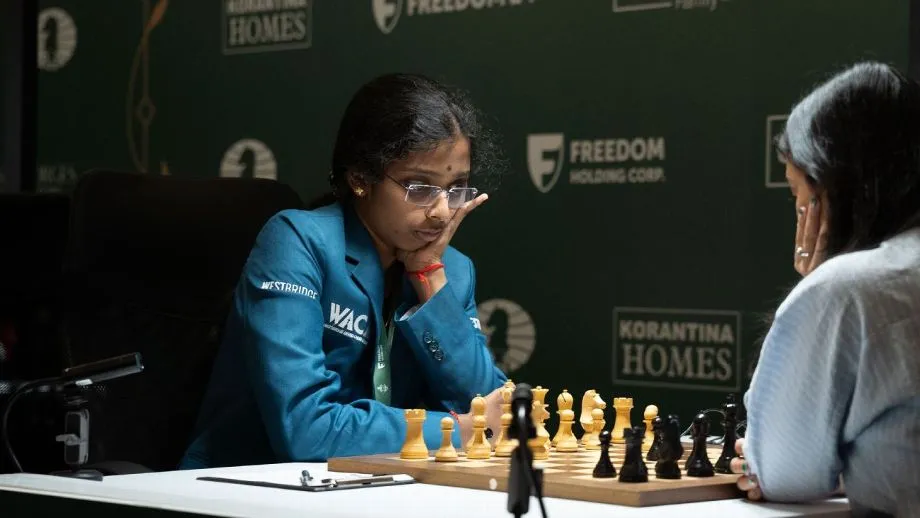
India’s emergence as a global chess powerhouse is accelerating, driven by the rise of elite young talents such as R Praggnanandhaa and Divya Deshmukh. As attention shifts toward the prestigious Candidates Tournament, their performances reflect both competitive excellence and a broader structural evolution within Indian chess. Increased institutional backing, data-driven training, and commercial interest are transforming the sport into a viable high-performance ecosystem. The Candidates cycle now represents not just a pathway to the world title, but a significant milestone in India’s expanding influence in global chess.
A New Growth Cycle in Indian Chess
Indian chess is undergoing a profound transformation, transitioning from isolated individual success to a sustained pipeline of elite performers. This evolution is underpinned by improved training infrastructure, international exposure, and early talent identification.
R Praggnanandhaa continues to demonstrate exceptional consistency against top-ranked opponents, signaling his readiness for the highest levels of competition. Meanwhile, Divya Deshmukh’s steady ascent highlights the growing depth in India’s women’s chess circuit, reinforcing the country’s multi-dimensional progress.
The Candidates Tournament: Gateway to Global Supremacy
The Candidates Tournament remains one of the most strategically significant events in professional chess. It determines the challenger for the World Chess Championship, making it a focal point for players aspiring to global dominance.
For Indian contenders, participation in the Candidates is both a validation of elite status and an opportunity to reshape international perceptions. Strong performances can elevate rankings, attract sponsorships, and position players as central figures in the global chess narrative.
High-Performance Preparation and Analytical Edge
The new generation of Indian chess players is distinguished by its integration of technology and analytics into training regimes. Advanced chess engines, data modeling, and scenario-based preparation have become standard tools in competitive readiness.
Praggnanandhaa’s dynamic playing style—characterized by deep calculation and positional flexibility—reflects this modern approach. Similarly, Divya Deshmukh’s disciplined and adaptive strategies demonstrate a high level of preparation, enabling her to compete effectively across formats.
Commercial Expansion and Market Potential
As Indian chess gains global traction, its commercial prospects are expanding significantly. Sponsorship deals, prize money structures, and digital viewership are all witnessing upward trends, contributing to a more sustainable financial ecosystem.
Emerging stars such as Praggnanandhaa and Divya Deshmukh are increasingly viewed as marketable assets. Their success enhances brand visibility for sponsors while attracting new audiences to the sport. This convergence of performance and commercial viability is reshaping chess into a compelling investment domain.
Long-Term Strategic Implications
The rise of multiple high-caliber players signals a structural shift in India’s chess ecosystem. Unlike previous eras dominated by a handful of individuals, the current landscape reflects depth, resilience, and continuity.
This diversification reduces dependency on singular success stories and strengthens India’s long-term competitiveness. Consistent representation in elite tournaments such as the Candidates will likely translate into sustained global influence and increased championship contention.
Conclusion
The growing prominence of R Praggnanandhaa and Divya Deshmukh ahead of the Candidates Tournament encapsulates a broader narrative of ambition, innovation, and strategic growth in Indian chess. As the sport evolves into a sophisticated blend of competition and commerce, these players stand at the forefront of a transformative era. Their journey not only elevates India’s standing on the global stage but also signals the arrival of a new, data-driven paradigm in modern chess.
Comments