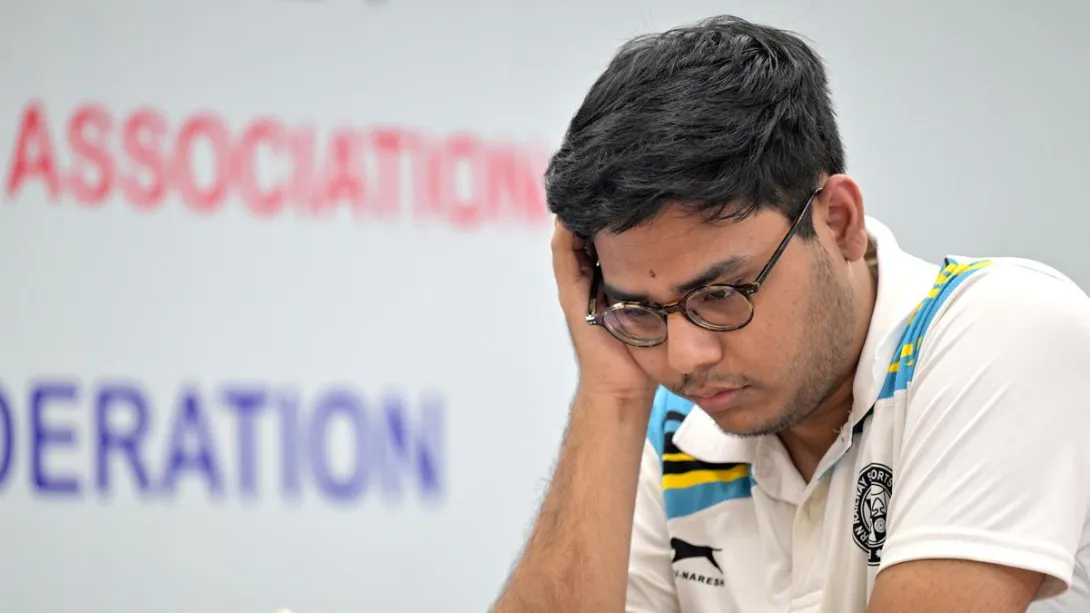
India’s chess landscape experienced a defining week marked by elite qualification, youth dominance, and a historic Grandmaster milestone. R. Vaishali secured her place in the FIDE Women’s World Championship, A. S. Sharvaanica captured the Under-12 Rapid title, and Aronyak Ghosh achieved his final norm to become India’s 95th Grandmaster at the Bangkok Chess Club Open 2026. These accomplishments collectively reflect the strength of India’s talent pipeline and the increasing institutional focus on the sport. Beyond competitive success, the achievements signal rising commercial viability and global influence for Indian chess within the broader sports economy.
A Landmark Week for Indian Chess
The Indian chess fraternity witnessed a rare convergence of success across multiple levels of competition. R. Vaishali secured qualification for the FIDE Women’s World Championship, reaffirming her standing among the global elite.
At the grassroots level, A. S. Sharvaanica delivered a standout performance to win the FIDE Under-12 Rapid Championship, highlighting the emergence of India’s next generation of prodigies.
Aronyak Ghosh Enters the Grandmaster League
The week culminated with Aronyak Ghosh achieving his final norm at the Bangkok Chess Club Open 2026, officially becoming India’s 95th Grandmaster.
Earning the Grandmaster title requires sustained excellence against top-tier international opponents. Ghosh’s accomplishment underscores not only his individual capability but also the competitive rigor embedded within India’s chess ecosystem.
Talent Pipeline Reflects Structural Maturity
The simultaneous success of players at different stages—youth, emerging, and elite—points to a well-structured and scalable development framework. India’s chess ecosystem has evolved into a multi-layered pipeline, capable of producing consistent results across global platforms.
This depth is supported by improved access to coaching, digital learning tools, and increased participation at the grassroots level, creating a virtuous cycle of talent identification and development.
Economic and Commercial Upside
The surge in Indian chess success carries significant implications for the sport’s commercial landscape. Enhanced global visibility attracts sponsorships, media coverage, and institutional investment, transforming chess into a more financially viable discipline.
As players gain international recognition, they contribute to expanding audience engagement and building a marketable ecosystem—an important shift for a sport traditionally driven more by intellectual prestige than commercial returns.
Strategic Outlook: Sustaining the Growth Curve
India’s recent achievements position it as a long-term contender in global chess dominance. The blend of experienced players like R. Vaishali and emerging talents such as A. S. Sharvaanica creates a balanced competitive structure.
Sustaining this momentum will require continued investment in training infrastructure, international exposure, and technological integration to keep pace with evolving global standards.
Conclusion
The latest milestones achieved by Indian players represent more than isolated successes—they signal a systemic rise in the country’s chess capabilities. With Aronyak Ghosh joining the elite Grandmaster ranks, India is reinforcing its position as a global powerhouse. As performance excellence converges with growing commercial interest, the future of Indian chess appears both competitive and economically promising.
Comments