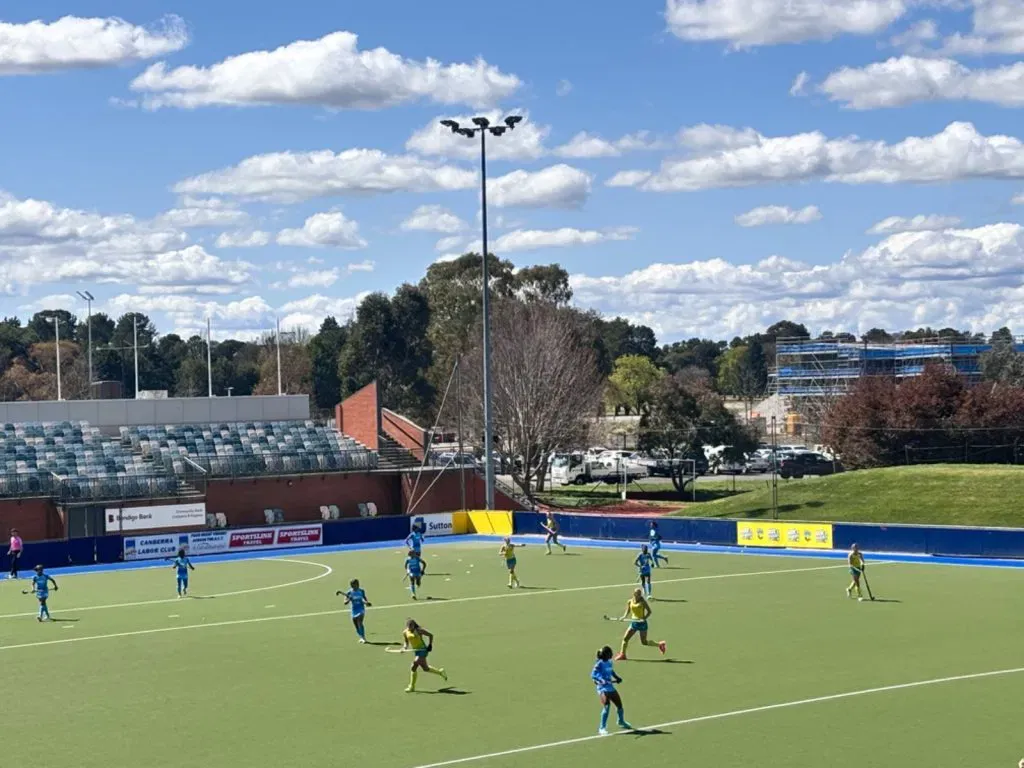
The India women's national field hockey team concluded its four-match tour of Argentina with a determined 2-2 draw, marking a strong recovery after early setbacks. Facing the formidable Argentina women's national field hockey team, India initially struggled but gradually adapted, securing victories in the latter part of the series. The tour highlighted the team’s resilience, tactical evolution, and growing competitiveness on the international stage. Beyond results, the campaign offered critical insights into performance consistency, positioning India as an emerging force in global women’s hockey.
Early Setbacks Against Elite Opposition
India’s campaign began in Buenos Aires on April 13 with an attacking display that, despite its promise, fell short on the scoreboard. Goals from Navneet Kaur and Annu demonstrated offensive intent, but defensive vulnerabilities allowed Argentina to secure a 4-2 victory.
The hosts capitalised through contributions from Maria Emilia Larsen, Victoria Granato, and Julieta Jankunas. While the result highlighted gaps in defensive structure, it also underscored India’s willingness to engage aggressively against top-tier competition.
Narrow Loss Reflects Competitive Progress
The second match on April 14 offered further evidence of India’s growing competitiveness. Ishika opened the scoring, giving the visitors an early advantage. However, Argentina responded through Agustina Gorzelany, whose two goals secured a narrow 2-1 win.
Despite the defeat, the reduced margin indicated incremental improvement. India’s ability to maintain pressure and challenge a higher-ranked opponent suggested a टीम in transition, gradually closing the gap at the elite level.
Tactical Adjustments Drive Strong Finish
Following consecutive losses, India recalibrated its approach, delivering improved performances in the remaining matches. The team registered victories in the third and fourth games before concluding the tour with a 2-2 draw, reflecting a significant turnaround.
This resurgence was driven by enhanced defensive discipline and better conversion of scoring opportunities. The ability to adapt within a short series demonstrates both strategic flexibility and mental resilience—key attributes in international competition.
Performance Analysis and Developmental Gains
From a broader perspective, the tour provided valuable insights into India’s evolving tactical framework. Early defensive lapses were progressively addressed, while attacking coordination showed greater cohesion as the series advanced.
Exposure to a strong opponent like Argentina serves as a critical developmental tool, enabling players to refine decision-making under pressure. Such experiences are instrumental in preparing the team for upcoming global tournaments and improving long-term performance metrics.
Commercial and Strategic Implications
International tours of this nature extend beyond competitive outcomes. They enhance visibility for the team, attract sponsorship interest, and contribute to the коммерशियल ecosystem of Indian hockey.
Improved performances against established teams can elevate brand value, encouraging investment in infrastructure and grassroots initiatives. For stakeholders, the tour represents both a sporting challenge and a strategic opportunity to strengthen the sport’s economic foundation.
Conclusion
The Indian women’s hockey team’s tour of Argentina concluded with a narrative of resilience and growth. After early setbacks, the team’s ability to recover and finish strongly reflects its rising потенциал on the global stage. While challenges remain, the lessons drawn from this campaign provide a solid foundation for future успех. As India continues to invest in women’s hockey, such performances could play a pivotal role in shaping both competitive success and the sport’s broader commercial trajectory.
Comments