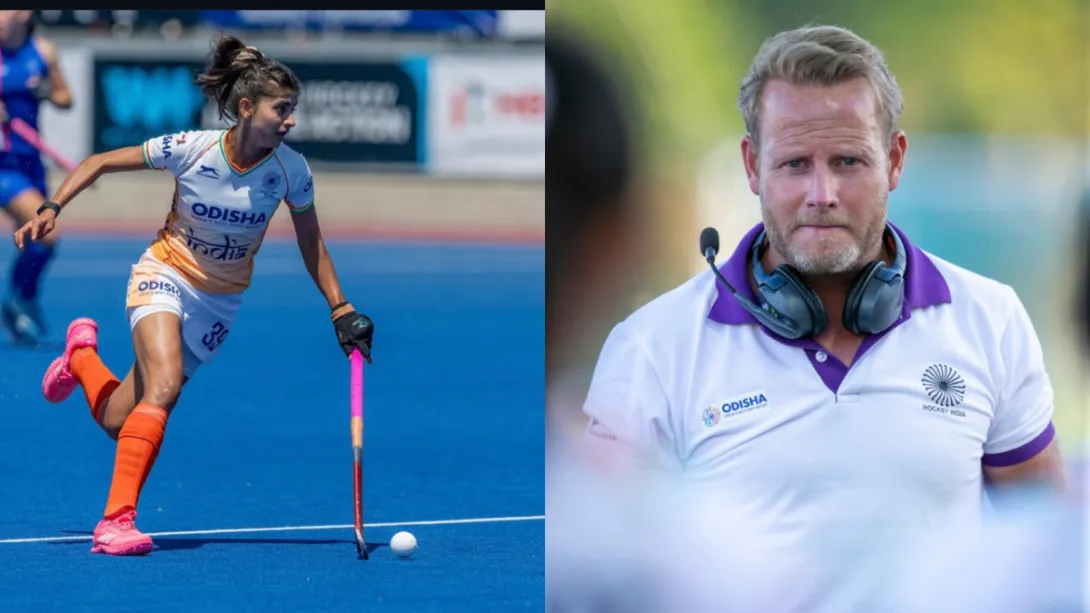
India’s women’s hockey team has entered a critical phase of preparation with the announcement of a Senior National Coaching Camp scheduled from April 1 to April 9, 2026. Following a strong silver-medal performance at the FIH World Cup Qualifiers in Hyderabad, the team has secured qualification for the upcoming World Cup in Belgium and the Netherlands. The camp aims to refine tactical cohesion, enhance fitness, and build a competitive squad under head coach Sjoerd Marijne. With major tournaments including the Nations Cup and Asian Games on the horizon, this phase is pivotal for India’s international ambitions.
Strategic Reset After Qualification Success
Hockey India has initiated a high-intensity training camp as the national women’s team transitions from qualification success to performance optimization. The recent silver-medal finish at the World Cup qualifiers not only secured a berth in the global tournament but also reinforced India’s rising stature in international hockey.
This preparatory phase is designed to consolidate gains while addressing tactical gaps. With global competition intensifying, the focus has shifted toward building a cohesive and adaptable squad capable of delivering consistent results on the world stage.
Focused Approach Under New Leadership
The coaching camp marks an important chapter under head coach Sjoerd Marijne, whose return brings both experience and strategic clarity. The emphasis will be on refining team combinations, improving match fitness, and enhancing tactical awareness.
Training modules are expected to incorporate data-driven performance analysis, situational drills, and role-specific conditioning. Such an approach reflects a broader evolution in Indian hockey, where scientific training methods and analytics are becoming central to competitive success.
Squad Composition: Experience Meets Emerging Talent
The camp roster reflects a balanced mix of seasoned campaigners and emerging players. In goal, Savita Punia leads a strong unit alongside Madhuri Kindo, Bansari Solanki, and Bichu Devi Kharibam, the latter recently recognized for excellence in goalkeeping.
Defensively, experienced players such as Nikki Pradhan and Udita provide stability, while younger talents including Ishika Chaudhary, Jyoti Singh, Lalthantluangi, and Shilpi Dabas add depth and versatility. This blend of experience and youth is critical for sustaining performance across multiple high-stakes tournaments.
High-Stakes International Calendar Ahead
The timing of the camp is strategic, with a demanding international schedule approaching. India is set to compete in the FIH Women’s Nations Cup in June, followed by the World Cup in August and the Asian Games later in September.
Each of these tournaments carries significant competitive and commercial implications. Strong performances not only enhance global rankings but also attract sponsorships, funding opportunities, and broader institutional support—key drivers in the evolving sports economy.
Economic and Performance Implications
The structured preparation reflects a growing recognition of sports as both a performance domain and an economic asset. Investments in training infrastructure, coaching expertise, and athlete welfare are increasingly viewed through the lens of return on investment, both in terms of medals and marketability.
For Indian women’s hockey, sustained international success could unlock new revenue streams, including endorsements, league participation, and grassroots development funding. This aligns with the broader vision of transforming sports into a viable economic sector.
Outlook: Building Toward Global Competitiveness
As the team embarks on this preparatory phase, the emphasis will remain on consistency, adaptability, and mental resilience. The upcoming tournaments will test not only skill but also the depth and strategic maturity of the squad.
If the current momentum is sustained, India’s women’s hockey team is well-positioned to translate preparation into podium finishes. The ongoing camp, therefore, is more than routine training—it is a calculated investment in future success on the global stage.
Comments