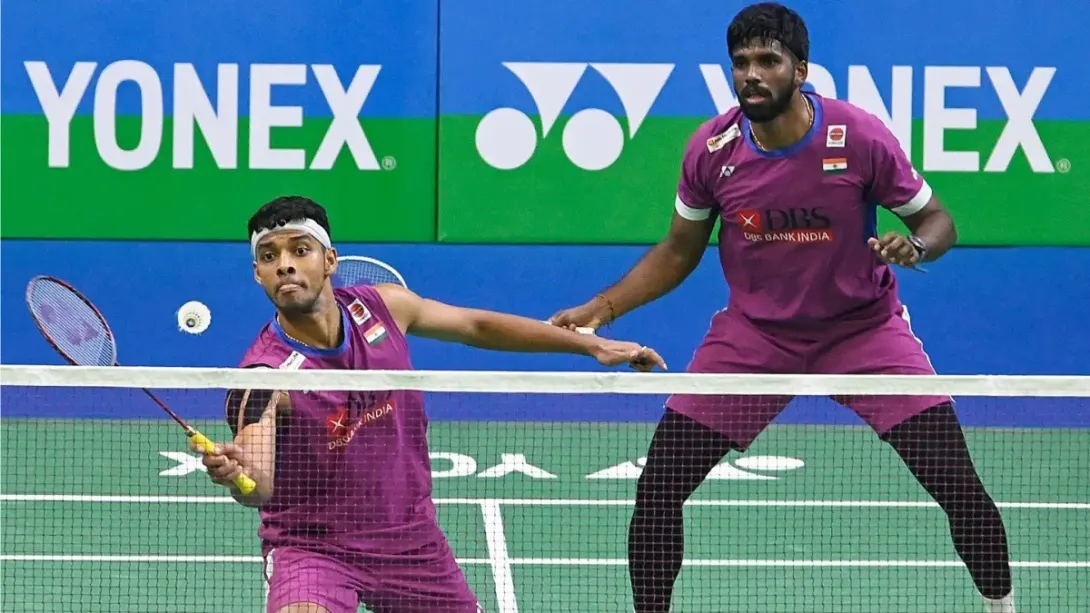
India men's national badminton team are set to compete against Chinese Taipei men's national badminton team in a high-stakes quarterfinal clash at the Thomas Cup in Horsens. Having finished runners-up in Group A behind China, India now face a team that topped Group C with strong form. The encounter represents a pivotal juncture in India’s campaign, where tactical discipline and execution will determine progression. Beyond sport, the fixture reflects India’s growing stature in global badminton and the increasing strategic and commercial relevance of team-based international competitions.
Tournament Landscape: India’s Path to the Knockouts
India’s progression to the quarterfinals underscores a competitive and resilient group-stage campaign. Finishing second in Group A, behind a dominant Chinese unit, the team demonstrated the ability to adapt under pressure while maintaining consistency.
While not securing top position, India’s qualification reflects depth across singles and doubles formats. However, knockout stages in elite tournaments such as the Thomas Cup demand heightened precision, where even marginal lapses can prove decisive.
Opponent Analysis: Chinese Taipei’s Winning Momentum
Chinese Taipei men's national badminton team enter the quarterfinal as Group C leaders, signaling both confidence and tactical cohesion. Their unbeaten run through the group phase highlights a balanced lineup capable of delivering across multiple disciplines.
For India, this matchup presents a nuanced challenge. Chinese Taipei’s consistency and adaptability require a carefully calibrated approach, particularly in managing key matchups that could influence the overall tie.
Tactical Framework: Execution Under Pressure
Quarterfinal ties in international badminton are often determined by strategic clarity and execution efficiency. India’s approach is expected to prioritize controlled aggression, precise shot selection, and effective court coverage.
The ability to convert critical points—especially in tightly contested games—will be central to success. In performance terms, this reflects a high-efficiency model, where optimal use of opportunities defines outcomes.
Psychological Dynamics: Managing Expectations
The transition from group stages to knockout rounds introduces a distinct psychological dimension. Expectations intensify, and the margin for recovery diminishes.
India’s experience in high-pressure environments will be a key asset. Maintaining composure while executing tactical plans can provide a decisive edge, particularly against an opponent entering the match with strong momentum.
Strategic and Commercial Implications
Beyond the immediate sporting stakes, India’s presence in the latter stages of the Thomas Cup carries broader implications. Success at this level enhances the visibility of badminton within India, driving fan engagement and potential investment.
From a commercial perspective, deep tournament runs contribute to brand value, sponsorship opportunities, and the overall growth of the sport’s ecosystem. International success often serves as a catalyst for domestic development and financial expansion.
Conclusion: A Crucial Inflection Point
India’s quarterfinal clash against Chinese Taipei represents a defining moment in their Thomas Cup campaign. With both teams entering the contest in strong form, the outcome will hinge on execution, adaptability, and mental resilience.
As global badminton continues to evolve, matches of this magnitude highlight the increasing competitiveness of the sport. For India, the opportunity extends beyond progression—it is a chance to reinforce its position as a formidable force on the international stage.
Comments