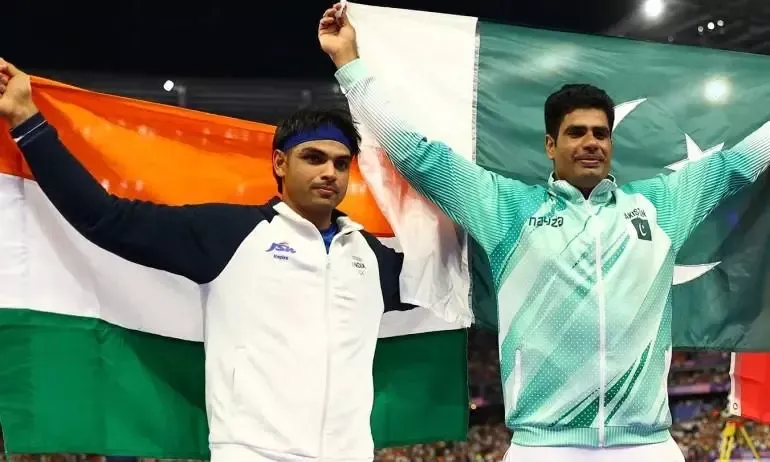
India has unveiled a carefully balanced sports policy that allows Pakistani athletes to compete in multinational tournaments hosted in the country while maintaining its long-standing suspension of bilateral sporting ties with Islamabad. The decision, announced by the Ministry of Youth Affairs and Sports, reflects New Delhi’s attempt to align with international sporting obligations as it expands its ambitions in the global sports economy. The policy comes at a time when India is aggressively pursuing the hosting rights for marquee international events, including the Olympic Games and Asian Games. Analysts view the move as a strategic exercise in sports diplomacy, combining geopolitical caution with institutional pragmatism and economic foresight.
India Clarifies Its Position on Cross-Border Sporting Participation
India’s sports ministry on Wednesday formally stated that Pakistani athletes and teams will be permitted to participate in multinational sporting competitions organized in India, provided those events are governed by international federations or global sporting bodies.
The clarification establishes a clear distinction between bilateral sports engagements and multilateral competitions. While participation in internationally sanctioned tournaments will be allowed, bilateral sporting contests between India and Pakistan will remain suspended.
Government officials indicated that the policy is designed to ensure compliance with international sporting regulations without altering India’s broader diplomatic posture toward Pakistan. The move effectively creates a dual-track framework in which India fulfills global sporting commitments while preserving restrictions on direct sporting exchanges.
The decision is likely to affect multiple sporting disciplines, including cricket, hockey, wrestling, athletics, and other events conducted under multinational frameworks.
Strategic Sports Diplomacy Takes Center Stage
The announcement arrives during a transformative phase for India’s sports ecosystem. The country has intensified efforts to position itself as a premier destination for global sporting events and international sports administration.
India’s aspirations to host future mega-events — including the 2036 Olympic Games and the 2038 Asian Games — have significantly increased the importance of adhering to international participation standards. Global sporting institutions generally require host nations to guarantee entry and competition access to all eligible member countries.
Policy analysts believe the government’s latest clarification reflects a pragmatic recognition of these obligations. Restricting participation by athletes from specific countries in multinational tournaments could invite criticism from international governing bodies and potentially weaken India’s credibility as a host nation.
By separating bilateral diplomacy from international sports governance, India appears to be protecting its long-term strategic interests in the rapidly expanding global sports economy.
Bilateral Sporting Relations Remain Frozen
Despite the opening for multilateral participation, the Indian government reiterated that bilateral sporting relations with Pakistan remain firmly suspended.
The two countries have experienced prolonged disruptions in sporting ties over the past decade, driven largely by political tensions and security concerns. Cricket, historically the most commercially significant sporting relationship between the two nations, has been particularly affected.
India and Pakistan have not played a full bilateral cricket series in years, with encounters restricted primarily to multinational tournaments organized by bodies such as the International Cricket Council and the Asian Cricket Council.
Under the current framework, Indian teams will continue to avoid bilateral tours to Pakistan, while Pakistani teams will not be invited for exclusive bilateral competitions in India. Any future contests between the neighboring nations are expected to occur only within international tournament structures.
Economic Implications for India’s Expanding Sports Industry
The policy also carries broader economic implications as India seeks to deepen its footprint in the international sports business landscape.
Large-scale sporting events generate substantial economic activity through broadcasting rights, sponsorship agreements, tourism, hospitality, merchandising, infrastructure development, and urban investment. Ensuring smooth participation for all qualified nations enhances the commercial attractiveness of tournaments hosted in India and strengthens confidence among international stakeholders.
Sports economists argue that credibility in global event management is increasingly essential for countries competing to attract international sporting investments. India’s willingness to facilitate multinational participation, even amid geopolitical tensions, signals administrative maturity and operational reliability.
The ministry also indicated that visa procedures for athletes, coaches, officials, and sports administrators linked to international federations would be streamlined to improve tournament logistics and reduce bureaucratic delays.
Global Governance and Sporting Obligations
India’s decision highlights the growing influence of international governance frameworks in shaping national sports policy.
Organizations such as the International Olympic Committee and various global sports federations emphasize inclusivity and non-discriminatory participation as core principles of international competition. Countries seeking to host elite global tournaments are expected to comply with these standards irrespective of political disputes.
By allowing Pakistani participation in multinational events while avoiding bilateral normalization, India has adopted a model that preserves diplomatic flexibility without jeopardizing its standing within the global sporting community.
The approach also reflects a broader global trend in which sports increasingly function as an autonomous institutional ecosystem governed by international rules, commercial interests, and diplomatic sensitivities.
A Calculated Balancing Act
India’s latest sports policy does not indicate a broader thaw in relations with Pakistan. Instead, it represents a carefully calibrated administrative strategy aimed at balancing political realities with international sporting obligations.
The distinction between bilateral and multilateral participation enables New Delhi to maintain its existing diplomatic stance while simultaneously advancing its ambitions of becoming a leading global sports destination.
For international federations, sponsors, broadcasters, and athletes, the clarification offers greater predictability regarding future tournaments hosted in India. For policymakers, it demonstrates how sports diplomacy can be leveraged to strengthen global influence without compromising geopolitical priorities.
As India continues its push to emerge as a central player in the global sports economy, the government’s latest move illustrates the increasingly complex intersection of diplomacy, commerce, governance, and international competition.
Comments