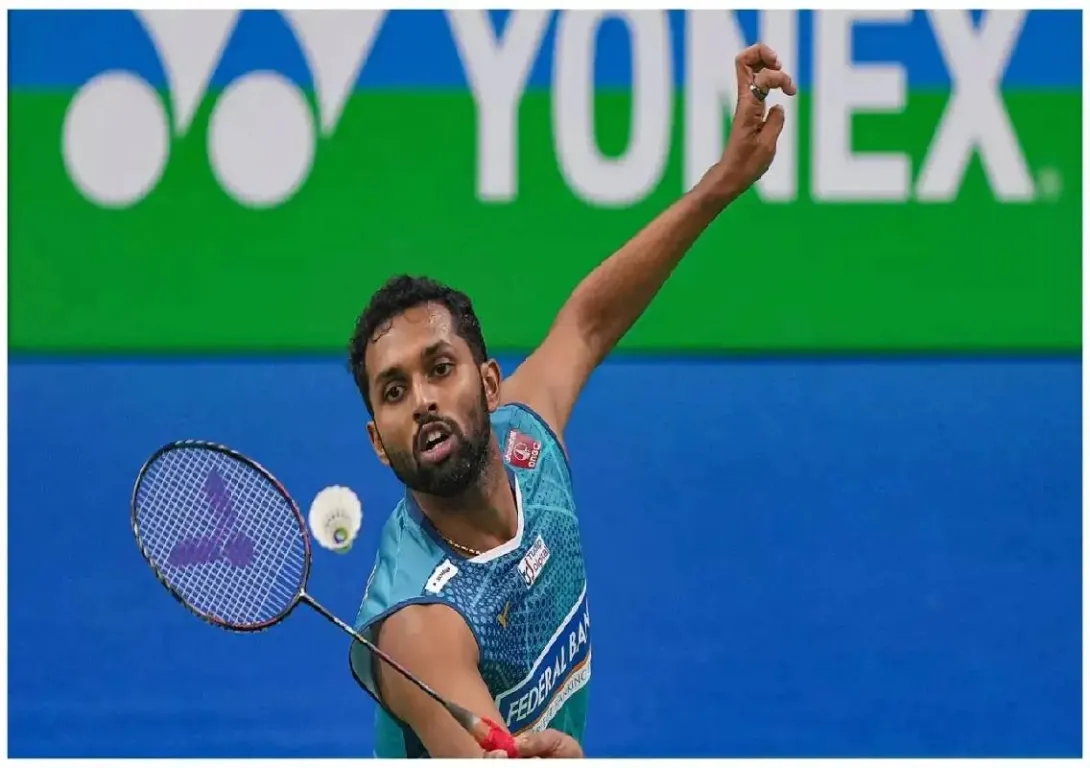
Indian badminton veteran H. S. Prannoy has triggered a broader national conversation on athlete recognition after expressing disappointment over the limited public attention received by India’s badminton team following its bronze-medal finish at the Thomas Cup. Prannoy argued that badminton accomplishments in India often gain widespread visibility only when athletes secure gold medals. His remarks came shortly after doubles stars Chirag Shetty and Satwiksairaj Rankireddy posted emotional reactions on social media regarding the muted response to the team’s achievement, reigniting debate around India’s sporting priorities and recognition ecosystem.
Prannoy Raises Concerns Over Limited Appreciation for Sporting Success
India’s badminton community has found itself at the center of a larger national debate after H.S. Prannoy openly questioned the lack of recognition awarded to significant achievements in the sport.
The experienced shuttler stated that badminton in India often receives mainstream attention only when players secure gold medals or historic titles, despite the intense level of competition involved in reaching the podium at major international tournaments.
His remarks emerged following India’s bronze-medal finish at the Thomas Cup — one of the most respected and competitive events in global badminton.
For many within the sporting fraternity, Prannoy’s comments reflected a growing frustration among athletes competing outside India’s dominant cricket ecosystem, where sustained international performances frequently struggle to maintain public visibility.
Thomas Cup Bronze Sparks Wider Sporting Debate
India’s bronze medal at the Thomas Cup was widely regarded within badminton circles as another important milestone for the country’s growing international stature in the sport.
The tournament features the world’s leading badminton nations and is considered one of the toughest team competitions on the global calendar. Reaching the podium requires exceptional consistency, squad depth, and tactical execution against elite international opposition.
However, despite the significance of the achievement, discussions surrounding the medal quickly shifted toward the issue of public recognition after Chirag Shetty and Satwiksairaj Rankireddy shared emotional social media posts highlighting the comparatively subdued national reaction.
The posts resonated with many athletes and fans who believe that India’s non-cricket sports continue to receive inconsistent acknowledgment despite delivering increasingly strong international results.
Prannoy’s intervention further intensified that conversation, transforming a sporting achievement into a larger reflection on India’s sporting culture.
Indian Badminton’s Growth Contrasts With Visibility Challenges
Indian badminton has experienced a remarkable transformation over the past decade, evolving into one of the country’s most successful Olympic disciplines.
Athletes such as P. V. Sindhu, Saina Nehwal, Satwiksairaj Rankireddy, Chirag Shetty, and H.S. Prannoy have consistently elevated India’s global profile through medals and victories across major international competitions.
Yet despite these achievements, badminton still faces challenges in sustaining mainstream attention and commercial value compared to cricket.
Sports marketing experts often note that recognition directly influences sponsorship revenue, endorsement opportunities, media coverage, and long-term athlete marketability.
In an increasingly professional sporting ecosystem, visibility has become a crucial component of an athlete’s career sustainability, particularly in sports requiring year-round international participation and extensive travel commitments.
Medal-Centric Mindset Under Scrutiny
Prannoy’s comments have also reignited debate around India’s medal-centric sporting mindset.
In several leading sporting nations, podium finishes at elite global competitions are celebrated as indicators of sustained excellence regardless of whether the medal is gold, silver, or bronze. In India, however, public discourse frequently narrows its focus to championship victories alone.
Analysts argue that such an approach can unintentionally diminish appreciation for the competitiveness of international sport, where even securing a podium finish often requires years of preparation and exceptional consistency.
India’s Thomas Cup bronze was achieved against some of the strongest badminton nations in the world, making it a significant accomplishment within the sport’s global hierarchy.
The comparatively muted response, however, has reinforced concerns among athletes that sustained international excellence is not always adequately acknowledged unless accompanied by headline-making triumphs.
Commercial Implications for Indian Sports
The debate extends beyond emotional recognition and carries important commercial implications for Indian sport.
The growth of non-cricket sports in India increasingly depends on audience engagement, media visibility, and sponsorship investment. Recognition plays a central role in strengthening those ecosystems.
Badminton has emerged as one of India’s fastest-growing Olympic sports, attracting television audiences, digital streaming engagement, and corporate partnerships. Yet industry experts believe the sport’s commercial potential remains significantly underdeveloped relative to its international achievements.
Broader public recognition of consistent performances — not just gold-medal victories — could contribute to stronger financial ecosystems supporting players, academies, and grassroots development programs.
Such changes are increasingly viewed as essential if India aims to become a multi-sport global powerhouse rather than a country defined predominantly by cricket success.
A Reflection of India’s Changing Sporting Landscape
H.S. Prannoy’s remarks have ultimately highlighted the evolving expectations of modern Indian athletes.
Today’s generation of sports professionals competes regularly on the global stage and increasingly expects institutional support, media visibility, and public appreciation comparable to international sporting standards.
The conversation sparked after the Thomas Cup bronze therefore reflects a deeper transition in India’s sporting identity — one in which athletes are demanding recognition not only for extraordinary victories but also for sustained excellence against world-class competition.
As Indian badminton continues its ascent globally, the debate initiated by Prannoy may prove important in reshaping how sporting achievement is valued across the country.
For India’s athletes, recognition is no longer merely symbolic. It has become an essential component of building a stronger, more balanced, and globally competitive sporting culture.
Comments