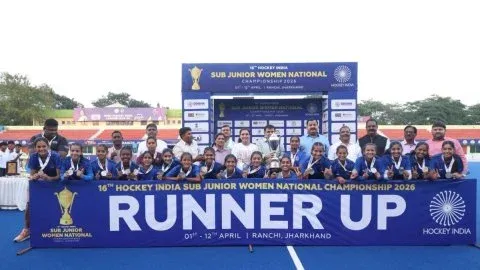
Hockey Madhya Pradesh has emerged as a benchmark of consistency in India’s junior hockey landscape, securing 29 medals over the past 16 years at national championships. This sustained performance is rooted in a robust grassroots ecosystem supported by dedicated training academies in Bhopal and Gwalior. The state’s structured approach to talent identification and athlete development has enabled a steady pipeline of competitive players. As Indian hockey increasingly adopts a performance-oriented framework, Madhya Pradesh’s success highlights the strategic value of long-term investment in infrastructure, coaching, and youth development as key drivers of sporting and institutional excellence.
Consistency as a Competitive Advantage
In Indian hockey’s evolving ecosystem, sustained performance is often the clearest indicator of structural strength. Hockey Madhya Pradesh has demonstrated this through an impressive tally of 29 medals across categories in national competitions over a 16-year period, including the Hockey India Sub Junior National Championship.
Such a record reflects more than periodic success; it signals a deeply embedded system capable of delivering results across generations of players. In high-performance sport, this level of consistency is rarely incidental—it is the outcome of deliberate planning and execution.
Grassroots Infrastructure as the Foundation
The cornerstone of this achievement lies in a well-developed grassroots network, anchored by specialized hockey academies in Bhopal and Gwalior. These institutions function as critical training hubs, offering structured programs that combine technical coaching, physical conditioning, and competitive exposure.
From a strategic standpoint, grassroots infrastructure acts as a long-term asset. By nurturing talent at an early stage, the system ensures continuity and reduces dependence on sporadic talent discovery. This model aligns with global best practices, where early investment in player development yields sustained competitive returns.
A Structured Pipeline for Talent Development
Hockey Madhya Pradesh’s approach is characterized by a systematic talent pipeline that bridges grassroots training with elite competition. Athletes are identified, trained, and progressively exposed to higher levels of competition, ensuring a seamless transition through the ranks.
This structured progression enhances both individual performance and team cohesion. Players entering national championships are not only technically proficient but also tactically aware and mentally prepared—attributes essential for success in competitive environments.
Implications for India’s Hockey Ecosystem
The state’s success carries broader implications for Indian hockey. As the sport continues to rebuild its global standing, the importance of state-level development models becomes increasingly evident. Regions that invest in infrastructure and governance contribute directly to the national talent pool.
From an economic perspective, such systems also improve efficiency in resource allocation. Investments in training and development yield measurable outcomes in the form of medals, player progression, and national representation, reinforcing the value of structured sports management.
Bridging Development and Performance
One of the defining strengths of Madhya Pradesh’s model is its ability to convert grassroots potential into competitive success. The academies in Bhopal and Gwalior not only develop skills but also instill discipline, resilience, and adaptability—qualities that translate effectively into match performance.
This integration of development and performance is critical in modern sport, where the margin between success and failure is often determined by preparation and consistency rather than raw talent alone.
Conclusion: A Blueprint for Sustainable Sporting Excellence
Hockey Madhya Pradesh’s sustained success at national championships underscores the importance of long-term vision in sports development. By investing in grassroots infrastructure and maintaining a structured training ecosystem, the state has created a replicable model for excellence.
As Indian hockey continues to evolve, such frameworks will play a pivotal role in shaping its future trajectory. For policymakers and stakeholders, the lesson is clear: sustainable success is built through systems, not short-term achievements.
Comments